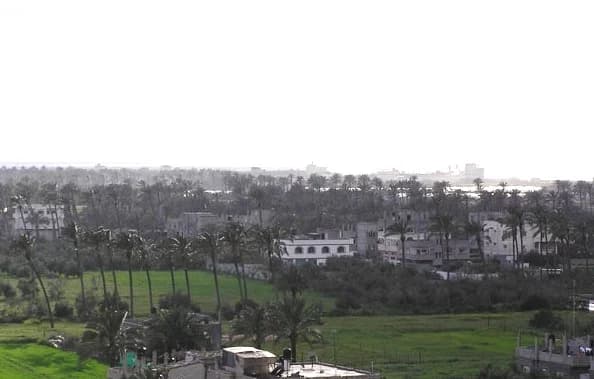
Israeli troops carried out a ground operation beyond the so-called Yellow Line in central Gaza on 18 November 2026, the first such publicly announced incursion since the ceasefire began, the Israel Defense Forces (IDF) said. Thousands of Palestinians left homes and shelters east of Nuseirat refugee camp and around Deir al-Balah, and the Israeli military said the operation had ended by the morning of 19 November.
What happened in central Gaza?
Israel's military carried out a short ground push into an area west of the line its forces have held since the ceasefire, and announced on 19 November that it was over. According to a BBC Verify report, the Arabic-language spokesperson of Israel's Coordination of Government Activities in the Territories (COGAT) announced the operation in the early afternoon of 18 November and warned residents north of the Nuseirat and Bureij camps to stay away. COGAT said on Thursday morning that the activity had ended and that the Salah al-Din road, the main north-south route, had reopened.
BBC Verify said it found damage more than 1.2 km beyond the Yellow Line, which it described as the furthest Israeli advance into central Gaza since the truce took effect.
Why did Israel say it went in?
The IDF and Israel's internal security agency, Shin Bet, said the joint operation was meant "to dismantle a terror tunnel west of the Yellow Line that posed an immediate and direct threat to IDF troops". This claim has not been independently verified. The IDF also said it had struck several militants in separate strikes.
How many people were affected?
More than 18,000 people were living in the affected area of about 2.5 square kilometres, including around 4,000 in displacement sites, according to an initial analysis by the United Nations Office for the Coordination of Humanitarian Affairs (OCHA), as reported by UN News on 19 November. OCHA said people were moving west and south-west from Deir al-Balah.
Gaza's Hamas-run government media office said about 6,000 people fled. Hamas-run Civil Defence said three people were killed in drone strikes on 18 November in Nuseirat, Gaza City and Deir al-Balah. Gaza health officials said two more people were killed by Israeli fire in eastern Gaza City on 19 November; the IDF did not comment immediately.
What are the reactions?
Hamas called the advance and evacuation orders "a dangerous development and a flagrant violation of the ceasefire agreement". Israel says its forces are acting in line with the agreement.
OCHA said civilians who flee must be allowed to return, and that all civilians must be protected and able to receive aid. Aid teams also warned that rainwater and sewage basins in the area could overflow if they are damaged or blocked.
Why it matters
The incursion tests a ceasefire that is already under strain. The Hamas-run health ministry, whose figures the UN considers reliable, says at least 1,662 people have been killed in Gaza since the ceasefire began, while the IDF says six of its soldiers have died in the same period. According to UN figures cited by the BBC, more than 1.9 million people, about 90% of Gaza's population, are displaced, and 1.4 million live in tents or makeshift shelters.
What is confirmed and what is not
- Confirmed: the operation started on 18 November and Israel said it ended on the morning of 19 November; COGAT reopened the Salah al-Din road.
- Not independently confirmed: the tunnel Israel says it targeted, and the final casualty and displacement figures, which may change.
What's next
Humanitarian agencies will be watching whether displaced families can go back to the area, and whether the operation is followed by further moves across the Yellow Line.