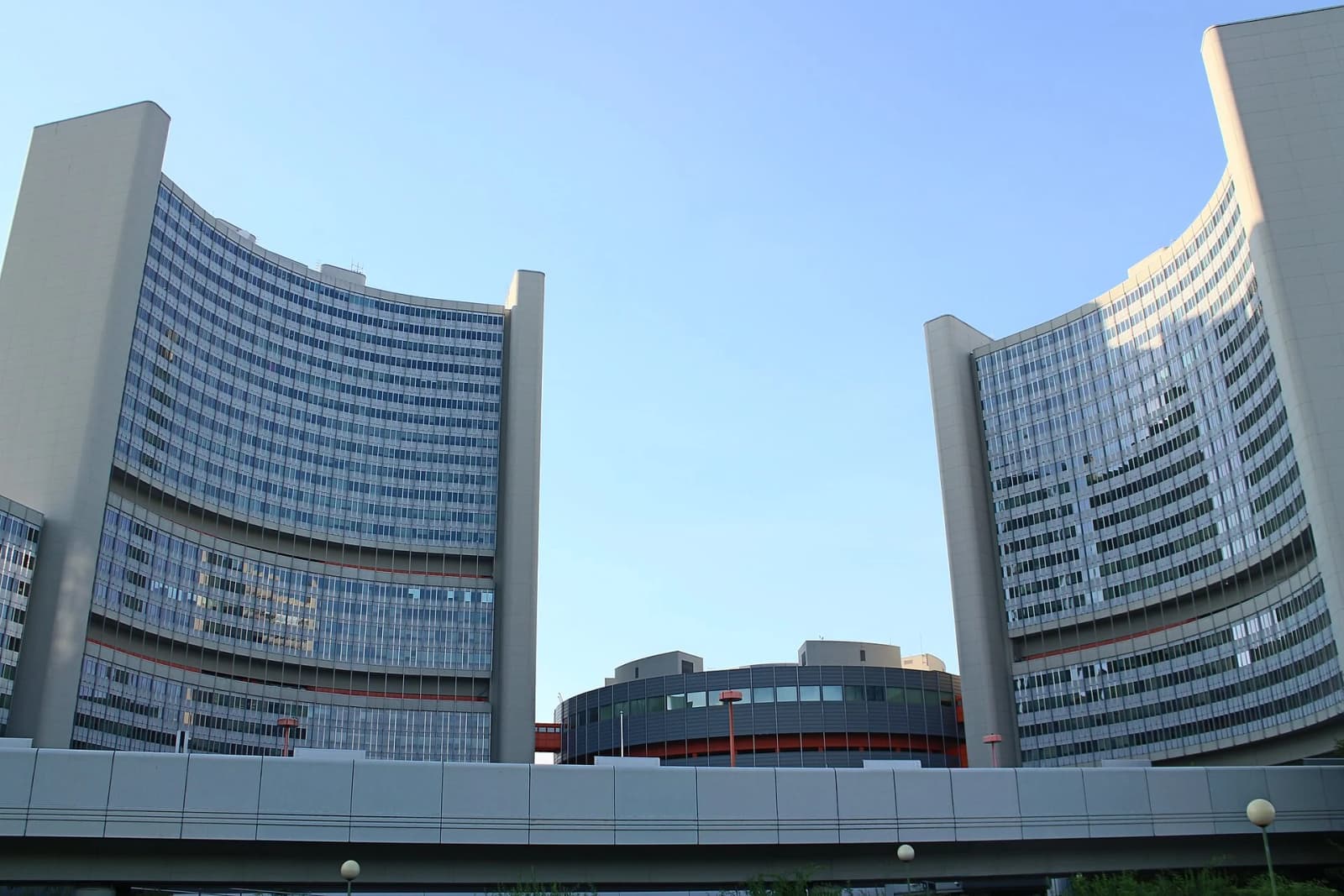
North Korea has built a new extension to its original uranium enrichment plant at the Yongbyon nuclear complex, the head of the United Nations nuclear watchdog said on 18 November 2026. Rafael Mariano Grossi, Director General of the International Atomic Energy Agency (IAEA), told the agency's Board of Governors in Vienna, Austria, that the expansion of the country's enrichment programme was "a cause for serious concern".
In his introductory statement to the Board, Mr Grossi said construction of a further extension to the original Yongbyon enrichment facility had been under way since mid-September 2026, according to reports by Euronews, which drew on the Associated Press, and The Korea Times. By late October, the building was "externally complete", he said, meaning its outer structure appeared finished.
What did the IAEA find at Yongbyon?
The agency says a new building has been added to the plant where North Korea enriches uranium, and that its exterior was completed in roughly six weeks. Euronews noted that North Korea's facilities at Yongbyon, which Pyongyang calls the "heart" of its nuclear programme, can produce both highly enriched uranium and weapons-grade plutonium.
The Korea Times reported that North Korea is also believed to run enrichment facilities at Kangson and Kusong. A year ago South Korea's Unification Minister Chung Dong-young said the North was operating four enrichment facilities every day, Euronews reported.
How does the IAEA know without inspectors?
It relies on satellite imagery and open-source information. The agency has had no access to Yongbyon or any other site in North Korea since Pyongyang expelled its inspectors in 2009, so it cannot verify what happens inside the buildings or how much material is produced.
Why the timing matters
The report came as United States President Donald Trump was in China for the Asia-Pacific Economic Cooperation (APEC) summit in Shenzhen, where he held talks with Chinese President Xi Jinping and Russian President Vladimir Putin. MapMyTimes has explained what the Shenzhen meeting of the three leaders means.
Mr Trump has said he is eager to meet North Korean leader Kim Jong Un. Secretary of State Marco Rubio said no meeting was scheduled, but that Mr Trump was prepared to start a new dialogue with Pyongyang, Euronews reported. North Korea has not responded to the overtures.
Mr Kim has said he could return to talks if Washington drops what he calls its "hostile policy" and respects the North's status as a nuclear power. The Korea Times reported that his sister, Kim Yo Jong, has called that status "absolute" and dismissed talk of denuclearisation. Experts quoted by Euronews say Pyongyang wants to be recognised as a nuclear-armed state so it can press for the lifting of United Nations sanctions.
What is confirmed and what is not
- Confirmed: The IAEA chief told the Board on 18 November that an extension to the original Yongbyon enrichment plant was built from mid-September and was externally complete by late October.
- Not known: Whether the new space is already operating, how many centrifuges it may hold, and how much it could add to North Korea's stock of enriched uranium. The IAEA cannot check this on the ground.
- No reaction yet: North Korea had not publicly responded to the IAEA's remarks in the reports reviewed.
What happens next
The IAEA Board of Governors is meeting in Vienna this week, with Mr Grossi's statement setting out the agency's latest findings for member states. Any renewed talks between Washington and Pyongyang would be the first serious test of whether the expansion at Yongbyon can be slowed or frozen.
Photo source · Suicasmo, CC BY-SA 4.0