Update (19 November 2026, 23:35 IST): The White House has since released the same text as the joint statement first put out by the Kremlin, CBS News reported; Fox News reported that the White House titled it the "U.S.-Russia-China Heads of State Declaration toward Peace". The statement text quoted in reports does not name Ukraine or Iran, although CBS News reported that Ukraine was discussed in the meeting. Speaking to NBC News by phone on the flight home, Trump rated the meeting "a 12" on a scale of zero to 10, and in a social media post reported by Fox News he called it "a Great and Highly Consequential Trip" and said he would hold a White House news conference at noon (US time) on Friday.
Update (20 November 2026, 01:00 IST): The three-way meeting between US President Donald Trump, Chinese President Xi Jinping and Russian President Vladimir Putin took place in Shenzhen on the afternoon of 19 November and lasted roughly an hour and a half, CNBC reported. The leaders issued a short joint text, described by Chinese state media as a peace declaration, in which they committed to strategic stability, a dialogue on reducing nuclear risks and preventing proliferation, reform of the United Nations and higher production of refined petroleum products; it reaffirmed that a nuclear war cannot be won and also said the International Criminal Court and similar bodies should not abuse their jurisdiction. The text did not mention the war in Ukraine or the conflict involving Iran, and no figures, timelines or further trilateral meetings were announced. Xi called the talks "positive, constructive and fruitful", according to Chinese state media, while Putin said Ukraine and Europe were not yet ready for compromise and, according to CBS News, ruled out talks after Ukraine's strikes on the Crimean Bridge. French Foreign Minister Jean-Noël Barrot said the three leaders "fundamentally disagree on everything", Euronews reported. Trump has said he will hold a press conference on Friday.
Update (19 November 2026, 19:30 IST): The three-way meeting took place on Thursday at Kylin Villa in Shenzhen and lasted about 90 minutes, NBC News reported. Afterwards, China's state news agency Xinhua and the Kremlin released a "peace declaration" that, according to China and Russia, the three leaders had agreed. As reported by Reuters and France 24, it reaffirmed that a nuclear war cannot be won and must never be fought and committed the three countries to dialogue on reducing nuclear risks and preventing proliferation; pledged to advance reform of the United Nations and to increase the production and supply of refined petroleum products; and, stressing the immunity of state officials, said the International Criminal Court and similar bodies must not abuse their jurisdiction. The declaration did not spell out how the UN should be reformed. Chinese President Xi Jinping called the meeting "positive, constructive, and fruitful", according to Xinhua, and Russian President Vladimir Putin described the talks as useful. US President Donald Trump boarded Air Force One for Washington after the meeting, France 24 reported, and left without commenting, according to Reuters. US officials had not immediately released their own version of the declaration.
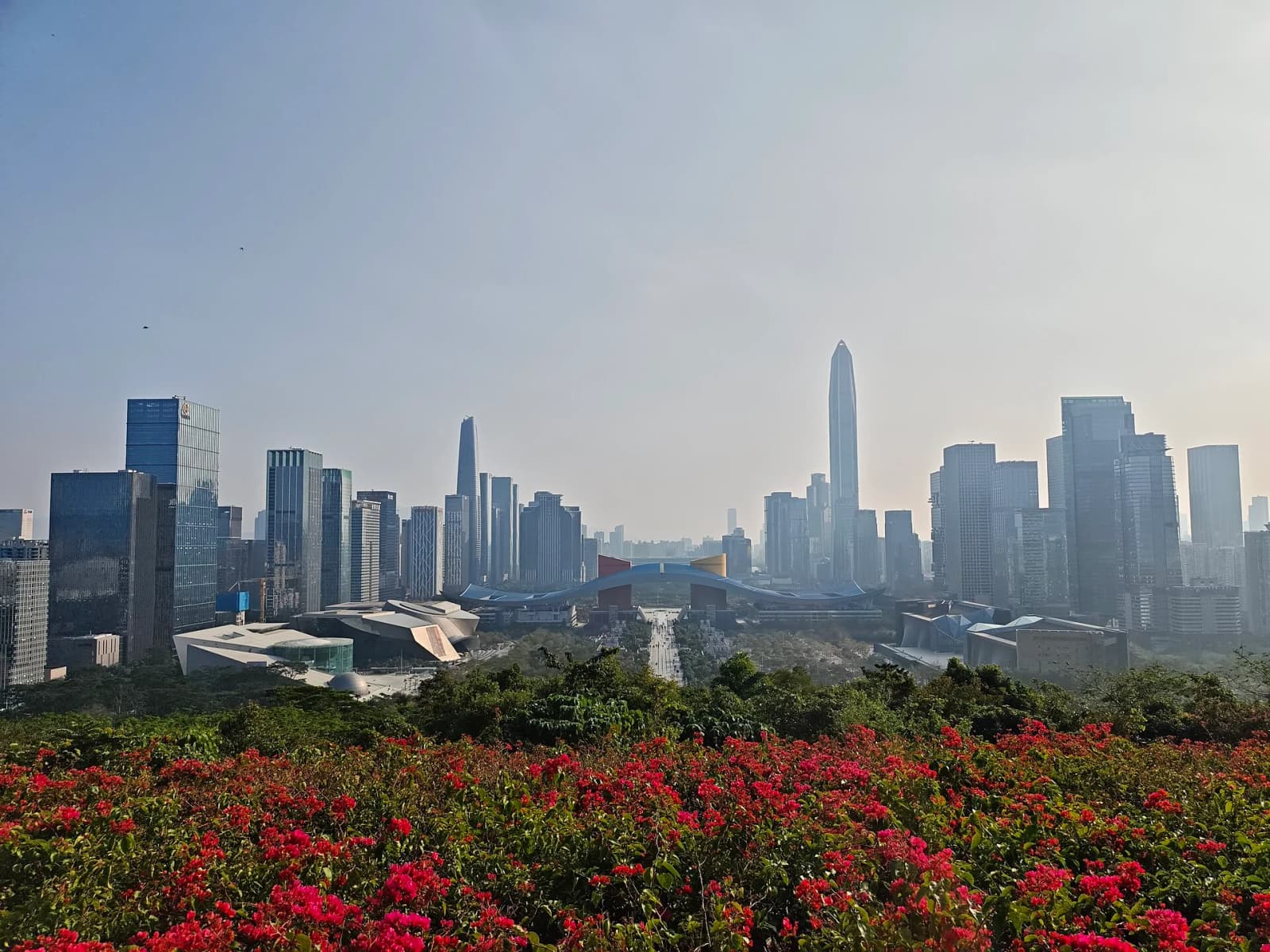
United States President Donald Trump met Russian President Vladimir Putin and then Chinese President Xi Jinping in separate meetings in Shenzhen, China, on the morning of 19 November 2026 (India time), on the sidelines of the Asia-Pacific Economic Cooperation (APEC) Economic Leaders' Meeting. The three leaders then sat down together later on Thursday in what the White House had called the first-ever trilateral meeting of the heads of the US, China and Russia. This explainer sets out what has happened so far, how the meeting came about, what each side wants, and why it matters for India.
For the news report on the Trump-Putin talks, see MapMyTimes' earlier article: Trump and Putin hold 40-minute talks in Shenzhen at APEC.
What happened in Shenzhen on 19 November?
Trump held two bilateral meetings within roughly an hour. According to NBC News' live coverage, formal talks between Trump and Putin began at 11.40 pm US Eastern Time on 18 November (10.10 am IST on 19 November) and ended after about 40 minutes. Opening the meeting, Trump said the two had "had a great relationship for many years". Putin made no public remarks.
Shortly afterwards, Chinese state media reported that Trump and Xi had begun talks on the APEC sidelines. No official readout of either bilateral meeting had been published at the time of writing, and no agreement has been announced.
The bilaterals followed a day of choreography. Trump landed in Shenzhen on the morning of 18 November after an Asia stop in Manila, and Xi greeted him personally at the airport — a gesture MapMyTimes reported on Wednesday. Xi and Putin also met separately on 18 November, their 50th in-person meeting according to NBC News, and the three leaders shook hands before the APEC welcome banquet that evening, according to Al Jazeera.
How did the three-way meeting come about? A timeline
- October 2025, Busan: Trump and Xi agreed a trade truce that eased tariffs, which had peaked at 145% on Chinese goods and 125% on US goods; Beijing paused new rare-earth export curbs, Al Jazeera reports.
- February 2026: New START, the 2010 treaty capping US and Russian strategic nuclear arsenals, lapsed. Trump turned down a Russian proposal to extend it and has said he wants a new deal that includes China.
- May 2026: Xi and Putin signed more than 40 cooperation agreements at a summit in Beijing. Trump also visited China that month for talks with Xi, according to CNBC.
- 10-11 November 2026: US envoys Steve Witkoff and Jared Kushner brokered US-Russia-Ukraine talks in Abu Dhabi.
- 13 November 2026: China's Foreign Ministry spokesperson Mao Ning said at her regular press conference that China was "in communication with relevant parties" about a meeting of the three heads of state.
- 18-19 November 2026: APEC leaders meet in Shenzhen; the trilateral was held on Thursday, 19 November.
What is on the table?
The White House has said Trump will raise the war with Iran and a possible three-way nuclear arms arrangement, describing the goal as "the reduction of nuclear weapons in the world", according to reports by Al Jazeera and the Atlantic Council. Ukraine is not expected to be on the formal agenda because, Al Jazeera reports, Xi regards it as a European matter, although the war is expected to come up.
Trade sits in the background. The US-China truce has been extended to 10 January 2027, and both sides hope to stretch it further. According to NBC News, Trump wants to reduce China's export surplus with the US; China's trade surplus with the world crossed $1 trillion by the end of October. Al Jazeera, citing the Center for Strategic and International Studies, reports that China's rare-earth exports to the US remain about 75% below normal.
What does each leader want?
Analysts quoted by Al Jazeera say Trump is looking for a "win" to sell at home after Republicans lost both houses of Congress in the midterm elections. Scott Lucas, professor of international politics at University College Dublin, told the network Trump was there largely for the photo opportunity.
For Putin, analysts point to relief from isolation and a seat at the table as an equal of the US. Vuk Vuksanovic of King's College London described China as "probably the biggest winner" of the wars in Ukraine and Iran, and said Beijing prefers patience to grand diplomacy.
Melanie Hart of the Atlantic Council said Xi wants to display convening power and avoid surprises — "show, not substance". Deborah Elms, head of trade policy at the Hinrich Foundation, told Al Jazeera that a handshake without incident would count as a win.
Will China join nuclear arms talks?
Not on current evidence. China's Foreign Ministry has said it is "neither fair, reasonable nor realistic" to ask China to join trilateral nuclear disarmament negotiations at this stage, the Atlantic Council notes. Beijing points to the gap between its stockpile and those of the US and Russia, though a US Defense Department report projects China will field more than 1,000 warheads by 2030. Russia, for its part, says any multilateral framework must also count British and French arsenals. Alyxandra Marine of the Atlantic Council said modest steps, such as a US-China missile-launch notification pact, were possible but unlikely.
What is established
- The APEC leaders' summit is being held in Shenzhen on 18-19 November, with China as host.
- Trump met Putin and then Xi on the sidelines on 19 November (India time); the Trump-Putin meeting lasted about 40 minutes.
- China's Foreign Ministry confirmed it was in contact with "relevant parties" about a three-way meeting, and the trilateral was held on 19 November.
- The US-China trade truce currently runs to 10 January 2027.
- New START lapsed in February 2026, leaving no treaty limits on US and Russian strategic arsenals.
What is uncertain
- Outcomes: Before the trilateral, no readouts of the bilaterals had been released, China's Foreign Ministry had said expectations of a concrete result were low, and the White House had also played down hopes of a breakthrough. The trilateral ended with the joint declaration described in the update above.
- Nuclear talks: Washington wants China in an arms-control deal; Beijing has publicly rejected joining at this stage, and Moscow wants British and French weapons counted.
- Ukraine: Trump has said the US and Russia are close to a "big, beautiful agreement", Al Jazeera reports, while analysts fear concessions to Moscow on territory and NATO. Russia's own framing favours a "Europe-wide security architecture".
- Iran: The US hopes Beijing will privately press Tehran to compromise; analysts doubt China will take on a major mediating role.
Why does this matter for India?
India is not at the table, but several of the issues bear directly on it. Any US-China trade settlement will shape the tariff environment India is negotiating in; India's own trade deal with Washington is waiting for the new US tariff regime, according to the Commerce Secretary. The Iran war and the status of the Strait of Hormuz — which the Atlantic Council says China also has an interest in reopening — matter for energy importers such as India. And India is a member of the Quad with the US, Japan and Australia, a grouping that, according to Al Jazeera, China would like to see stop challenging its regional military presence. CNBC reported that Trump met regional allies including India during his Manila stop before flying to China.
What happens next?
The three leaders met later on 19 November and issued the declaration described above. APEC members are expected to work towards a "Shenzhen Declaration", which Mao Ning said China looked forward to adopting. Watch for official readouts from the White House, the Kremlin and China's Foreign Ministry, any statement on extending the trade truce before 10 January 2027, and whether the White House publishes its own account of the declaration. NBC News reports that Trump's envoys Witkoff and Kushner were also due in Berlin for Ukraine-related talks.
Photo source · Pathfinbird, CC BY-SA 4.0