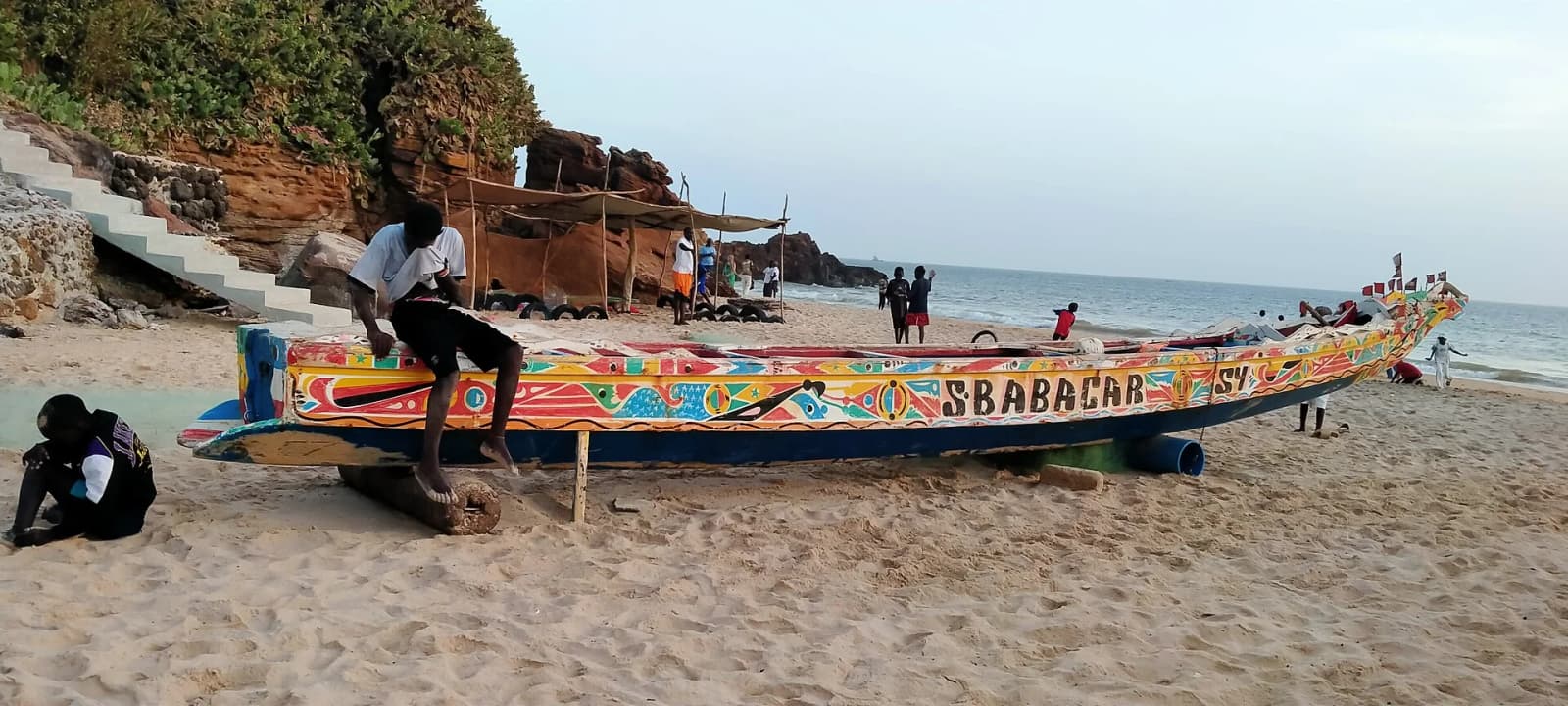
A wooden boat carrying migrants towards Spain's Canary Islands struck rocks and capsized off Yenne, a coastal town south of Senegal's capital Dakar, in the early hours of 18 November 2026. At least one person died and dozens are feared missing, according to local officials, survivors and aid workers quoted by international news agencies.
Ousmane Sène, secretary general of the Yenne mayor's office, said the accident happened at about 3 am and that the boat was already on the shore when officials arrived, the Associated Press (AP) reported. Oumar Sow, speaking for the village chief, told Agence France-Presse (AFP) it happened around 2 am. "You could hear screams coming from the canoe, audible even from the beach," he said, as quoted by InfoMigrants.
How many people were on board?
The exact number is not yet known. A survivor told Reuters about 50 people were aboard, according to Adama Mbengue, president of the local group Action for Human Rights and Friendship, while other survivors said there were about 100, including five women. Reuters, citing the local organisation, said dozens were missing.
Firefighters recovered one body at the scene. Two more bodies were found in nearby villages, but AP reported it was not clear whether those people drowned in the same incident. Police arrested one survivor, according to AP.
Search and investigation
Two fire department inflatable boats resumed searching on Wednesday afternoon and the search was due to continue on Thursday, InfoMigrants reported. Officials found eight identity documents, several mobile phones and a school enrolment document on the beach. Local official Mamadou Ndione said Yenne had become a departure point and that smugglers were recruiting boat pilots in the village.
Why are so many boats leaving now?
Departures along the Atlantic route from West Africa have surged in recent weeks. More than 11,000 migrants reached the Canary Islands in the first two weeks of November 2026, according to figures cited by AP and AFP, a number AP said was more than half of the total for all of 2025. Senegal's navy said on Wednesday it had rescued more than 1,400 migrants at sea in just 48 hours.
The United Nations refugee agency (UNHCR) recorded 598 people dead or missing on it in 2026 up to 15 November, InfoMigrants reported, and aid groups warn that many shipwrecks go unrecorded. Days before the Yenne sinking, a boat went down near Kébémer in northern Senegal; AP put that death toll at at least 39, while AFP reported at least 43.
The reports point to several reasons for the departures, including economic hardship, a lack of jobs, political instability and regional conflicts, along with tighter European visa and border rules. According to the European Union's border agency, Frontex, Senegalese nationals make up most people on the route.
What has Senegal's government said?
President Bassirou Diomaye Faye on Wednesday spoke out against the renewed wave of departures and called for stronger controls along the coast. He said "the acceleration and complexity of irregular migration" required urgent action, and asked for a full report on possible solutions. He also called for stronger policies on youth employment, vocational training, entrepreneurship and women's economic empowerment, and for reviving agriculture and fishing. Senegalese authorities have made dozens of arrests as part of a crackdown on the route, AP reported.
What happens next
The final number of dead and missing is not yet confirmed and may change as searches continue and survivors are interviewed. Investigators are also expected to look into who organised the voyage.
Photo source · Salma03regine, CC BY-SA 4.0