Nearby dwarf galaxies appear to have lost much of the oxygen created by their stars, according to research highlighted by NASA on November 2. The GLOW project examined 37 small, gas-rich galaxies, combining Hubble observations with other telescope data to reconstruct their chemical histories.
The researchers’ paper reports that the galaxies retained between 4 and 25 percent of the oxygen produced by stellar processes, with an average of about 11 percent. Almost all the retained oxygen was found in gas rather than stars. The amounts were generally lower than predictions from computer simulations of galaxy evolution.
Hubble’s images helped the team resolve individual stars and estimate how the galaxies formed stars over time. The analysis also used observations from the retired Spitzer Space Telescope and radio facilities.
NASA says winds associated with massive stars and supernova explosions may carry oxygen away. An important question remains unresolved: whether most of the missing material sits in gas surrounding the galaxies or has escaped farther into intergalactic space.
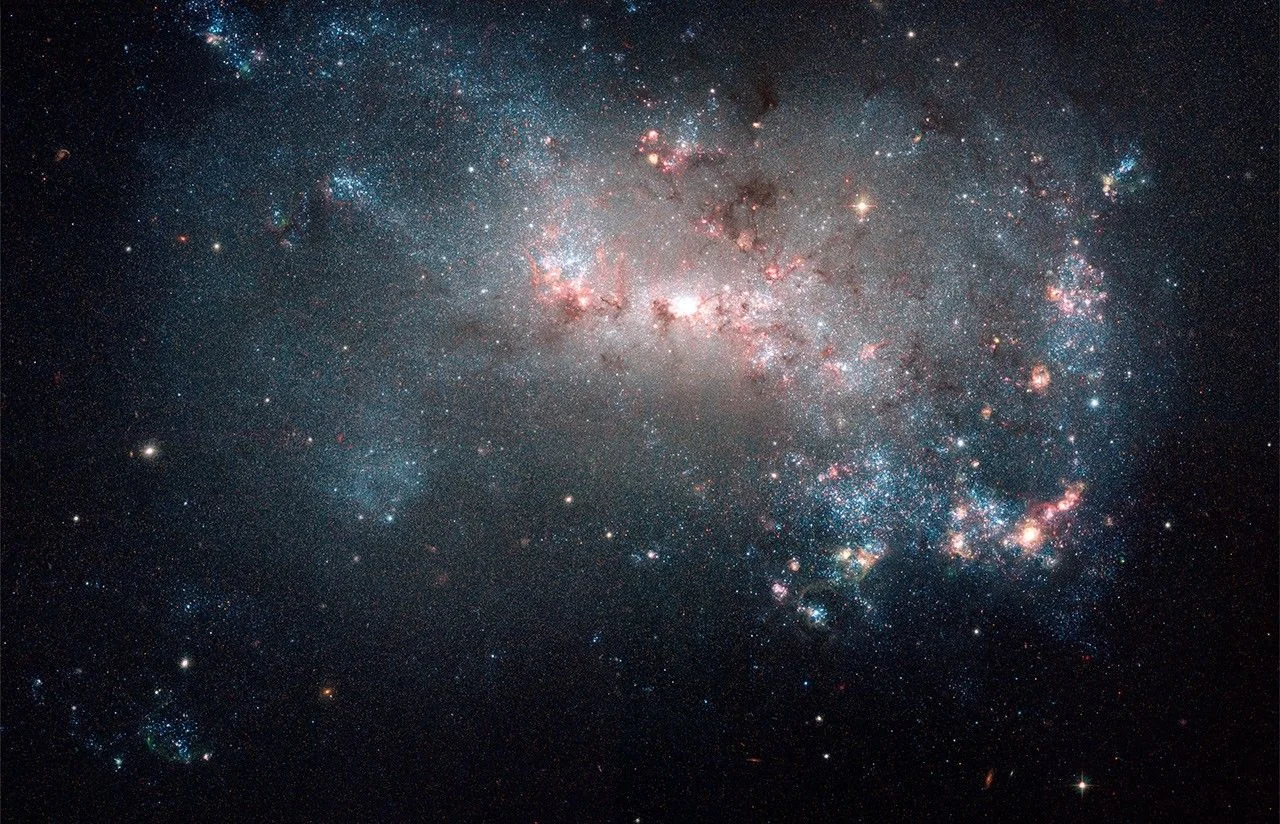
A Hubble view of the dwarf galaxy NGC 4449, used by NASA to illustrate its November 2 report. This is an archival astronomical observation, not a new photograph taken on the announcement date. Image: NASA, ESA, Hubble Heritage–ESA/Hubble Collaboration, Alessandra Aloisi (STScI, ESA). NASA media-use guidelines.