Indian scientists have found three gene variants linked to digesting milk in adulthood that had never before been recorded in Indian populations. They found them in communities of the Himalayan region and the neighbouring hills. The study appeared online on 13 November 2026 in Scientific Reports, an open-access journal from the Nature Portfolio. It suggests that the genetic basis of milk digestion in these groups is closer to that of Tibetans than to that of most people in mainland India.
What the researchers looked at
Most mammals lose the ability to digest lactose, the sugar in milk, after weaning, because the body stops making the enzyme lactase. Some people keep making it into adulthood. Scientists call this trait lactase persistence. It is linked to small DNA changes in a short control region that sits about 14,000 DNA letters upstream of the lactase (LCT) gene.
The team includes researchers from the University of Calcutta and Banaras Hindu University. They collected saliva samples from 618 healthy, unrelated men aged 20 to 65 from 17 Tibeto-Burman-speaking communities in the Indian Himalayan and adjoining regions. For comparison they added 36 men from the Khasi tribe and 26 from the Santhal tribe. They then compared these results with published data on about 2,200 people from 103 Indian populations.
Four variants, three new to India
The researchers sequenced the 100-base-pair control region and found four variants. One, known as -13910C>T, is the variant long associated with lactase persistence in Europeans, and it is already known to be widespread in India. The other three, -13838G>A, -13906T>A and -13908C>T, had earlier been described in Tibetans and are reported here for the first time in any Indian population.
The European-linked variant was much rarer in the Himalayan groups. Its frequency was 1.18 per cent, against a nationwide figure of 10.3 per cent reported in earlier work. Among the communities studied, it was most common in a Bhutia sample (4.76 per cent), followed by Tamang (4.17 per cent) and Sherpa (3.13 per cent).
Earlier studies had identified the Tibetan-type variant, -13838G>A, as the main contributor to lactase persistence in Tibetans. It turned up in 19 people across seven of the communities, with an overall frequency of 1.4 per cent. It was most common in the Bhutia, Tamang and Tibetan samples. Every carrier of each variant had only one copy. Two variants tied to milk digestion in parts of Africa and Arabia were absent.
Why it matters
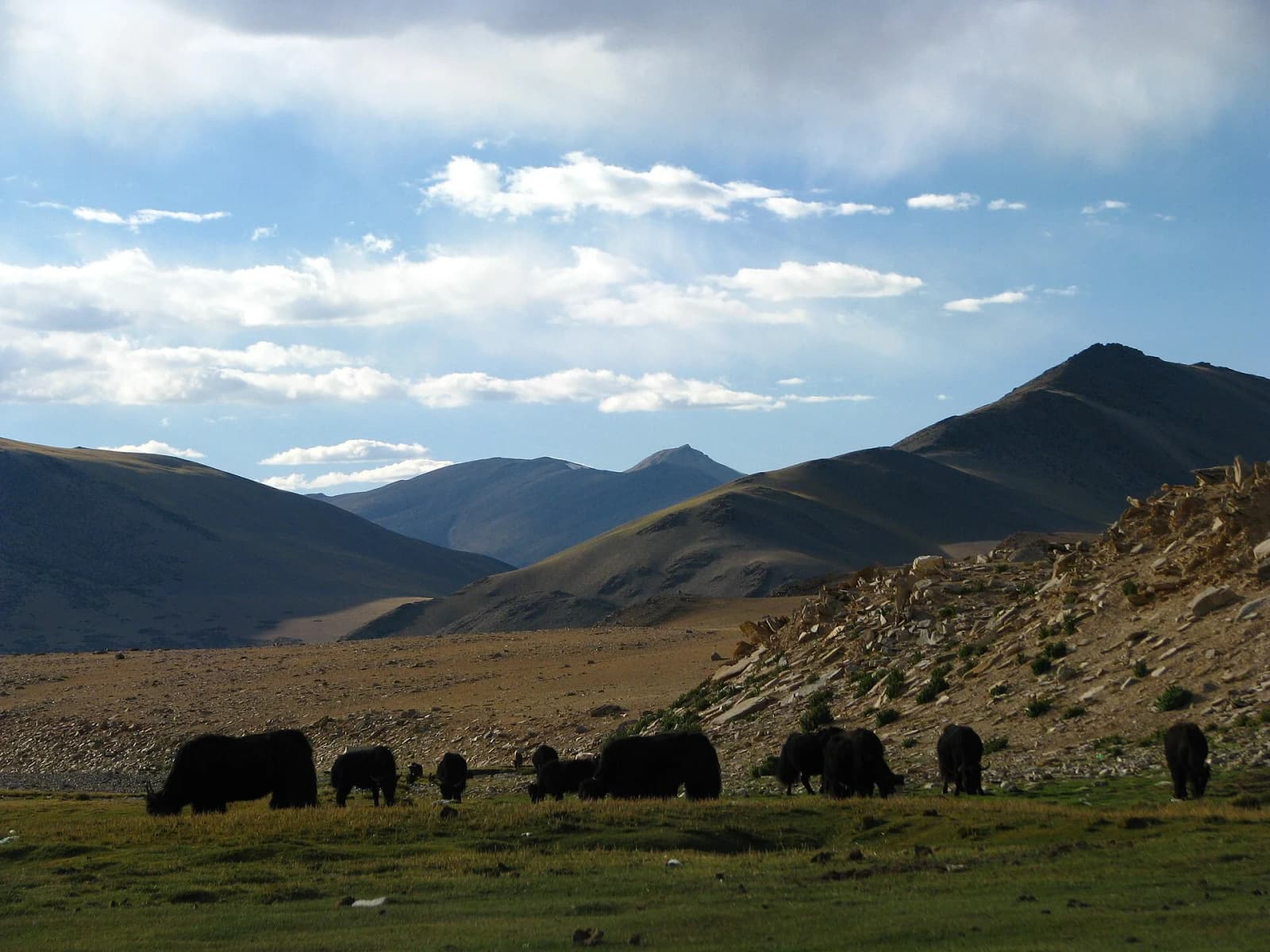
Many Himalayan communities have long herded cattle and yaks, partly because farmland is scarce and conditions are harsh. The paper lists groups such as the Changpa, Brokpa, Gaddi, Bhutia, Monpa and Sherpa as traditional herders. The authors say that finding both the European-linked and the Tibetan-linked variants at noticeable levels fits the region's mixed ancestry. Its people are genetically distinct from mainland Indians and share part of their ancestry with Tibetans.
The authors also note that India is one of the world's largest producers of milk, accounting for about 24 per cent of global output. Yet earlier research found that the common European-linked variant alone could not explain how widely milk is consumed in the country. They say this points to other variants that have not yet been explored.
Limits and next steps
The study is genetic only. The researchers did not test whether participants could actually digest lactose, and the sample included men only. The new variants appeared at low frequencies and only in single copies. Larger studies that combine DNA analysis with tests of milk tolerance would be needed to show how much these variants matter for people in the region. The authors argue that studying many populations side by side helps explain how lactase persistence arose and spread around the world.