The Supreme Court on 20 November 2026 dismissed the Karnataka government's appeal against a Karnataka High Court judgment that allowed bike taxis to operate in the state, leaving services run by Ola, Uber and Rapido free to continue in Bengaluru and elsewhere in Karnataka. MapMyTimes reported the ruling here. The decision has revived a question many commuters and riders are asking: can a state government simply ban bike taxis? Here is what is known so far.
What did the Supreme Court decide?
The Supreme Court refused to interfere with the High Court's ruling, so bike taxis can keep running in Karnataka subject to the state's permits and conditions. A bench of Justice Satish Chandra Sharma and Justice N. Kotiswar Singh dismissed the state's appeal and also turned down challenges from five auto-rickshaw and taxi driver associations, according to Bar & Bench and India Legal. During the hearing, Justice Sharma remarked that it was "better to regulate it than ban it". Reports describe these as oral observations from the bench; a detailed written order had not been reported at the time of writing.
The bench also questioned the state's concern about congestion, noting that a motorcycle takes up less road space than a car. Justice Sharma said young women working in his office used bike taxis because, in their words, an auto-rickshaw cost "five times" as much.
What is a bike taxi, legally?
A bike taxi is a motorcycle that carries a paying passenger, usually booked through an app, but Indian central law has no separate category for it. In March 2026 the Union government said that "bike taxis" are not defined in the Motor Vehicles Act, 1988, and do not have a distinct legal status under central law, according to a Bar & Bench report. In practice, the question is whether a motorcycle can be registered as a transport vehicle and given a permit to carry passengers, and whether a privately registered motorcycle can be used through an app.
Why is this in the news now?
It is in the news because the Supreme Court's dismissal ends, for now, a legal fight in Karnataka that has run since 2025. The key dates are:
- April 2025: Justice B. Shyam Prasad of the Karnataka High Court ordered bike taxi services to stop within six weeks, holding that aggregators could not offer them until the state notified rules under the Motor Vehicles Act.
- 1 July 2025: The Union Ministry of Road Transport and Highways issued the Motor Vehicles Aggregator Guidelines 2025.
- 23 January 2026: A High Court division bench of Chief Justice Vibhu Bakhru and Justice C.M. Joshi set aside the single-judge order, on appeals by Ola's parent ANI Technologies, Uber, Rapido's parent Roppen Technologies, motorcycle owners and the Bike Taxi Welfare Association.
- 20 November 2026: The Supreme Court dismissed Karnataka's appeal.
Can a state ban bike taxis?
Going by the Karnataka High Court judgment that now stands, a state cannot refuse permits simply because the vehicle is a motorcycle, but it can attach regulatory conditions. The division bench held that motorcycles can be registered as transport vehicles and run as contract carriages, directed transport authorities to consider such applications, and said a blanket refusal was not legally sustainable, according to reports of the judgment.
The central guidelines also leave the decision to states. Clause 23 of the Motor Vehicles Aggregator Guidelines 2025 says a state government may allow aggregators to use non-transport (private) motorcycles for passenger journeys, using its power under Section 67(3) of the Motor Vehicles Act, and may charge aggregators a daily, weekly or fortnightly fee for this. Because the wording is "may", the guidelines enable states rather than compel them. MapMyTimes has explained the wider guidelines, including fare and surge rules, here.
What is not settled is how far the ruling reaches outside Karnataka. The High Court judgment applies in Karnataka, and the Supreme Court dismissed an appeal rather than laying down a nationwide rule in a reported written judgment. Whether other states' restrictions would survive a similar challenge would depend on their own rules and on future court cases.
What did Karnataka argue?
Karnataka argued that bike taxis raise concerns about passenger safety and insurance cover and lack adequate safeguards, according to court reports. It also raised traffic congestion, pointed out that the Motor Vehicles Act defines motorcycles and motor cabs separately, said its aggregator rules did not provide for bike taxis, and relied on a 2019 expert committee report. Bar & Bench reported that the state was willing to consider bike taxis elsewhere in Karnataka but opposed them in Bengaluru. The driver associations argued that bike taxis were being allowed without the obligations placed on autos and cabs.
The aggregators told the court that about 4.5 lakh passengers in Karnataka use bike taxis and relied on central notifications from 2004 and 2024. When the bench asked, the Centre confirmed that its notifications allow motorcycles to be used as taxis, Bar & Bench reported.
How does it affect you?
If you live in Karnataka, bike taxis booked through apps can continue, but riders and operators still need the registrations and permits the state grants. The High Court said transport authorities must consider applications and cannot reject them only because the vehicle is a motorcycle; it did not hand out automatic clearance. Commuters may see the state set conditions on matters such as insurance and safety, which it is allowed to do. Auto and taxi drivers, whose unions opposed bike taxis, face continued competition.
What happens next?
The next step is likely to be the rules and permit decisions the Karnataka transport department makes after the ruling. The state has not publicly announced its response in the reports MapMyTimes reviewed, and neither Ola, Uber nor Rapido had issued statements in those reports. Readers should watch for any written Supreme Court order, which may clarify the court's reasoning, and for whether other states revisit their own bike taxi rules.
What is established and what is uncertain
- Established: The Supreme Court dismissed Karnataka's appeal on 20 November 2026, and the High Court's 23 January 2026 judgment allowing bike taxis with state regulation stands.
- Established: The 2025 central guidelines let states permit private motorcycles on aggregator apps but do not force them to.
- Uncertain: What conditions Karnataka will set, how quickly permits will be processed, and whether the ruling will influence other states.
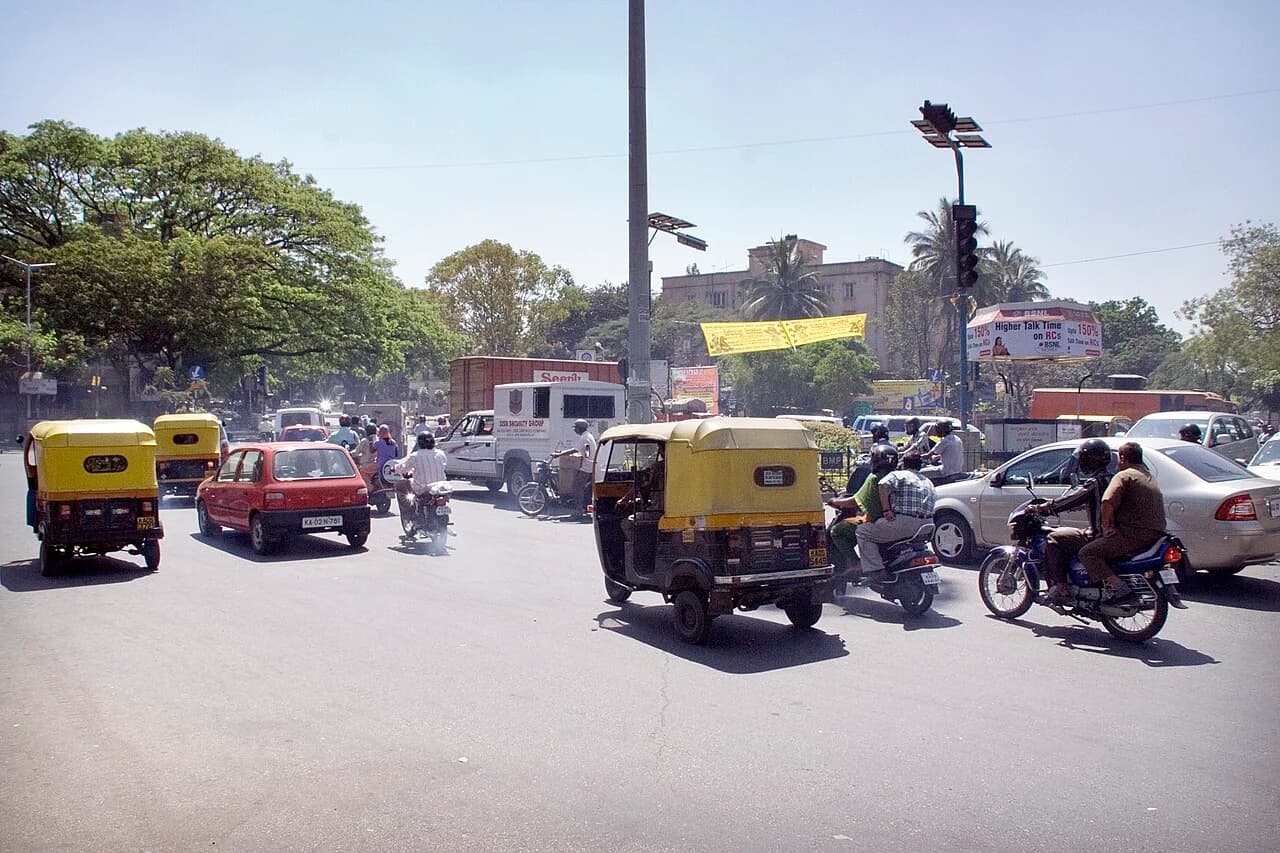
Photo source · Eirik Refsdal, CC BY 2.0