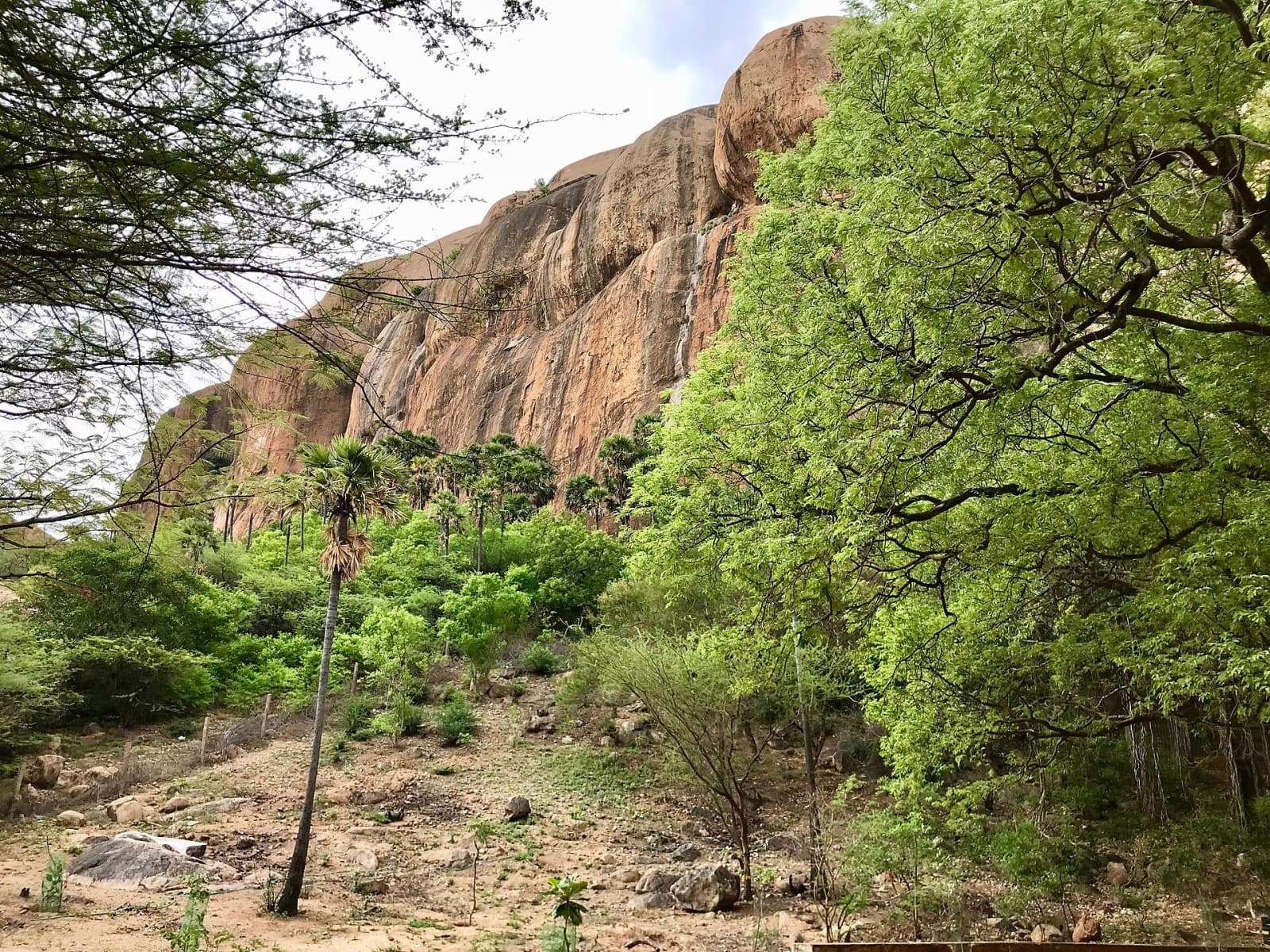
The Supreme Court on 20 November 2026 allowed the ceremonial Karthigai Deepam lamp to be lit on 24 November at a disputed stone pillar on Thiruparankundram hill in Madurai, Tamil Nadu, as a one-time measure, while staying the Madras High Court's findings on the nature of the pillar and the land it stands on, LiveLaw and Bar & Bench reported.
A bench of Justices Aravind Kumar and Vipul M. Pancholi passed the interim order on an appeal filed by the Tamil Nadu government against the High Court verdict. The pillar, referred to as the Deepathoon, stands near the Sikandar Badusha Dargah on the hill, which is also home to the Arulmigu Subramania Swamy temple.
What exactly did the Supreme Court allow?
The court permitted only a small team organised by the temple administration (Devasthanam) to light the lamp at the pillar on 24 November, this year's Karthigai Deepam day. The Madurai District Collector will decide the size and make-up of the team in consultation with the temple's Executive Officer, the Archaeological Survey of India and the Madurai Police Commissioner, and will act as nodal officer.
According to both reports, the general public will not be allowed to go to the site, and processions, public gatherings, slogan-raising and demonstrations are barred. The district administration will fix the time and route, and the team must leave immediately after the ritual. Excavation, construction and structural changes at the site are prohibited, and access to and worship at the dargah and mosque must not be disturbed. The court also allowed central forces to be deployed for security if needed, and asked the Collector to file a compliance report within three days of the festival.
Is this a final decision on the custom?
No. The bench made clear that the arrangement is not a ruling that the pillar has historically been a place of customary worship, and does not decide whether lighting a lamp there is an essential religious practice or whether anyone holds an enforceable right. Neither the permission nor the ceremony can be cited as proof of custom or as a basis for permission in future years, the court said.
LiveLaw quoted the bench as saying that the opportunity to perform the festival on 24 November, if denied, "cannot be restored by a subsequent adjudication", while the ceremony, once performed, "cannot be undone" — which is why the interim arrangement had to be narrowly confined. The court said the case raises important questions, including the scope of religious rights under Articles 25 and 26 of the Constitution, which it will take up at a later stage. It noted that two High Court forums had allowed the ceremony, but said its order should not be read as approving the High Court's reasoning.
How did the dispute reach the Supreme Court?
According to Bar & Bench, the case began when the temple's Executive Officer turned down a devotee's request to light the lamp at the pillar. On 1 December 2025, Justice G.R. Swaminathan of the Madras High Court held that the pillar was a Deepathoon and directed the temple to light the lamp there in addition to the customary site. The lamp was not lit at the pillar that year after police blocked access, citing a prohibitory order. On 6 January 2026, a Division Bench upheld the direction and held that the pillar stood on temple land, prompting the appeals.
The Supreme Court has stayed paragraphs 1 to 140 of that Division Bench judgment, as far as the present challenge is concerned, until further orders, LiveLaw reported.
What happens next?
The Madurai district administration must now settle the arrangements for 24 November. The wider questions on religious rights and the status of the pillar remain pending before the Supreme Court. The reports did not mention a date for the next hearing.
Photo source · Ms Sarah Welch, CC BY-SA 4.0