BepiColombo, the joint Mercury mission of the European Space Agency (ESA) and the Japan Aerospace Exploration Agency (JAXA), is scheduled to begin entering orbit around Mercury on 21 November 2026, according to ESA's mission updates page. Mission control is at ESA's operations centre in Darmstadt, Germany. The spacecraft was launched more than eight years ago. Here is what Saturday's step involves, why it has taken so long, and what is still uncertain.
What is BepiColombo?
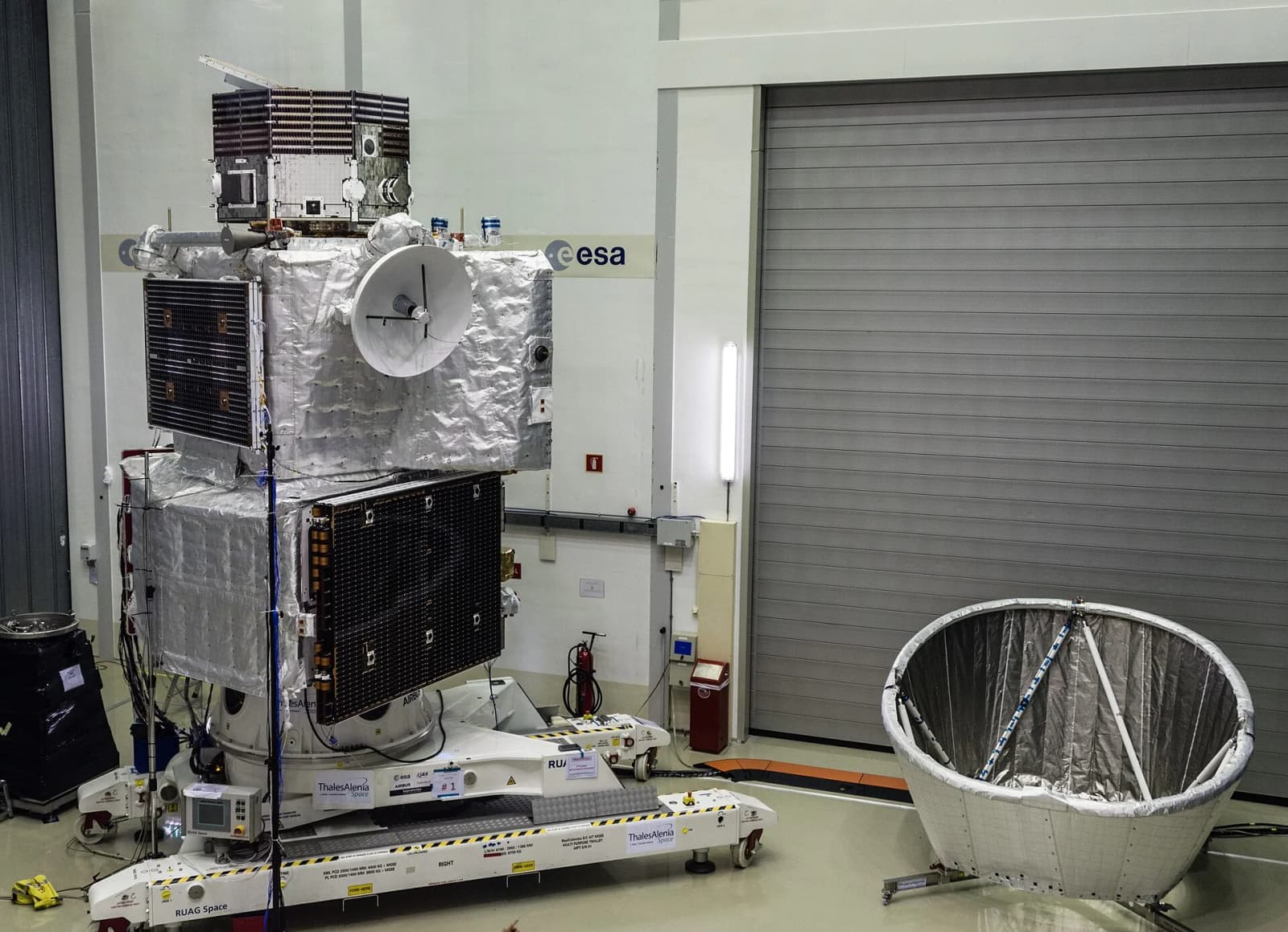
BepiColombo is a mission that will put two spacecraft in orbit around Mercury, the planet closest to the Sun, at the same time. It is the first mission to do that. ESA built the Mercury Planetary Orbiter (MPO). JAXA built the Mercury Magnetospheric Orbiter, known as Mio. For most of the journey the two flew stacked together, attached to an ESA propulsion stage called the Mercury Transfer Module (MTM).
According to ESA's mission fact sheet, the stack weighed about 4,100 kg at launch, including roughly 1,400 kg of propellant. MPO carries 11 instruments and Mio carries five. An Ariane 5 rocket launched the spacecraft from Kourou, French Guiana, at 01:45:28 UTC on 20 October 2018. The mission is named after Giuseppe "Bepi" Colombo (1920–84), an Italian mathematician and engineer.
Why is it in the news?
It is in the news because on 21 November the spacecraft is due to begin orbit insertion, the point at which it stops flying past Mercury and starts orbiting it. ESA's operations team says the insertion is the first of 16 burn manoeuvres that will lower and reshape the orbit step by step through March 2027. MapMyTimes reported the approaching milestone on Friday.
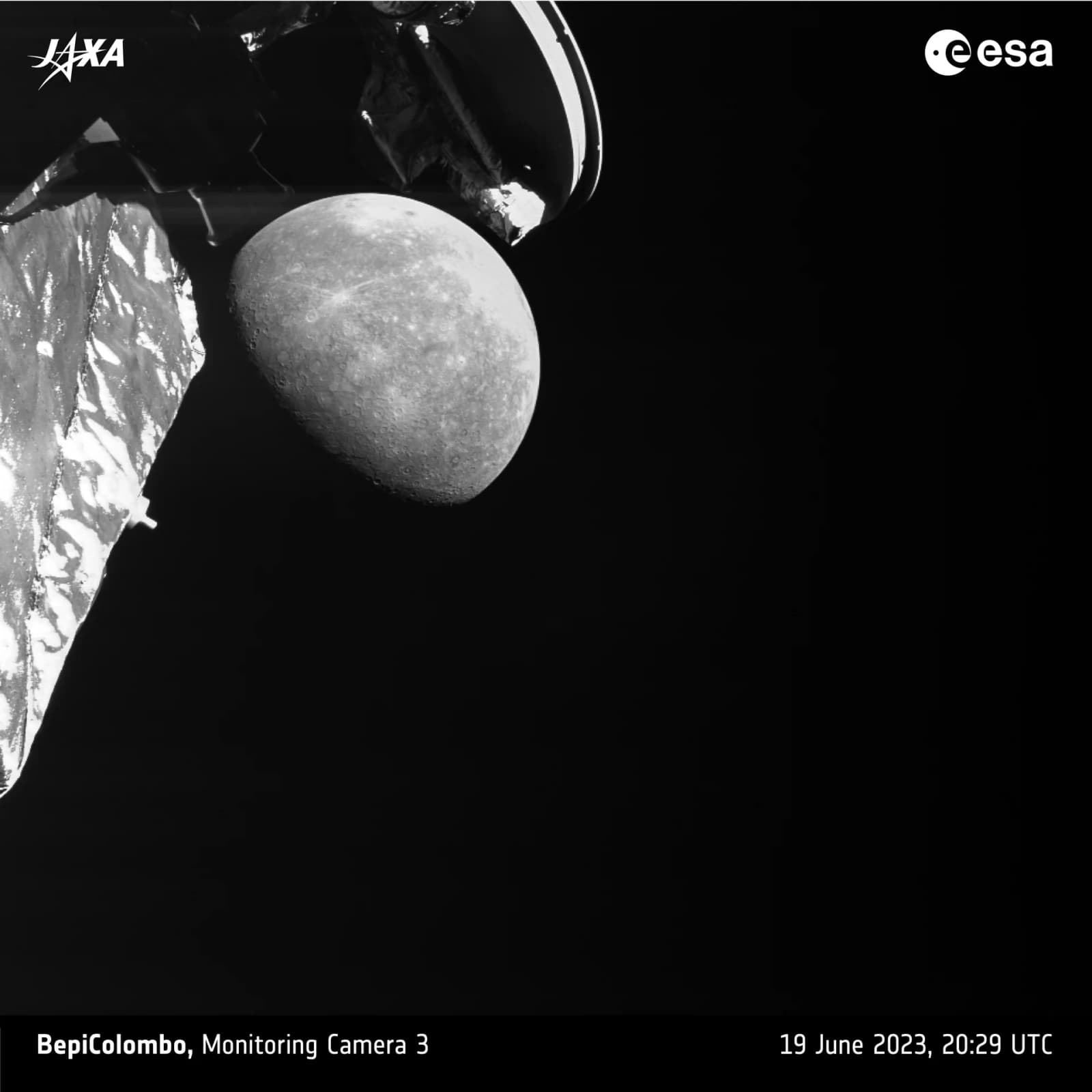
Reaching Mercury is harder than it sounds. ESA's fact sheet says that because of the Sun's strong gravity, putting a spacecraft into a stable orbit around Mercury takes more energy than sending one to Pluto. To lose enough speed, BepiColombo made nine gravity-assist flybys: one of Earth, two of Venus and six of Mercury, as Space.com has reported.
Why did it take eight years?
The trip was always going to be long, but a fault added almost a year. Space.com reported that in April 2024 a solar-panel problem reduced the power available to the transfer module's electric thrusters. Engineers designed a lower-thrust trajectory, and arrival moved from December 2025 to November 2026.
ESA's update log sets out the main steps since then:
- 3 September 2026: The transfer module separated. Ground stations at Cebreros in Spain and Malargüe in Argentina picked up MPO's signal at 14:52 BST, and its solar panels were charging the batteries.
- 15 September: All of MPO's instruments were switched on for the first time since the separation. The BELA laser altimeter fired more than 700,000 pulses over 21.5 hours.
- 24 September: MPO fired its thrusters for 8 minutes 42 seconds. The burn changed its speed by 11.4 m/s and was the first planned course correction after the separation.
- 29 October: Mission control finished its last arrival simulation. The rehearsals had started in June.
How does it affect you?
It has no direct effect on daily life. Its value is scientific. Mariner 10 and MESSENGER, both NASA missions, are the only spacecraft to have explored Mercury before. Mariner 10 flew past the planet three times in 1974–75, and MESSENGER orbited it from 2011 to 2015. BepiColombo will be the second mission to orbit Mercury. It will be the first to study the planet from two orbits at once.
ESA lists several open questions the mission is meant to answer. One is how a planet forms and changes so close to its star. Others are what Mercury is made of and what its interior looks like, where its magnetic field comes from, and what the deposits in its polar craters are made of, which may include water ice. The mission will also test Einstein's general theory of relativity. According to the fact sheet, MPO will fly a polar orbit of 480 × 1,500 km with a 2.3-hour period. Mio's polar orbit will be much more stretched, at 590 × 11,640 km with a 9.3-hour period, so that it can study Mercury's magnetic environment. Near Mercury the spacecraft will face temperatures above 350 °C.
What happens next?
If the insertion goes as planned, ESA and Space.com describe the following schedule:
- 9–10 December 2026: MPO and Mio separate. Mio goes into its own elliptical polar orbit.
- 16 December 2026: MPO releases the Mio Sunshield and Interface Structure (MOSIF), which shielded Mio during the cruise.
- March 2027: MPO reaches its final science orbit.
- April 2027: Science operations begin.
The fact sheet plans for one Earth year of operations in Mercury orbit, equal to four Mercury years, with an optional one-year extension. ESA BepiColombo operations manager Nacho Clerigo said in ESA's operations article: "The arrival phase is not a single event, but six months full of one-of-a-kind activities and critical operations."
What is established and what is not
Established: The launch date, the flyby route, the 2024 power problem and the September 2026 separation and test burn are all documented by ESA or widely reported. ESA has said that all of MPO's instruments are in good health according to early analysis.
Not yet known: The ESA pages checked for this article do not give a time of day for the 21 November insertion. The dates after it are plans, not results. During the rehearsals, an anomaly in one simulation forced controllers to abort a planned separation scenario and run it again, ESA said. That shows how much depends on precise coordination between the two spacecraft. The first confirmation that the insertion worked is expected to come from ESA.
Photo source · ESA/BepiColombo/MTM, CC BY-SA 3.0 IGO