India will put more than 7 million euros into rebuilding two research beamlines at Italy's Elettra Sincrotrone Trieste, joining the facility's Elettra 2.0 upgrade as a co-partner. The investment will be spread over five years starting in 2026-27, the Ministry of Science and Technology said on Saturday.
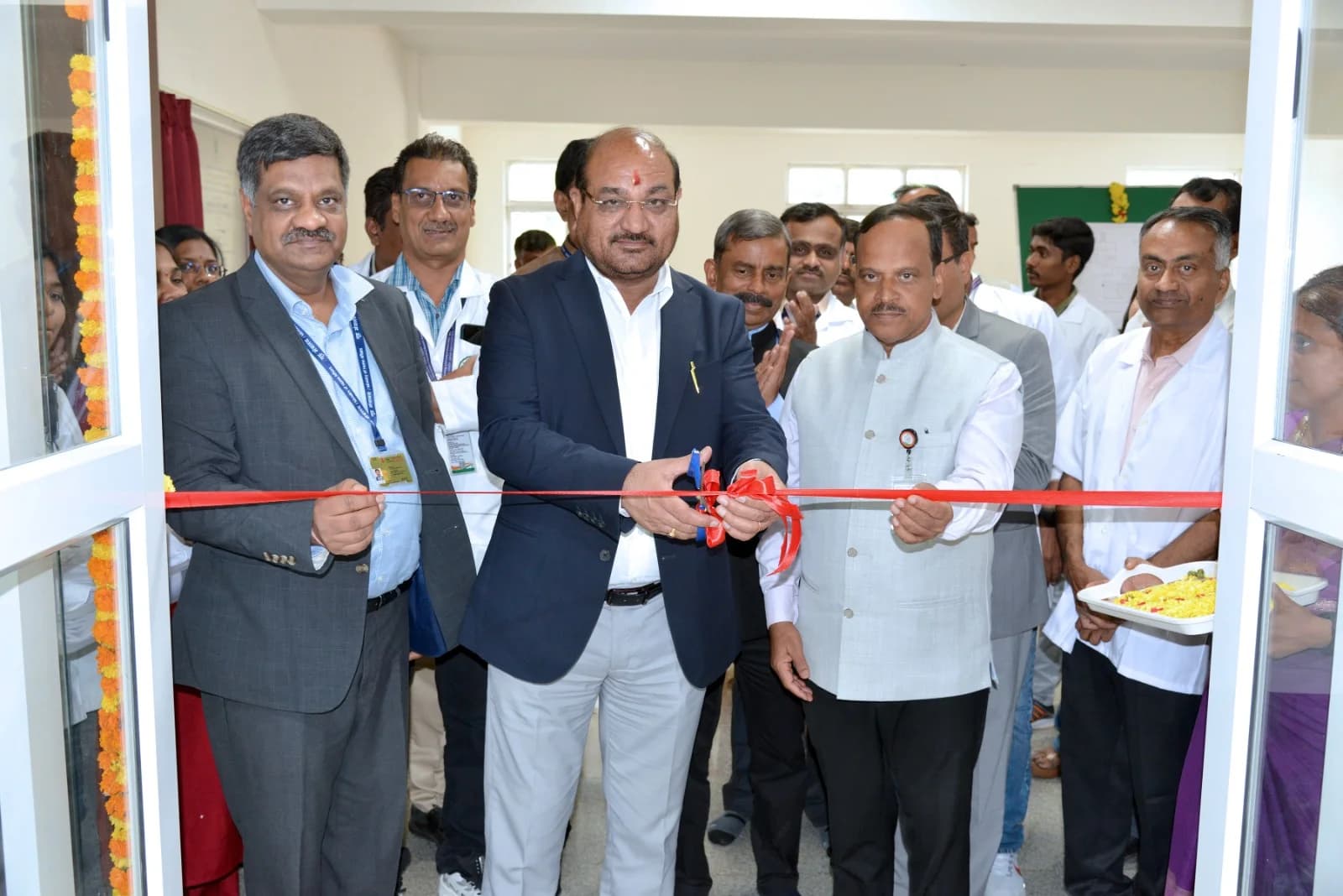
Union Minister of State (Independent Charge) for Science and Technology and Earth Sciences Dr Jitendra Singh announced the commitment on 13 November 2026, during a visit to the synchrotron facility in Trieste.
What India is paying for
Under Elettra 2.0, the two beamlines that currently serve Indian researchers, known as XRD2 and Xpress, will be taken out of service and replaced with two new ones with improved capabilities, according to the ministry.
- Micro-XRD (μXRD): a microfocus beamline for macromolecular crystallography, a technique used to work out the structures of large biological molecules.
- Xpress Superbend (Xpress-SB): a beamline for diffraction studies under high pressure.
The ministry said the money will go towards both research infrastructure and building human resource capacity. It expects the upgraded facilities to open fresh possibilities in chemistry, physics, advanced materials and structural biology, for Indian scientists as well as researchers from other countries.
A partnership going back to 1998
Indian scientists have been running experiments at Elettra since 1998, the ministry said, and India is now the facility's second-largest user after Italy itself. Indian groups have sent Elettra more than 1,100 experimental proposals, placing India second after Italy and just ahead of France, which has submitted 1,098.
The new commitment follows an earlier Indian investment. The Department of Science and Technology (DST) co-funded the construction of the existing XRD2 and Xpress diffraction beamlines with the Italian side, contributing around ₹22 crore. Those beamlines were jointly inaugurated on 20 October 2016. Since then, roughly 50 to 60 Indian scientists have travelled to Trieste each year to carry out experiments, the ministry said.
DST has also funded researchers' access through the Indo-Italian Executive Programme of Cooperation (EPOC). Under EPOC 2022-2024 it sanctioned ₹2 crore over three years to support visits by 50 Indian researchers a year. The 2025-2027 programme includes a proposed allocation of ₹1.5 crore over three years for the same purpose.
Why it matters
Synchrotron beamlines are specialised instruments, and researchers use them in allocated shifts. By co-funding dedicated beamlines, India secures a continuing route for its scientists to run experiments in areas such as protein structure and high-pressure materials research. The ministry described the move as the start of a significant new phase in the India-Italy scientific relationship.
What happens next
DST had already agreed to take part in redeveloping the India-centric beamlines and a Letter of Intent had been signed, the ministry said. The investment period begins in 2026-27 and runs for five years. The ministry did not give a timeline for when the new μXRD and Xpress-SB beamlines will be commissioned.