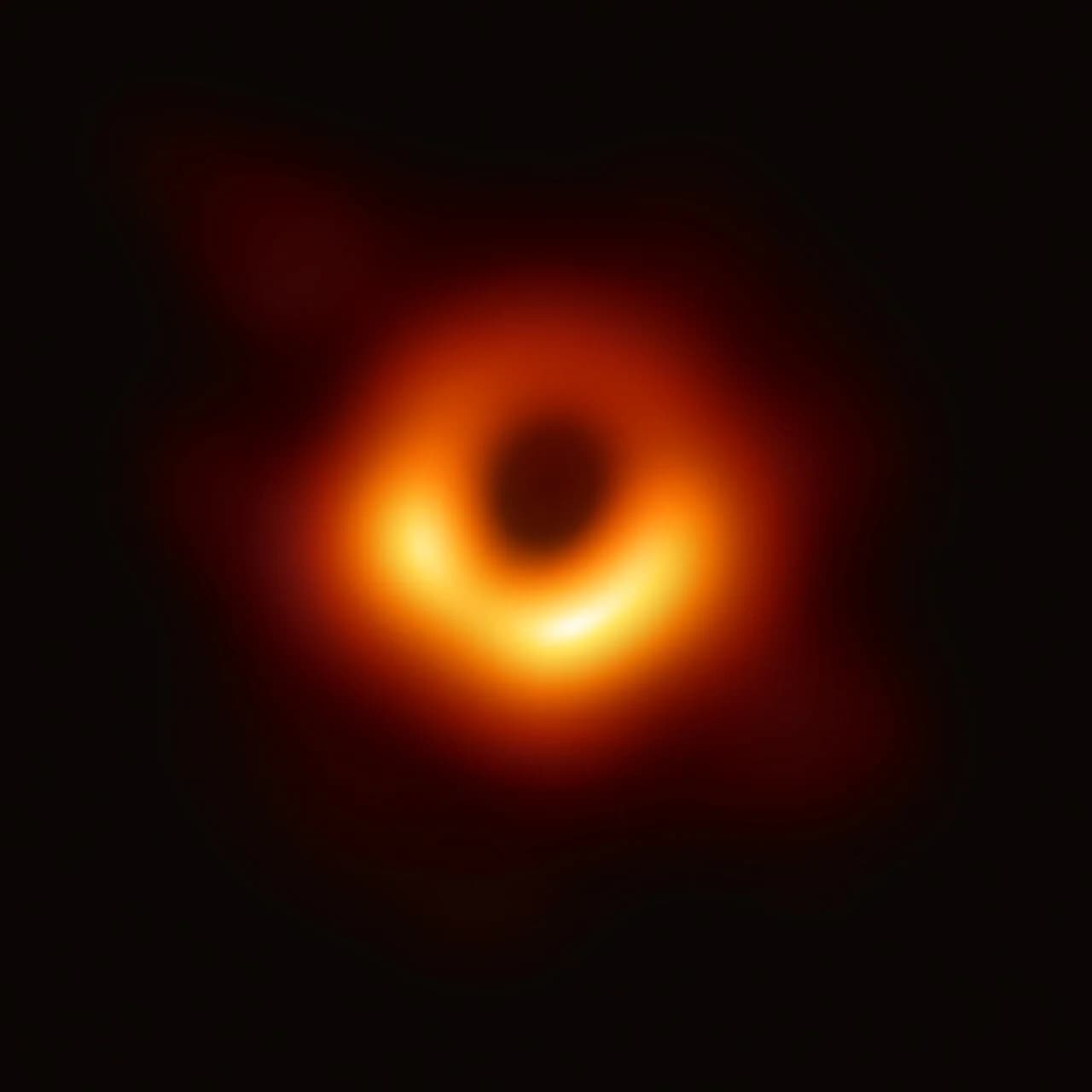
Seven years after the world first saw a black hole, a team of Australian scientists has tested that famous picture with an independent method and reached a clear verdict: the glowing ring at the heart of galaxy M87 is real. The study, by researchers at CSIRO, Australia's national science agency, was published in the journal Nature on 11 November 2026.
Revisiting a landmark image
The Event Horizon Telescope (EHT) Collaboration unveiled the first image of a black hole on 10 April 2019. It showed the supermassive black hole at the centre of M87, a galaxy about 55 million light-years from Earth. Since then, scientists have debated whether the finer features of that ring could be trusted, the CSIRO authors noted. They added that only one of the original EHT imaging teams had fundamentally questioned whether the source is ring-like at all.
The new paper is authored by Samuel Lai, Nithyanandan Thyagarajan, Ivy Wong and Foivos Diakogiannis. Lai and Thyagarajan described the work in an article for The Conversation, which CSIRO also published.
Triplets instead of pairs
Radio telescope arrays such as the EHT normally combine measurements from pairs of dishes. The CSIRO team instead used what are called closure invariants, which combine measurements from three telescopes at a time. According to the researchers, this approach cancels out errors introduced by Earth's atmosphere and by the instruments themselves, leaving cleaner information about the shape of the object being observed.
An AI that had never seen a black hole
To turn that data into a picture, the team used a machine-learning imaging method called GenDIReCT. To avoid steering the result towards a ring, they trained it only on ordinary pictures such as cats, dogs and cars, so it had no prior idea of what a black hole should look like.
The researchers said they first tested the method on structures that are not rings and on real observations of other galaxies, including Centaurus A. They then locked the procedure before running it on the EHT's M87 observations, which they processed on 4 December 2025, to limit human bias. A second, more traditional statistical imaging technique was also applied as a cross-check.
What the study found
- The ring structure appeared consistently across all the datasets analysed.
- Its diameter and overall orientation matched the EHT Collaboration's published images.
- The results fit a black hole of about 6.5 billion times the mass of the Sun, seen almost face-on.
- Finer details, such as the width of the ring and how its brightness varies around the circle, differ somewhat from the original images.
The authors call their result "a strong independent validation" of the supermassive black hole's structure at the centre of M87, and say it also helps resolve earlier discrepancies while offering a fresh view of the ring.
Why it matters and what next
Independent confirmation is a core part of science, especially for a result as celebrated as the first black hole image. By reaching the same overall picture with different mathematics and an unbiased AI model, the study strengthens confidence in what the EHT reported in 2019.
The researchers also see uses beyond astronomy. They say the technique could help in other fields that merge data from many sensors, such as medical imaging and earthquake mapping.