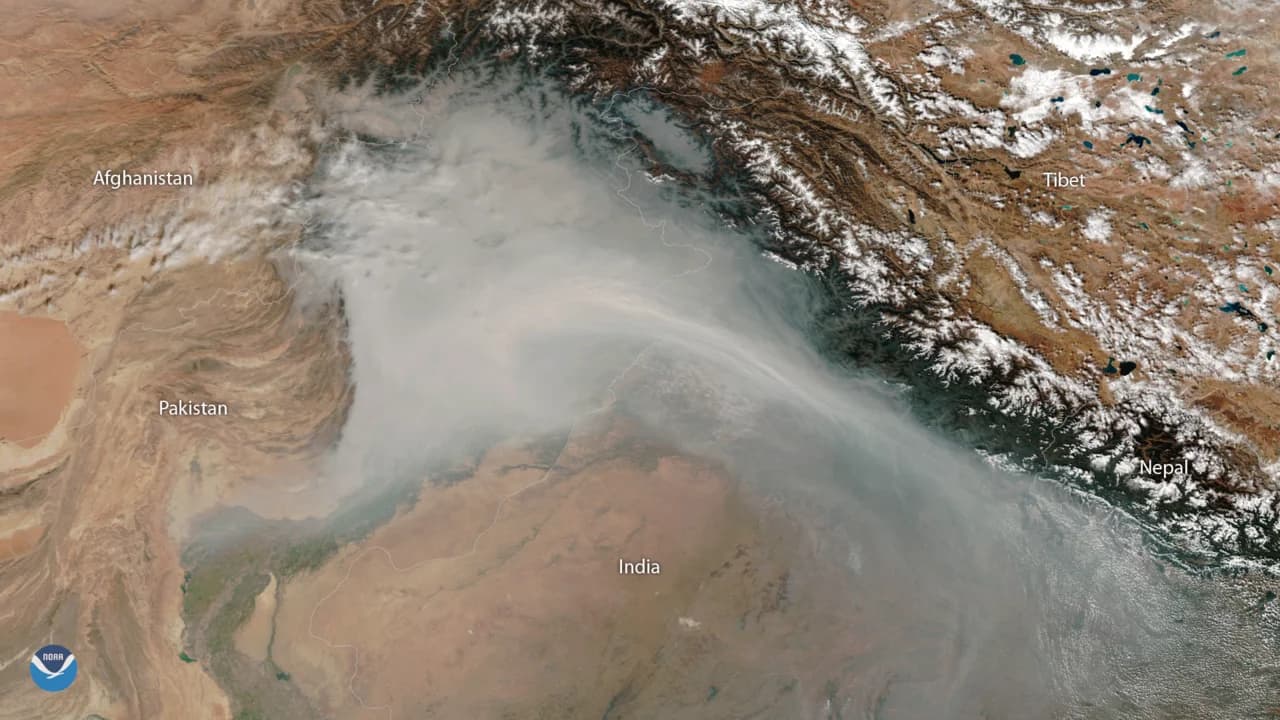
The Council of Scientific and Industrial Research's National Environmental Engineering Research Institute (CSIR-NEERI) has brought together government scientists and policymakers at its Delhi Regional Centre in Naraina, New Delhi, to look for large-scale, science-based fixes for air pollution in Delhi-NCR and the wider Indo-Gangetic Plains, the Ministry of Science and Technology said on 21 November 2026. The institute said it will turn the recommendations into a policy-level brief.
The brainstorming workshop, titled "Clean Air and Climate Resilience for the Indo-Gangetic Plains (IGP-CACR)", was held under the leadership of CSIR-NEERI Director Dr S. Venkata Mohan, according to the Press Information Bureau release. It comes as Delhi's air quality has slipped back into the 'poor' category, with a forecast of 'very poor' air this weekend.
What did the workshop focus on?
It focused on solutions that can be deployed at scale and that produce measurable improvements in air quality. Sessions covered airshed management, pollution sources, health impacts, climate vulnerability, pollution-control technologies, artificial intelligence-based decision-support systems and partnerships between institutions.
Dr S. K. Goyal, Scientist-G and Chair of CSIR-NEERI's Delhi Regional Centre, set out the main pollution challenges in the region and called for coordinated airshed management, stronger monitoring networks and an integrated mission across CSIR laboratories to turn research findings into practical measures and policy.
What did the ministries propose?
- Environment ministry: Dr N. Subrahmanyam, Scientist-E at the Ministry of Environment, Forest and Climate Change, called for a technical committee for the Indo-Gangetic Plains to identify priority areas and to plan India's Continuous Ambient Air Quality Monitoring network on a scientific basis.
- Science and Technology department: Dr G. V. Raghunath Reddy, Scientist-F at the Department of Science and Technology, suggested CSIR draw up a structured list of interventions, with suitable locations and scales, to support demonstration projects.
- Biotechnology department: Dr Balendra Singh, Scientist-D at the Department of Biotechnology, pointed to research openings in precision nutrition and the human microbiome and their links to pollution-related health effects.
- CSIR headquarters: Dr Shailaja Donempudi urged wider field use of CSIR technologies at Technology Readiness Level 6 or higher, while Dr Anirban Pal stressed technologies aimed at specific pollution sources, with clear implementation plans, responsibilities and measurable outcomes.
Who took part?
Scientists from CSIR-NEERI's four regional centres in Delhi, Mumbai, Kolkata and Hyderabad attended, along with several other CSIR laboratories, including CSIR-IIP, CSIR-CDRI, CSIR-IHBT, CSIR-IMTECH, CSIR-CRRI, CSIR-CBRI, CSIR-CMERI, CSIR-NIScPR and CSIR-NIDSA, as well as the Traditional Knowledge Digital Library and the Technology Management Directorate.
Why it matters and what comes next
The release said the workshop underlined the need to move beyond isolated measures towards a coordinated, action-oriented approach to recurring air pollution. Dr Venkata Mohan said the planned policy brief will list priority interventions, their technology readiness, possible demonstration projects and areas for collaboration, to support science-based decisions on air quality and climate resilience across Delhi-NCR and the Indo-Gangetic Plains. No date for the brief was given. For what the current pollution readings mean, see our explainer on AQI levels and GRAP stages.