Yemen's parliament has unanimously approved a bill that designates the Houthi group a "terrorist organisation" and provides for penalties of up to death for a list of offences, Anadolu Agency and Al Jazeera reported, citing the state-run Saba news agency. The vote was held on Monday, 16 November, as the internationally recognised government's forces lost ground near the Bab al-Mandeb Strait.
The bill is not yet law. It now goes to Rashad al-Alimi, chairman of the Presidential Leadership Council, for enactment.
What the bill contains
According to Anadolu, the bill has 55 articles in nine chapters and covers the group's political, military and civilian branches. It:
- criminalises the group's activities, its financing and the supply of weapons to it;
- sets penalties of up to death for specified offences, including seizing state institutions, besieging and starving cities, attacks on civilians and on international shipping, planting mines, recruiting children, and abduction and enforced disappearance;
- provides for tracing, freezing and confiscating funds and assets linked to the group;
- provides for international judicial cooperation, exchange of evidence and protection of victims' rights.
How it was passed
Lawmakers voted by video conference after two days of debate, Anadolu reported. A special parliamentary committee chaired by Deputy Speaker Mohsen Basurah had reviewed the text, with government representatives taking part. The Cabinet approved the draft on 11 October and sent it to parliament.
Parliament described passing the bill as a "national and constitutional duty", the agency said, and urged other countries to act against the group's funding and arms supplies and to help protect international navigation. There was no immediate comment from the Houthis, Anadolu reported.
The fighting around it
The vote came on the day the government military published its own account of the war. Spokesperson Colonel Majed al-Nuzaili said in a statement on X that the army had carried out 661 attacks on Houthi positions on several fronts, among them 526 artillery attacks, 67 rocket attacks, 53 drone strikes and 15 air strikes, and that 173 Houthi fighters had been killed or wounded, Al Jazeera reported. He said 71 military vehicles and other pieces of equipment were destroyed or damaged. These figures are the army's own claims.
The strikes are part of "Dawn of Yemen", the offensive the government launched on 5 October to retake Houthi-held territory, including the capital Sanaa. Government forces, backed by the Popular Resistance, are fighting in Taiz, Marib and al-Jawf provinces, according to Al Jazeera.
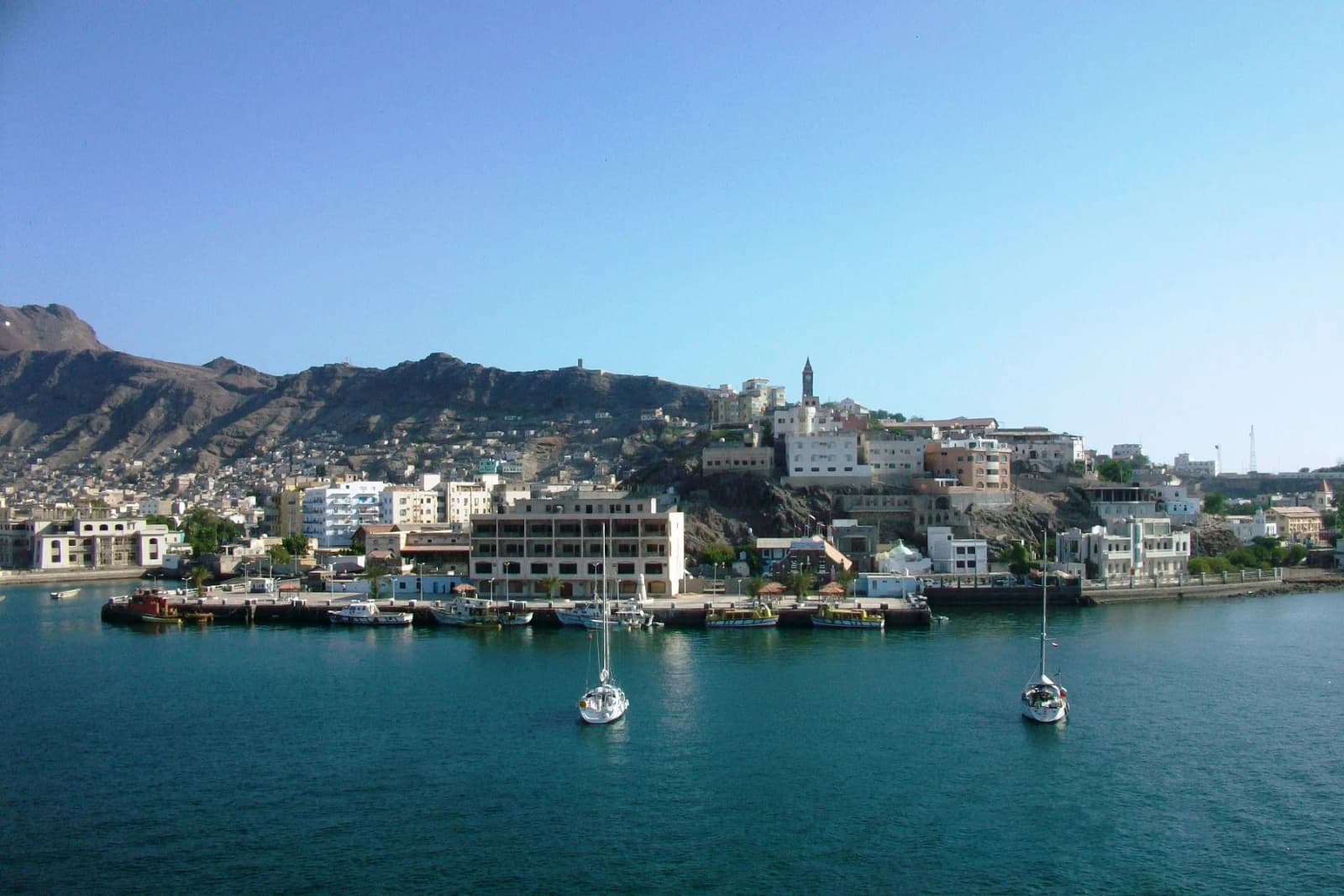
The campaign has also seen reverses. Government-aligned forces have withdrawn from positions near the Bab al-Mandeb Strait and are repositioning to defend Aden, the government's temporary capital, Al Jazeera reported. Its correspondent Yousef Mawry reported that the Houthis cut a key government supply route along the Red Sea coast, forcing troops to give up several positions, and that concern is growing about a possible Houthi push towards Aden.
Background
The Houthis seized Sanaa and other parts of Yemen in September 2014, and a Saudi-led coalition intervened in support of the government in March 2015, Anadolu noted. A UN-brokered truce that began in April 2022 brought a period of relative calm; fighting has resumed since July, the agency said.
PS · T3n60, CC BY-SA 3.0