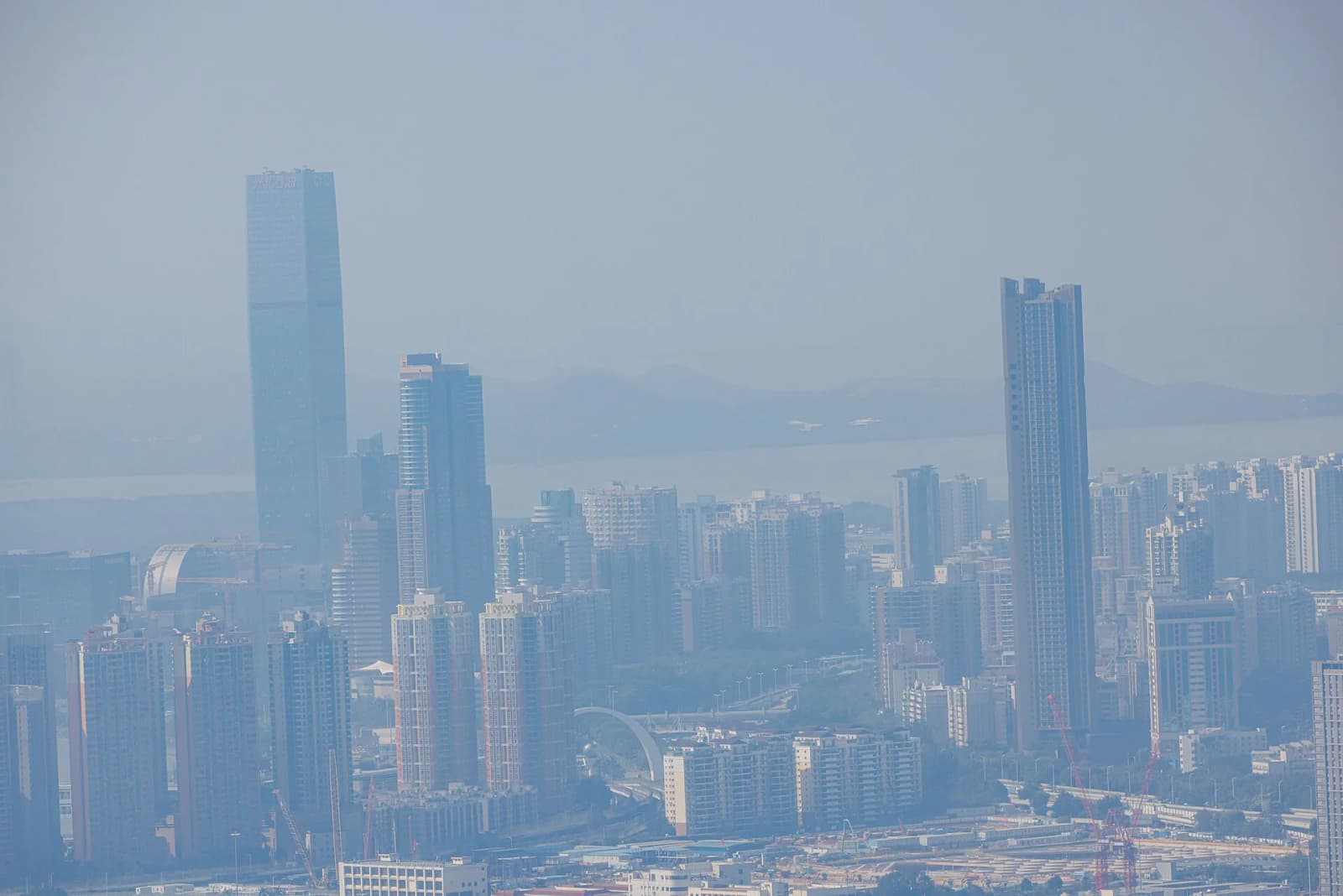
China will lower tariffs on about C$400 million of Canadian pork, fish and seafood exports, and Canada will keep its duty relief on certain Chinese steel and aluminium for two more years, Prime Minister Mark Carney's office announced on Tuesday, 17 November, after he met President Xi Jinping in Shenzhen.
The two leaders met in the southern Chinese city ahead of the Asia-Pacific Economic Cooperation (APEC) leaders' meeting being held there. According to Reuters, it was their third meeting since Carney became prime minister.
What was agreed
The Canadian Prime Minister's Office said the two sides had extended and expanded their "Preliminary Joint Arrangement" on bilateral trade issues. Under it:
- China will give additional tariff relief on roughly C$400 million of Canadian exports: about C$116 million of frozen pork cuts and C$285 million of fish and seafood, including frozen cold-water shrimp and prawns, some molluscs such as geoduck, sea cucumber and Greenland halibut.
- Canada will extend for two years its remission measures on certain Chinese steel and aluminium products, which were due to lapse at the end of 2026.
- Canada will also widen that remission to 32 more steel and aluminium tariff items where, the statement said, Canadian supply is insufficient or unavailable.
The statement said this comes on top of a two-year extension of tariff relief for Canadian canola meal, peas, lobster and crab announced earlier this month. Ottawa says market access has now been restored for more than 90% of the trade that had been hit by tariff action, worth nearly C$7.5 billion in exports.
Other announcements
Carney's office also listed a Canadian trade mission to China in 2027, a "Canada-China Year of e-Commerce" in 2027, C$850,000 in scholarships for 850 Canadian students to study at Chinese universities, and a new Air Canada route between Vancouver and Guangzhou from May 2027.
What the leaders said
"We have unlocked billions in new export orders for Canadian farmers, ranchers, and fish harvesters," Carney said in the statement issued by his office. Reuters reported him as saying Canada is well ahead of schedule on its goal of raising exports to China by 50% by the end of this decade.
Xi told Carney that "stronger communication and cooperation between China and Canada will benefit not only our two countries", Reuters reported. AFP quoted the Chinese leader as calling better ties "the right choice".
Background
Relations between the two countries deteriorated sharply after 2018, when Canada arrested the daughter of Huawei's founder on a US warrant and China detained two Canadians, AFP noted; the two later imposed tariffs on each other. Carney and Xi launched what Ottawa calls a new strategic partnership in January 2026, during the first visit to China by a Canadian prime minister since 2017.
Reuters reported that Carney's economic strategy includes cutting Canada's heavy dependence on the United States, which has imposed steep tariffs on many Canadian goods. After the January visit, China lowered tariffs on Canadian canola seed, while Ottawa allowed annual imports of 49,000 Chinese cars at a 6.1% tariff, the agency said.
Criticism
The closer relationship is contested at home. Security analysts and human rights groups have warned that it could compromise Canadian security and values, Reuters reported, pointing to the jailing of Hong Kong media figure Jimmy Lai and to Canadian intelligence findings that Beijing interfered in at least two federal elections. China says it has no interest in interfering in Canada's internal affairs.
What next
Carney is in Shenzhen for the APEC Economic Leaders' Meeting, accompanied by Foreign Affairs Minister Anita Anand. According to the Canadian government, two-way merchandise trade with China was C$125.6 billion in 2025, of which Canadian exports were C$35.1 billion.