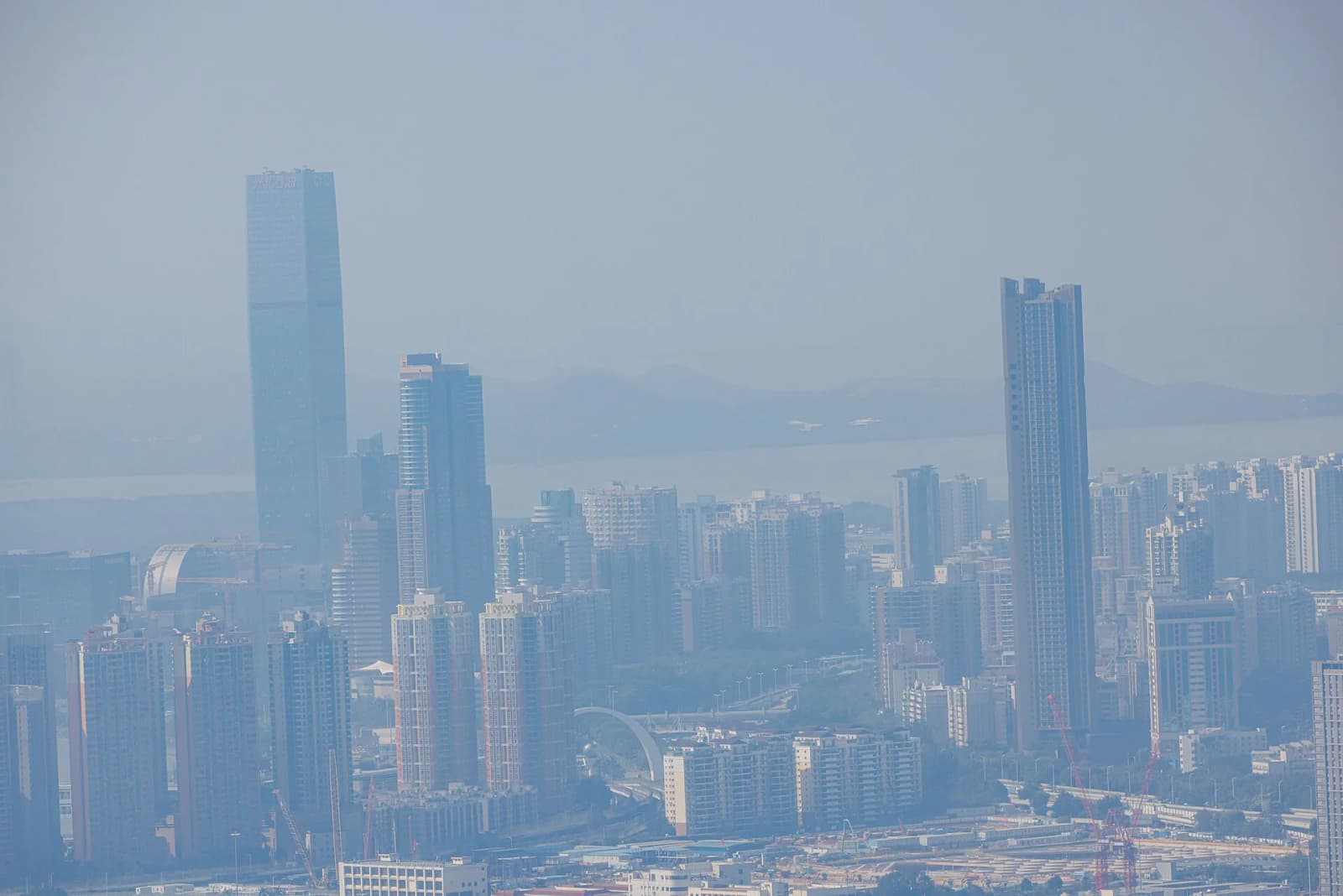
The presidents of the United States, China and Russia are due to sit down together for the first time on Thursday, 19 November, in the southern Chinese city of Shenzhen. All three governments have now confirmed that Xi Jinping will host Donald Trump and Vladimir Putin on the sidelines of the Asia-Pacific Economic Cooperation (APEC) summit. What they have not agreed on, at least in public, is what the meeting is for. This explainer sets out what is on record, where the three capitals contradict each other, and why a meeting India is not part of still matters to Indian readers. Our news report on China's confirmation is here.
What has happened
China's Foreign Ministry confirmed the meeting on Monday, 16 November. In the ministry's published transcript of that day's briefing, spokesperson Mao Ning said it would be the "first ever face-to-face meeting" of the three heads of state and described it as being of "groundbreaking significance". She said the presidents would exchange views on "safeguarding world peace and enabling strategic stability in major-country relations". Asked by a Japanese broadcaster whether nuclear arms control and Iran would come up, she did not confirm either subject and said more information would be released in due course.
Beijing was the last of the three to speak. The White House confirmed the plan on Friday, 13 November, and Kremlin spokesman Dmitry Peskov did so the next day, telling Russia's state news agency TASS that the meeting "will take place in Shenzhen on the sidelines of the APEC summit", according to Anadolu Agency.
Mr Trump left Washington on Monday. NBC News and ABC News report that his first stop is Manila, where he is expected to meet South-East Asian leaders, sign a trade deal with Thailand and meet his Quad counterparts from India, Japan and Australia, before flying on to Shenzhen.
How it came together: a timeline
- August 2025: Mr Trump and Mr Putin meet in Alaska, their most recent in-person meeting, according to the Associated Press (AP).
- February 2026: New START, the last treaty limiting US and Russian strategic nuclear forces, expires. Outlook magazine gives the date as 5 February. AP reports that Mr Trump turned down a Russian proposal to extend it by a year and asked for a new deal that includes China. On 28 February the US and Israel launch a war on Iran, Al Jazeera says.
- October 2026: The Wall Street Journal reports that Mr Putin proposed a three-way meeting, according to CNBC. On 19 October Mr Trump says he "would do that" when asked about meeting both leaders, ABC News reports.
- 13, 14 and 16 November: The White House, the Kremlin and China's Foreign Ministry confirm the meeting, in that order.
The numbers behind the nuclear question
The White House says nuclear weapons are the main subject. Before it lapsed, New START capped the US and Russia at 1,550 deployed strategic warheads each, 700 deployed missiles and heavy bombers, and 800 launchers in all, Outlook reports.
The US and Russia each hold more than 5,000 warheads. China's stockpile is far smaller: AP cites Pentagon estimates of more than 600, while Outlook puts it at around 500. Both describe it as growing.
APEC itself, which China chairs this year, has 21 member economies and meets in Shenzhen on 18 and 19 November. The three-way meeting is separate from the summit's formal proceedings.
What each side says it wants
United States
White House spokeswoman Olivia Wales has said Mr Trump will raise nuclear arms reduction and regards proliferation as "very dangerous", CNBC reports. A senior US official, quoted by AP without being named, called the meeting the "beginning of hopefully a conversation" on disarmament and said no agreements were expected to be announced. US officials also say the Iran war will be discussed and Ukraine will not. One official told Al Jazeera that China "is not really a part of that track".
Mr Trump has said otherwise. "We'll talk about, my favorite subject, Ukraine," he told reporters as he left, according to AP.
Russia
Mr Peskov called the meeting "extremely significant" but rejected comparisons with the 1945 Yalta conference, saying anything agreed in Shenzhen could not be imposed on other countries, AP reports. Kremlin foreign policy aide Yuri Ushakov said on Monday that the agenda was still being finalised and that a joint statement would follow the talks, according to the German news agency DPA.
China
Beijing has kept its description general. On arms control its stated position has not changed: the Foreign Ministry has said that asking China to join three-way disarmament talks at this stage would be neither fair nor reasonable, as both Outlook and Al Jazeera recall.
Ukraine
Ukraine will have no representative in the room, NBC News reports. President Volodymyr Zelenskyy said last month, in remarks quoted by AP: "We really don't want this to turn into 'Yalta 2, 3, 4'."
What is established
- A meeting of Mr Xi, Mr Trump and Mr Putin is planned in Shenzhen alongside APEC. The White House, the Kremlin and China's Foreign Ministry have each said so on the record.
- The US and Russian sides both give the date as Thursday, 19 November.
- It would be the first time the three have met together. China's own transcript says this, and US officials describe it the same way.
- New START has expired, so no treaty currently limits US and Russian strategic arsenals.
- Ukraine is not taking part.
What is uncertain
- The agenda. Washington names nuclear weapons and Iran. Beijing has confirmed neither and speaks only of world peace and strategic stability. Mr Ushakov says the agenda is still being finalised.
- Ukraine. US officials say Mr Trump will not raise it. Mr Trump says he will. The Kremlin has indicated it wants the subject discussed.
- The outcome. Mr Ushakov says a joint statement will be issued. The senior US official says no agreement is expected. China has not said either way.
- A separate Trump-Putin meeting. Mr Ushakov says one is possible on Thursday. The White House schedule lists only a Trump-Xi meeting and working lunch, DPA and ABC News report.
- Kim Jong Un. Mr Trump said the North Korean leader "may come" and that this was "up to President Xi". A senior White House official said on Friday there were no plans for engagement with North Korea, according to NBC News.
Why it matters in India
India is not an APEC member and will not be in Shenzhen, Outlook points out. The magazine argues that if the largest powers begin settling security questions in closed formats, the room for countries such as India that prize strategic autonomy could shrink. That is an assessment, not an announced outcome: nothing on territory or spheres of influence has been agreed or even tabled.
Three practical threads are worth watching.
- Energy. US officials say the Iran war is on Mr Trump's list. Al Jazeera reports that the Strait of Hormuz has been shut for more than 100 days and that oil and gas prices remain volatile. Any movement on that conflict bears on what importing countries pay for fuel.
- Russian oil. AP and Al Jazeera report that Washington has recently eased some sanctions on Russian energy. The Eastern Strategist, an Indian foreign-policy publication, assesses that a Ukraine settlement track would change the sanctions calculation for Indian refiners. No such track has been agreed.
- Trade. The US-China tariff truce runs out in January and analysts quoted by CNBC mostly expect an extension. India's own trade agreement with Washington remains unsigned, the Eastern Strategist notes.
The same trip takes Mr Trump to Manila first, where US media say he will meet the Quad leaders. The last Quad leaders' summit was in Wilmington in September 2024, the Eastern Strategist recalls. That publication found no statement from the Ministry of External Affairs on the Shenzhen meeting as of 15 November.
What happens next
- Tuesday, 17 November: Mr Trump is due in Manila in the evening.
- Wednesday, 18 November: APEC leaders' meeting opens in Shenzhen. Mr Putin and Mr Xi are expected to hold bilateral talks, DPA reports.
- Thursday, 19 November: Mr Trump and Mr Xi hold a bilateral meeting and working lunch, followed by the three-way meeting, which ABC News describes as the last event of the trip.
PS · Dinkun Chen, CC BY-SA 4.0