India's coffee crop for the 2026-27 marketing year (October to September) will be about 6.17 million 60-kilogram bags, or roughly 3.70 lakh tonnes, according to a semi-annual assessment released on 17 November 2026 by the New Delhi office of the United States Department of Agriculture's (USDA) Foreign Agricultural Service. The forecast is marginally higher than the office's earlier projection, but it still points to a crop about seven per cent smaller than last season because of a weather-hit arabica crop.
What did the USDA report say about India's coffee crop?
The report says total production has been revised up by 0.5 per cent to 6.17 million bags because a better robusta crop will more than offset a sharp cut to arabica. The USDA's Coffee Semi-annual report for India (IN2026-0062), prepared by Dhruv Sood and approved by Nicole Podesta, puts the revised 2025-26 crop at 6.62 million bags, so the new season is expected to come in about seven per cent lower.
- Arabica: 1.42 million bags (85,200 tonnes), nine per cent below the earlier estimate. Arabica yields are forecast to fall 18 per cent from 2025-26.
- Robusta: 4.75 million bags (2.85 lakh tonnes), four per cent above the earlier forecast of 4.58 million bags, though still about two per cent below 2025-26.
- Exports: 6.39 million bags, raised three per cent from the earlier forecast but about nine per cent lower than 2025-26.
- Imports: 1.67 million bags, 20 per cent above the earlier forecast.
Why is arabica being hit harder?
The USDA office blames weather. It says a rainfall deficit in June and July limited mucilage formation in coffee cherries, which is expected to mean smaller beans, more defects and a higher share of unwashed (natural) arabica. Trade sources quoted in the report expect an even steeper fall in arabica output, of 15 to 18 per cent, to between 70,000 and 72,000 tonnes.
The report also warns that white stem borer, a pest that attacks arabica, could spread further if dry and hot conditions persist. Robusta, by contrast, is expected to benefit from adequate shade and soil moisture, although the report flags that prolonged northeast monsoon rain during harvest could damage ripe cherries. According to the report, the northeast monsoon arrived on 16 October and has covered about 80 per cent of coffee-growing areas.
The Hindu BusinessLine, which reported the forecast on 19 November, quoted A Nanda Belliappa, chairman of the Coorg Planters Association, as saying the crop was not as bad as expected and broadly similar to last year, with the damage concentrated on arabica in areas that had deficit rains.
How does this compare with the Coffee Board's estimate?
The Coffee Board of India is more optimistic. According to The Hindu BusinessLine, the board's post-blossom estimate for 2026-27 is 4.04 lakh tonnes, made up of 2.84 lakh tonnes of robusta and 1.20 lakh tonnes of arabica. The USDA's figures are its own staff assessments; the report itself states that they are not necessarily official U.S. government policy.
What it means for exporters and coffee drinkers
The report says freight costs and longer shipping routes are weighing on shipments. It says transit times to Europe have stretched to 70 to 80 days. It also says European buyers have sharply reduced purchases of Indian arabica after about 75 shipment rejections over the past year, mainly in Italy and Switzerland, linked to residues of the insecticide chlorpyrifos, which the European Union banned in 2020.
At home, demand keeps rising. The USDA office forecasts domestic consumption of 1.30 million bags in 2026-27, up four per cent, driven mainly by instant (soluble) coffee. It notes that India's per capita consumption, at 0.07 kg, remains far below the global average of 1.33 kg.
What happens next?
The report says the harvest is running three to four weeks ahead of schedule. The main robusta harvest is expected from the first week of December, and new-crop coffee should reach the market by late December, with arrivals from Coorg and Chikmagalur peaking between mid-December and January.
Readers can also see MapMyTimes coverage of the FAO Food Outlook on global food import bills and the latest horticulture production estimates.
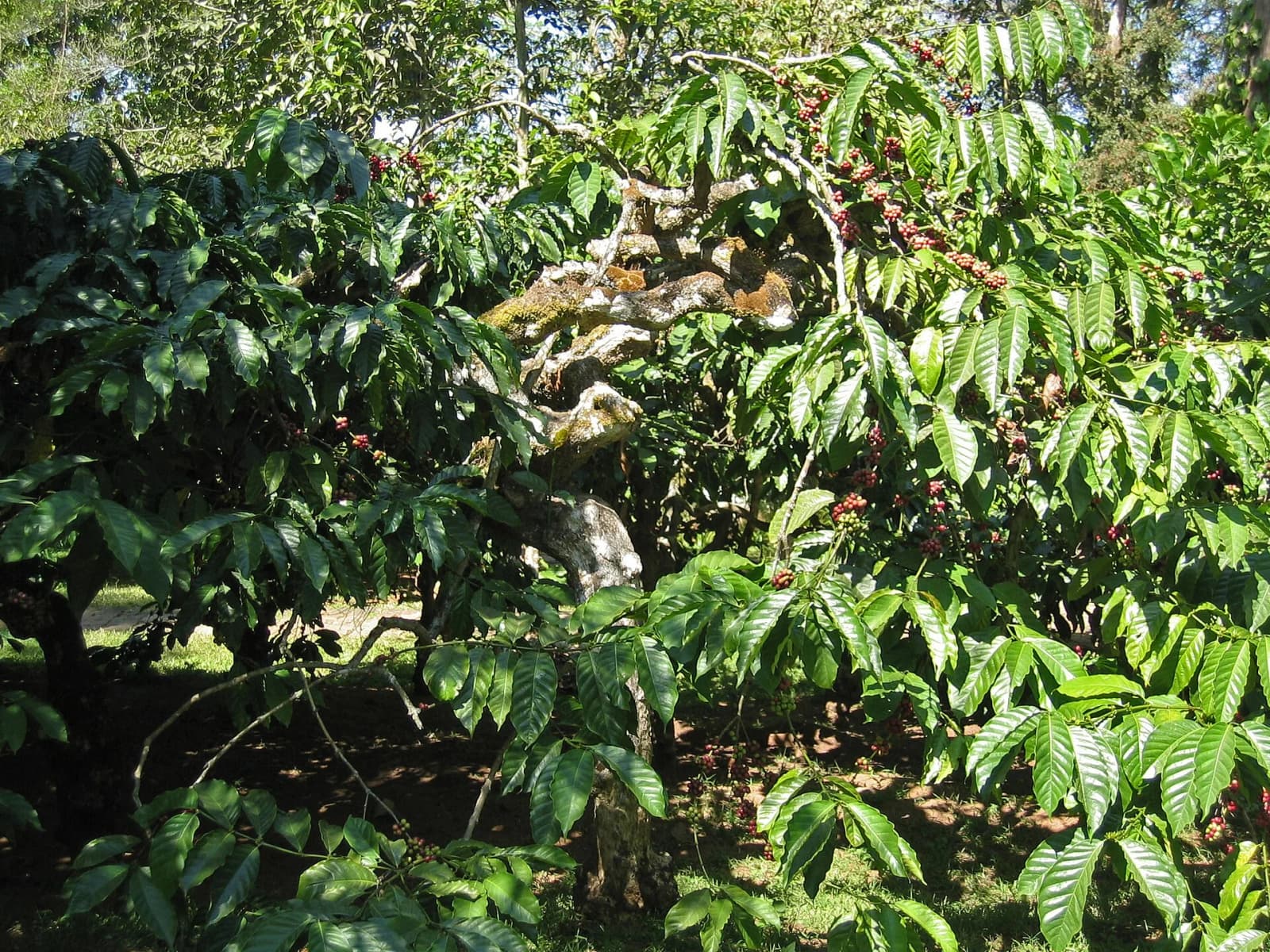
Photo source · Dcrjsr, CC BY 3.0