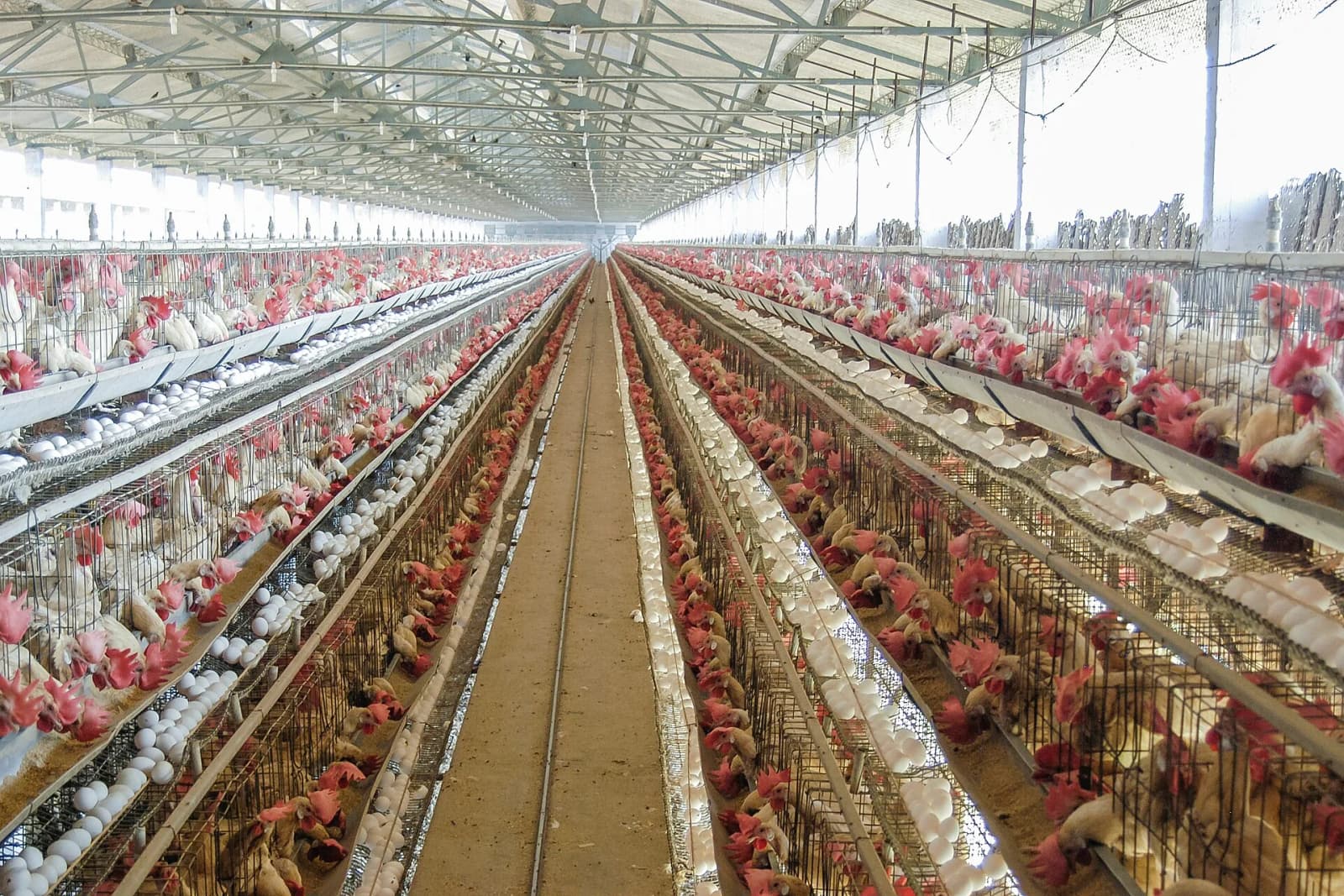
Union Agriculture Minister Shivraj Singh Chouhan is scheduled to dedicate India's first indigenous vaccine against the H5N1 bird flu virus for chickens to the nation on 20 November 2026 at the ICAR-National Institute of High Security Animal Diseases (ICAR-NIHSAD) in Bhopal, Madhya Pradesh. The Ministry of Agriculture and Farmers Welfare announced the launch in a press release issued on 18 November 2026. Here is what the vaccine is, why it matters to poultry farmers and consumers, and what is still unknown.
What is the new bird flu vaccine?
It is an inactivated vaccine for chickens against the highly pathogenic avian influenza (HPAI) H5N1 virus of a lineage called Clade 2.3.2.1a, developed in-house by ICAR-NIHSAD, Bhopal. The ministry describes it as the first vaccine of its kind in India against this particular clade.
Bird flu viruses are grouped into subtypes such as H5N1 and H5N8, and each subtype is further divided into genetic families known as clades. According to the ministry, studies have found that Clade 2.3.2.1a has caused most bird flu outbreaks in chickens in India. The ministry also says that, at present, no specific commercial vaccine is available against H5N1 viruses of this clade, which is why it calls an indigenous product important. The stated aim is to protect birds against the Clade 2.3.2.1a strains circulating in the country.
ICAR-NIHSAD is not a new name in bird flu work. Under India's Action Plan for Prevention, Control and Containment of Avian Influenza (Revised 2021), issued by the Department of Animal Husbandry and Dairying, the Bhopal institute is the laboratory that tests samples and confirms outbreaks, and it sends a copy of positive reports to the chief secretary of the state concerned.
Why is it in the news?
It is in the news because the vaccine is being formally launched on 20 November 2026, a step MapMyTimes reported on 19 November. The ministry's release sets out the scale of the problem the vaccine is meant to address:
- Since bird flu was first detected in India in 2006, more than 500 combined outbreaks of the H5N1 and H5N8 subtypes have been reported in the country.
- Outbreaks can kill close to 100 per cent of infected birds.
- A major outbreak could cut India's GDP growth by up to 1.5 per cent, and more than 20 per cent of the country's poultry population could be at risk if the disease spreads unchecked.
- The 2006 outbreak caused estimated direct and indirect losses of Rs 2,200–3,000 crore, while an outbreak in Manipur caused losses equal to 0.5 per cent of that state's GDP.
The ministry also points to a public health dimension. Citing the World Health Organization, it says 1,003 human cases of H5N1 avian influenza, including 479 deaths, have been reported across 25 countries, including India, since 2003. It adds that Clade 2.3.2.1a infections have recently been found in other animal species, including mammals, along with three human cases, and argues that controlling the virus in chickens can help stop it from moving into other animals and people.
How does it affect you?
For most people, the vaccine matters mainly through poultry farmers' livelihoods, the supply of chicken and eggs, and prices, rather than through any change in what they should do today. The ministry notes that bird flu hits farmers through large-scale culling of birds and trade restrictions, and that outbreaks can affect the prices of poultry products.
That culling is built into the current response. Under the 2021 action plan, the area within one kilometre of a confirmed outbreak is declared an "infected zone", where poultry are culled, and the rest of the area up to 10 km becomes a "surveillance zone". The plan also calls for an absolute ban on moving poultry and the closure of poultry and egg markets and shops in the affected area. Farmers are compensated at fixed rates for culled birds, with the Centre sharing 50 per cent of the compensation cost, and restocking in the culling zone is allowed only three months after a sanitisation certificate is issued. A vaccine that works in the field could, in principle, reduce how often such drastic steps are needed, though the government has not yet said how it will be used alongside these rules.
For consumers, the official guidance in the same action plan is that poultry meat cooked at more than 70°C for 30 minutes inactivates the virus, and that properly cooked poultry meat and eggs are safe to eat. The plan also asks authorities to run awareness campaigns without creating panic. The vaccine is for chickens; it is not a human vaccine.
What happens next?
The next step is the formal dedication of the vaccine in Bhopal on 20 November 2026. Several practical questions are not answered in the ministry's release, and readers should treat them as open until the government or ICAR says more:
- Rollout: the release does not say when, where or how farmers will be able to get the vaccine, or whether its use will be limited to particular regions or situations.
- Manufacturing and price: no manufacturer, licensing partner, production volume or price per dose has been announced.
- Performance data: the release does not give efficacy figures, the number of doses a bird needs or how long protection lasts.
- Policy fit: the release does not explain how vaccination will sit alongside the existing culling-and-surveillance approach in the national action plan.
Details on these points may emerge at the launch event. Until official guidance changes, the existing action plan, with its infected and surveillance zones, remains the framework that states follow when bird flu is confirmed.
Photo source · Matthew T Rader, CC BY-SA 4.0