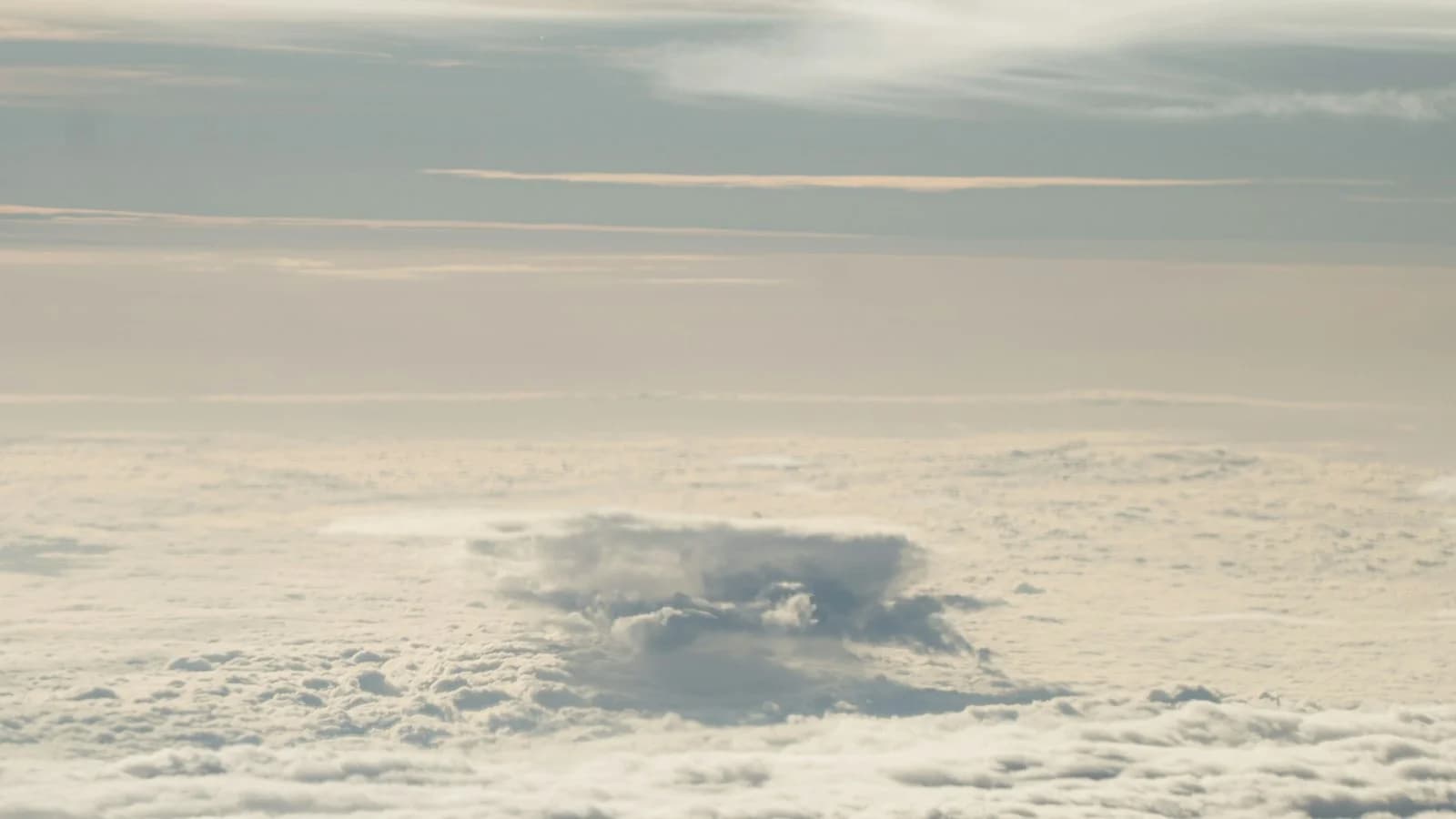
A research aircraft that repeatedly dipped in and out of the top of a cloud over southern England has produced the first detailed evidence linking electric charge at a cloud's top to the size of its water droplets, scientists at the University of Reading reported in a study published in the journal Geophysical Research Letters on 27 November 2026.
The flight took place on 12 January 2024 over southern England, including the university's Whiteknights campus in Reading, using the FAAM Airborne Laboratory, a modified research jet fitted with instruments for measuring atmospheric electricity. In one sequence the aircraft crossed the cloud top 16 times in a row, while specially equipped weather balloons were released into the same cloud so that readings from the two platforms could be compared.
What did the measurements show?
The measurements showed that layer clouds carrying more electric charge at their tops tended to contain larger water droplets, with droplet size rising by about 10% across the range of charge recorded. According to the University of Reading news release, the charge readings carried information about droplet size that went beyond what conventional cloud measurements provided.
The clouds studied were layer clouds, the flat, widespread sheets that meteorologists call stratus and stratocumulus, and that cover large parts of the sky on overcast days. Because the aircraft measured droplets, reflectivity and charge at the same moment, the team could line up the electrical readings against the cloud's physical properties.
Why does cloud electricity matter for climate science?
Droplet size matters because it helps decide how much sunlight a cloud bounces back into space, which in turn affects how strongly these clouds cool the planet. The researchers say their findings could help refine the way such clouds are represented in weather and climate models, where low-level layer clouds remain one of the harder features to capture accurately.
The paper, titled "Linking cloud-top charge to droplet microphysical variability in layer clouds", was led by Professor Giles Harrison of the University of Reading, with Dr Claire Ryder serving as mission scientist and co-author.
What was the flight like?
Harrison said the campaign "yielded an unusually detailed set of measurements", while also noting that "it was not the most comfortable of flights". Ryder described the repeated climbs and descents through the cloud top as being "a bit like being on a rollercoaster", and said that of the aircraft's passes overhead, "we were told that it could certainly be heard clearly by those on the ground".
What happens next?
The team has not announced a specific follow-up campaign, but says the dataset gives researchers new material for studying how electricity shapes the behaviour of clouds, including whether charge influences the way droplets grow and merge. For now the result is an observed association from a single, intensively measured cloud system, not a demonstration that charge causes droplets to grow.
The work adds to a steady stream of recent cloud and water-cycle research, including a study finding that extreme global heat in 2023-24 triggered the largest synchronised drop in rivers and lakes since 1991, and the conclusion of the World Meteorological Organization's INFCOM-4 meeting in Geneva, which advanced global cryosphere monitoring and flood forecasting frameworks.