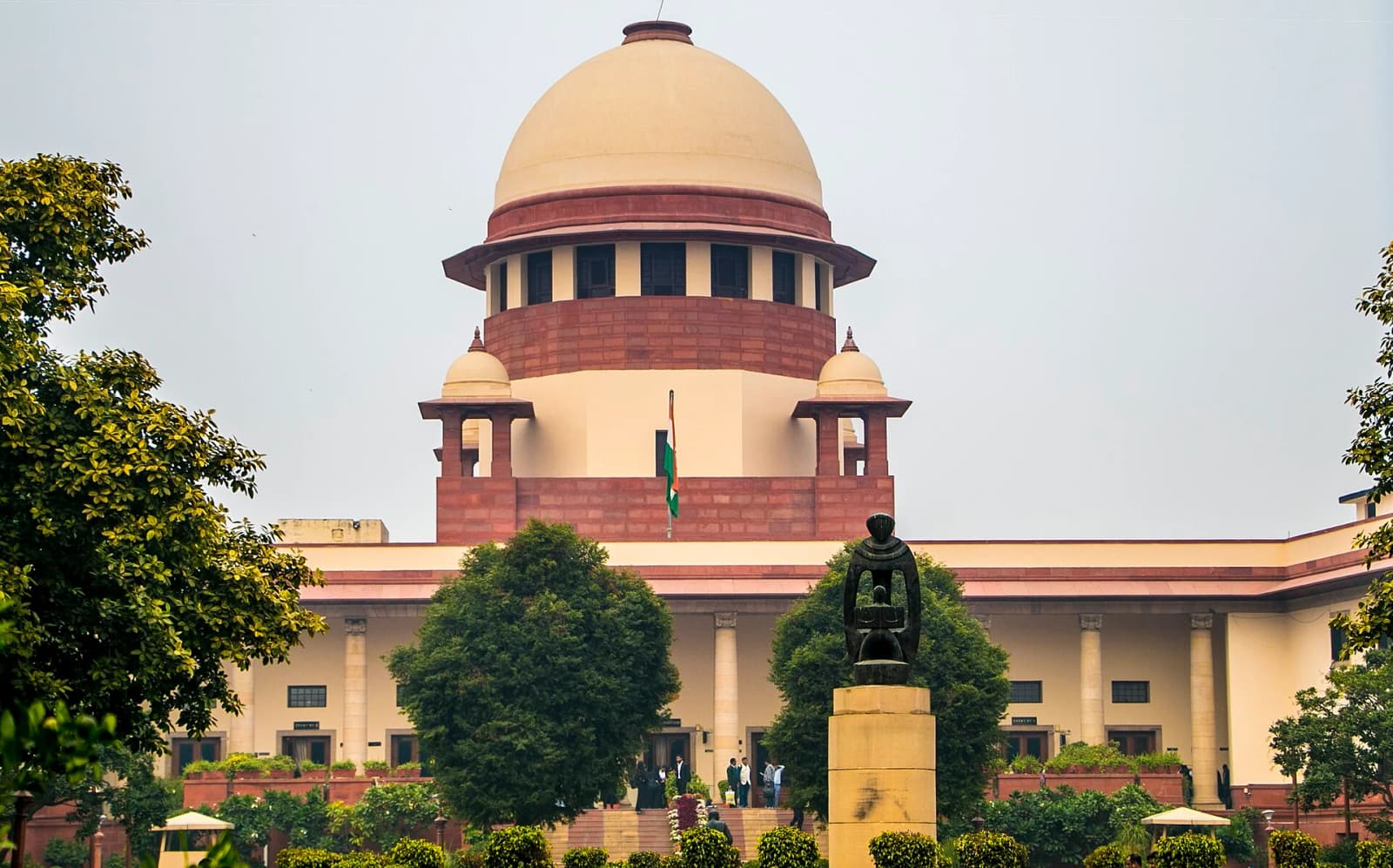
The Supreme Court on Tuesday, 17 November 2026, reserved its order on a public interest petition by financial journalist Sucheta Dalal that asks for a single, searchable online database to help legal heirs trace bank deposits, shares, insurance money and provident fund balances left behind by people who have died. A bench of Justice Vikram Nath and Justice R. Mahadevan closed the hearing and allowed all sides to file written notes, legal news site LiveLaw reported.
What the petition asks for
The petition, Sucheta Dalal v. Union of India, was filed in 2022. It argues that heirs and nominees often do not know which institutions hold a dead relative's money, and so cannot claim it. Over time, such money moves into government-controlled funds, including the Depositor Education and Awareness Fund (DEAF), the Investor Education and Protection Fund (IEPF) and the Senior Citizens' Welfare Fund. The plea wants the Centre, the Reserve Bank of India (RBI), the Ministry of Corporate Affairs and the Securities and Exchange Board of India (SEBI) to make information on these funds available to rightful claimants through one central database.
Appearing for Dalal, advocate Prashant Bhushan told the bench that the case covers four kinds of assets: bank deposits, securities, insurance policies and provident fund accounts. According to LiveLaw, he said no effective step had been taken on insurance and that the RBI's UDGAM portal helps only when the user already knows the bank in which the account was held. “There should be one searchable database where, if I put my father's name, all his accounts and deposits will come up,” LiveLaw quoted him as telling the court.
What the government and regulators said
Additional Solicitor General N. Venkataraman, for the Centre, argued that the measures already in place answer the petition's prayers and that no judicial direction is needed. As reported by LiveLaw, he told the court:
- Companies are required under the Companies Act to disclose unclaimed deposits, and these disclosures can be viewed on the IEPF Authority's portal.
- More than 3 lakh claims had been processed till March 2026, with about 10% pending.
- Unclaimed bank deposits are governed by Section 26 of the Banking Regulation Act, and the 2025 amendment to banking laws lets an account holder name up to four nominees.
- A three-month nationwide campaign called “Your Money, Your Right” ran from October to December 2025 to help people trace deposits, insurance proceeds, mutual funds, dividends and shares.
- Unclaimed financial assets worth Rs 6,453 crore had been returned to rightful owners as of 18 April 2026.
Senior advocate Dama Seshadri Naidu, for the RBI, said 30 banks are on the UDGAM portal and about 90% of unclaimed deposits can be looked up through it. Responding to Bhushan's objection, he said a user can select all banks at once and search across them, and that the portal had been redesigned after public feedback, LiveLaw reported.
For SEBI, advocate Amarjeet Singh Bedi relied on the regulator's affidavit and pointed to MITRA, the Mutual Fund Investment Tracing and Retrieval Assistant, a portal meant to help investors, nominees and heirs find inactive or unclaimed mutual fund holdings.
Why it matters
The dispute before the court is narrow but practical. The government and regulators say separate portals for deposits, shares and mutual funds already exist. The petitioner says a family that does not know where the money lies has to knock on each door separately, and wants one search across all of them. In an earlier hearing, LiveLaw noted, the court had asked the Centre and the RBI why information on unclaimed bank accounts of dead persons could not be given to legal heirs, and had also weighed privacy concerns and the risk of fraudsters posing as heirs.
What happens next
The parties can now file written submissions. The bench did not announce a date for its order, and the report does not record any observation by the judges at Tuesday's hearing. Whether the court orders a unified database or accepts the existing portals as sufficient will be known only when the order is pronounced.
PS · Subhashish Panigrahi, CC BY-SA 4.0