A cultural meeting of the Shanghai Cooperation Organisation (SCO) that India is hosting in New Delhi from 20 to 22 November has turned into a political argument at home. Pakistan has named a federal minister to attend, which would be the first such visit to India since 2023, and Congress leaders are asking the government to say what has changed in its Pakistan policy since the Pahalgam attack of April 2025. The Ministry of External Affairs (MEA) has said the invitation went to every SCO member and that its Pakistan policy is unchanged. This explainer sets out what is on record, what each side says and what is still not known.
What happened
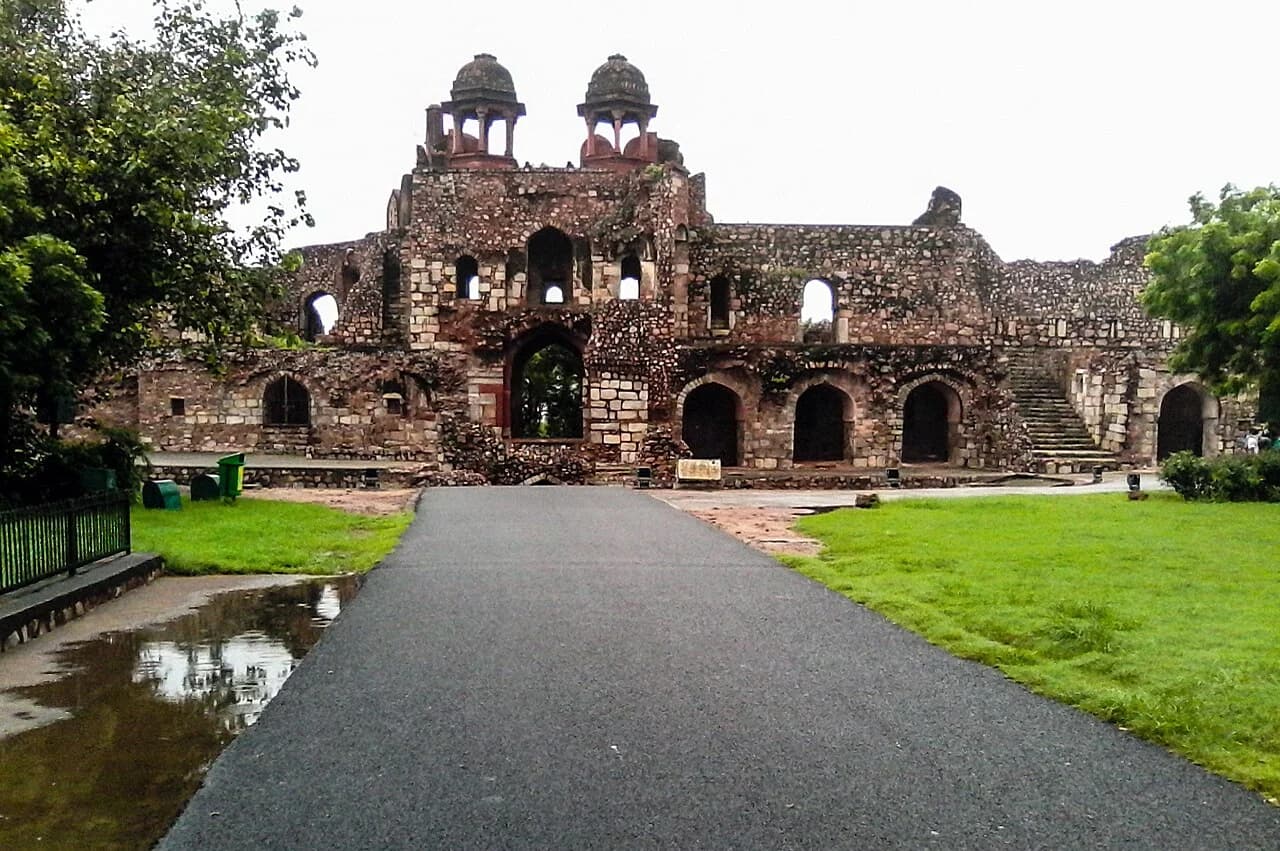
India is hosting the first SCO Civilisational Dialogue Forum at Purana Qila in Delhi from 20 to 22 November 2026. According to reports in Outlook and The Pioneer, the Union Ministry of Culture is organising it with the MEA, and Prime Minister Narendra Modi is expected to inaugurate it on 20 November.
On 14 November, Pakistan's Foreign Office announced that Dr Musadik Masood Malik, the Minister for Climate Change and Environmental Coordination, would represent the country. State-run Radio Pakistan carried the same announcement, saying Pakistan "remains committed to promoting dialogue among civilizations".
On 17 November, Outlook reported that Congress leaders had questioned the decision to have Pakistan at the forum. Congress MP Manish Tewari, the magazine reported, said Pakistan's presence at a multilateral event was not unusual in itself, but asked what had changed since the attack at Baisaran near Pahalgam. Former external affairs minister Salman Khurshid was quoted as asking, "What kind of policy is this?" and saying the government should spell out its position so that the Opposition could respond to it.
Background and timeline
- May 2023: Pakistan's then foreign minister Bilawal Bhutto Zardari attended an SCO foreign ministers' meeting in Goa. No Pakistani federal minister has visited India since, Outlook reported.
- October 2024: External Affairs Minister S. Jaishankar attended the SCO Council of Heads of Government meeting in Islamabad, PTI recalled in a report carried by The Week.
- 22 April 2025: Twenty-six people were killed in the terror attack at Pahalgam. India subsequently placed the Indus Waters Treaty in abeyance.
- 7–10 May 2025: India launched Operation Sindoor against terror infrastructure in Pakistan and Pakistan-occupied Kashmir. The four-day military confrontation ended on 10 May after an understanding between military officials of the two sides, according to PTI.
- September 2025: Mr Modi proposed a civilisational dialogue at the SCO leaders' summit in Tianjin and the grouping later adopted the idea, according to Outlook and The Pioneer.
- 1 September 2026: Pakistan took over the rotating chair of the SCO Council of Heads of State for 2026-27, OPEN magazine reported. The next leaders' summit is due in Pakistan in August 2027.
- 28 October 2026: India said it had invited all SCO members to the Delhi forum in keeping with established practice, PTI reported.
- 13 November 2026: Union Culture Minister Gajendra Singh Shekhawat told reporters at Bharat Mandapam that 15 countries had confirmed and that he hoped Pakistan would come, ThePrint and Outlook reported.
- 14 November 2026: Pakistan nominated Mr Malik.
- 16–17 November 2026: Opposition leaders questioned the government.
Verified data
- Dates and venue: 20–22 November 2026, Purana Qila, Delhi.
- SCO membership: ten full members — India, China, Russia, Kazakhstan, Kyrgyzstan, Tajikistan, Uzbekistan, Pakistan, Iran and Belarus. India and Pakistan both became full members in 2017.
- Who was invited: all ten members, along with dialogue partners and observers. The Pioneer put the number of dialogue partner and observer countries at 15; Outlook reported that representatives from more than 25 countries were expected.
- Confirmations: 15 countries had confirmed by 13 November, according to Mr Shekhawat, among them China, Kazakhstan, Iran, Tajikistan and Uzbekistan.
- Programme: The Pioneer reported four thematic sessions covering monastic trails, religious and philosophical traditions, art and architecture, languages and manuscripts, and living cultural traditions.
- The invitation to Pakistan: it was addressed to Pakistan's Minister for National Heritage and Culture, Aurangzeb Khan Khichi, Outlook and The Pioneer reported. Islamabad chose to nominate Mr Malik instead.
What each side is saying
The government
MEA spokesperson Randhir Jaiswal, in remarks reported by The Pioneer from a PTI post on 28 October, said: "Post the Pahalgam attack, we have a Pakistan policy. That policy remains in place. There has been no change." Officials quoted by the newspaper said all ten members had been invited and that the forum had nothing to do with bilateral ties with Pakistan.
Mr Shekhawat, asked whether terrorism or border disputes could come up, said the focus would stay on cultural and civilisational links rather than geopolitical differences, according to Outlook. Of Pakistan he said, "Their evolution has happened parallelly with us."
BJP leader Dilip Ghosh, quoted by Outlook, said Pakistan should improve relations with India "for its own benefit".
The Opposition
The Congress leaders quoted so far have not objected to the SCO format itself. Mr Tewari's point, as reported by Outlook, is that the government owes an explanation of what has changed since people were killed at Baisaran "in the name of religion". Mr Khurshid's criticism is that the policy is unclear.
Pakistan
Pakistan's Foreign Office described the forum as a gathering of SCO states on civilisational dialogue and cultural understanding, and spoke of promoting people-to-people contact within the SCO framework in a spirit of mutual respect. Earlier, when India's SCO national coordinator Alok Dimri travelled to Islamabad for a preparatory meeting, Foreign Office spokesperson Sajjad Haider Khan called it a "welcome move" but, ThePrint reported, cautioned that participation in SCO events "has occurred in the past" and there was "nothing new" in it.
Analysts' reading
A PTI report from Islamabad said Mr Malik's participation suggests Pakistan wants to lower tensions ahead of the summit it will host next year. That is an interpretation, not a stated position of either government.
Why the choice of minister is being noticed
Mr Malik is not Pakistan's culture minister, and he has been a prominent voice against India's decision on the Indus Waters Treaty. In late June 2026, Business Today reported that at a media briefing with Information Minister Attaullah Tarar he vowed that Islamabad would stop anyone trying to take water it considers its share; the phrase attached to those remarks in Indian headlines was "we will cut off those hands". Business Today noted that the footage, aired by a Pakistani channel, could not be independently authenticated.
What it means for Indian readers
- No policy change has been announced. The MEA's stated line is that its post-Pahalgam approach to Pakistan stands. Nothing has been announced on the Indus Waters Treaty or any other bilateral matter in connection with this forum.
- No bilateral meeting is on the public schedule. Neither government has announced one, and PTI noted that Pakistan's statement did not mention any.
- It is a test of how India handles SCO hosting duties. India has used SCO platforms to press for a united stand against terrorism "without double standards", and it will again share a room with Pakistan while Islamabad chairs the grouping until the 2027 summit.
- A domestic political debate. The questions from the Opposition are likely to be raised again when the forum opens.
What is established and what is uncertain
Established
- India is hosting the forum in Delhi on 20–22 November and invited all SCO members; both governments' statements are consistent on this.
- Pakistan has officially nominated Musadik Masood Malik to attend.
- The last visit to India by a Pakistani federal minister was in May 2023.
- The MEA spokesperson has said on record that the Pakistan policy has not changed.
Uncertain or contested
- Whether this is a thaw. The Indian government says the forum is unrelated to bilateral ties; some commentary reads Pakistan's decision as an attempt to ease tensions; the Opposition says the government's position is unclear.
- Any meeting on the sidelines. None has been announced. Whether Mr Malik will meet Indian ministers separately is not known.
- Who else is in Pakistan's delegation, and when it arrives.
- Mr Malik's exact words on the Indus waters. The remarks were widely reported in June, but at least one outlet said the video could not be independently verified.
- The timing of Mr Dimri's Islamabad visit. Reports place it variously in September, October and early November.
- The government's response to the latest criticism. The MEA had not, in the reports reviewed, replied directly to the Congress leaders' remarks.
What happens next
The forum is due to open at Purana Qila on 20 November, with the Prime Minister expected at the inaugural ceremony, and to run until 22 November. Mr Malik's arrival, what he says in Delhi and whether Indian and Pakistani representatives interact beyond the formal sessions will be watched closely. Further ahead, Pakistan is due to host the SCO leaders' summit in August 2027, and the question of India's level of participation there is likely to return.
PS · Moheen Reeyad, CC BY-SA 4.0