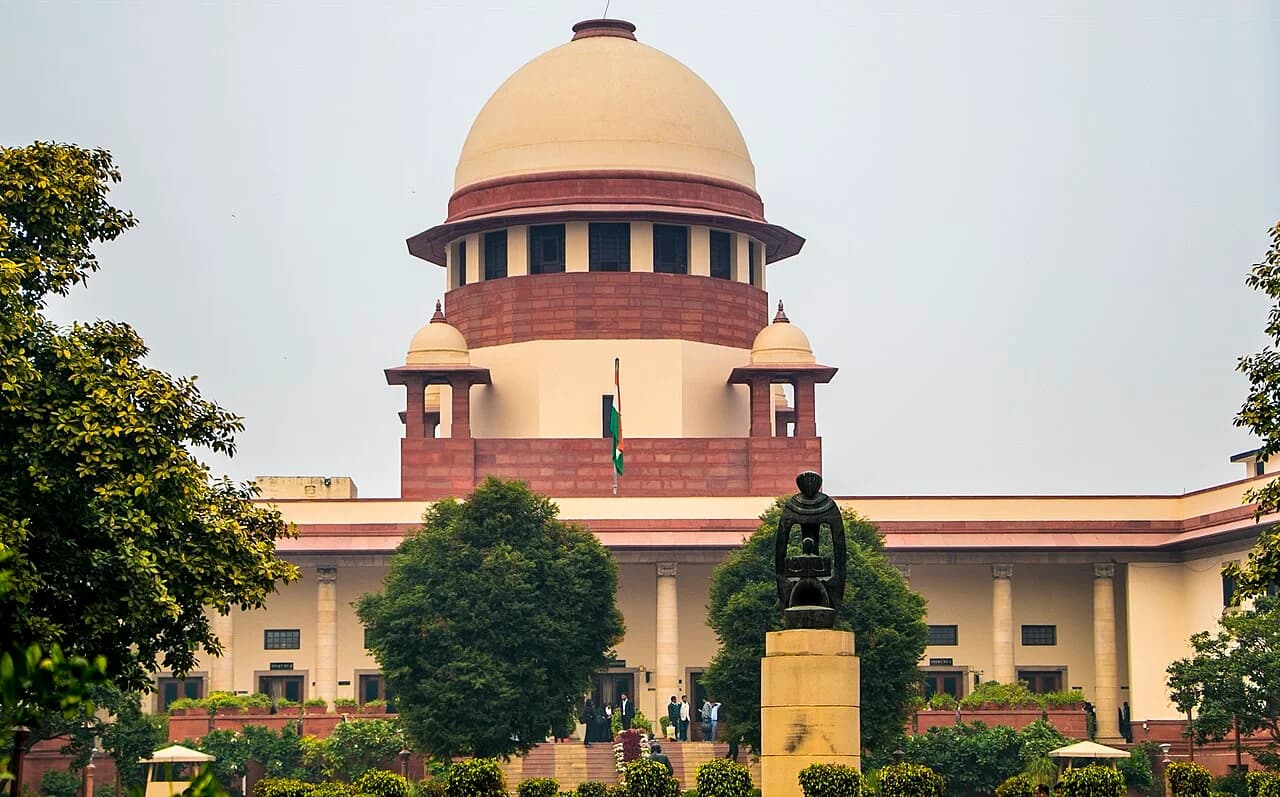
The Supreme Court of India on 26 November 2026 gave the Food Safety and Standards Authority of India (FSSAI) four months to finalise front-of-pack warning rules for packaged foods, ordering that products high in sugar, salt or saturated fat each carry a separate red hexagon warning rather than a single combined symbol. Companies will then get one year from notification to comply.
The ruling, delivered in New Delhi by a bench of Justices J B Pardiwala and K Vinod Chandran, came on a petition filed by the Kerala-based non-profit 3S and Our Health Society, according to a detailed report by Down To Earth on the 131-page judgment.
What exactly did the Supreme Court order?
The court ordered that each nutrient of concern get its own red hexagon, carrying a standard pictorial symbol and the words "HIGH FAT", "HIGH SUGAR" or "HIGH SALT". Each hexagon must be proportionate to the package's principal display panel and occupy not less than 4 to 5 per cent of it, and the court asked the regulator to take international practice into account.
FSSAI must also review the threshold level for each nutrient within four months. The bench asked it to consider total sugars and saturated fat, rather than only added sugar and added fat, alongside salt. Forbes India reported that the regulator's revised draft is due by 4 February, and that the bench held FSSAI to the four-month timeline it had itself proposed, reasoning that delay would harm public health, particularly that of children.
How did the case reach this point?
According to Forbes India, FSSAI had earlier proposed warnings only for products high in two or more nutrients, rolled out in two phases. After the bench questioned that approach in September, the regulator moved to a single phase that would cover a product high in any one nutrient. Down To Earth noted that the Union government deferred a decision on red warning labels in 2018 and that FSSAI had at one stage proposed a health star rating system, which grades a product's overall nutrition instead of flagging specific nutrients.
The judgment rests on Article 21 of the Constitution, read as protecting the rights to health, safe food and informed choice, together with Article 47, which makes improving nutrition and public health a primary duty of the state. The bench wrote that "the label is the only witness at the point of sale" and that "every meal is a quiet wager with one's own body, and a wager is fair only when the player can see the odds."
Why does it matter for shoppers?
The order aims to let buyers see at a glance, on the front of the pack, whether a biscuit, snack or drink is high in a nutrient linked to diet-related disease. The court also pointed to the commercial influence of advertising, packaging, pricing and availability on diets, saying unhealthy food choices cannot be seen purely as individual decisions.
The ruling comes days after the World Health Organization set out its own sugar, salt and fat limits for packaged foods in South-East Asia, which MapMyTimes reported on 25 November and explained here.
What has industry said?
Industry voices quoted by Forbes India flagged costs and grey areas. Ashwin Bhadri, founder and chief executive of Equinox Labs, said products in the same category can differ widely in nutrition, and that reformulation is a business risk for smaller makers. Thimmaiah Napanda, managing director of packaging supplier Alternicq, said printed packaging that no longer complies may have to be scrapped. The advocacy group Nutrition Advocacy in Public Interest told Down To Earth that setting scientifically sound thresholds is now the regulator's biggest task.
What happens next?
The Supreme Court will take up the matter again in 10 weeks, when FSSAI is expected to file an affidavit on its progress in drafting the regulations. The new labelling regime will apply only after it is notified, with food businesses then given a year to change their packs. FSSAI's public response to the judgment was not available at the time of writing.
Photo source · Subhashish Panigrahi, CC BY-SA 4.0