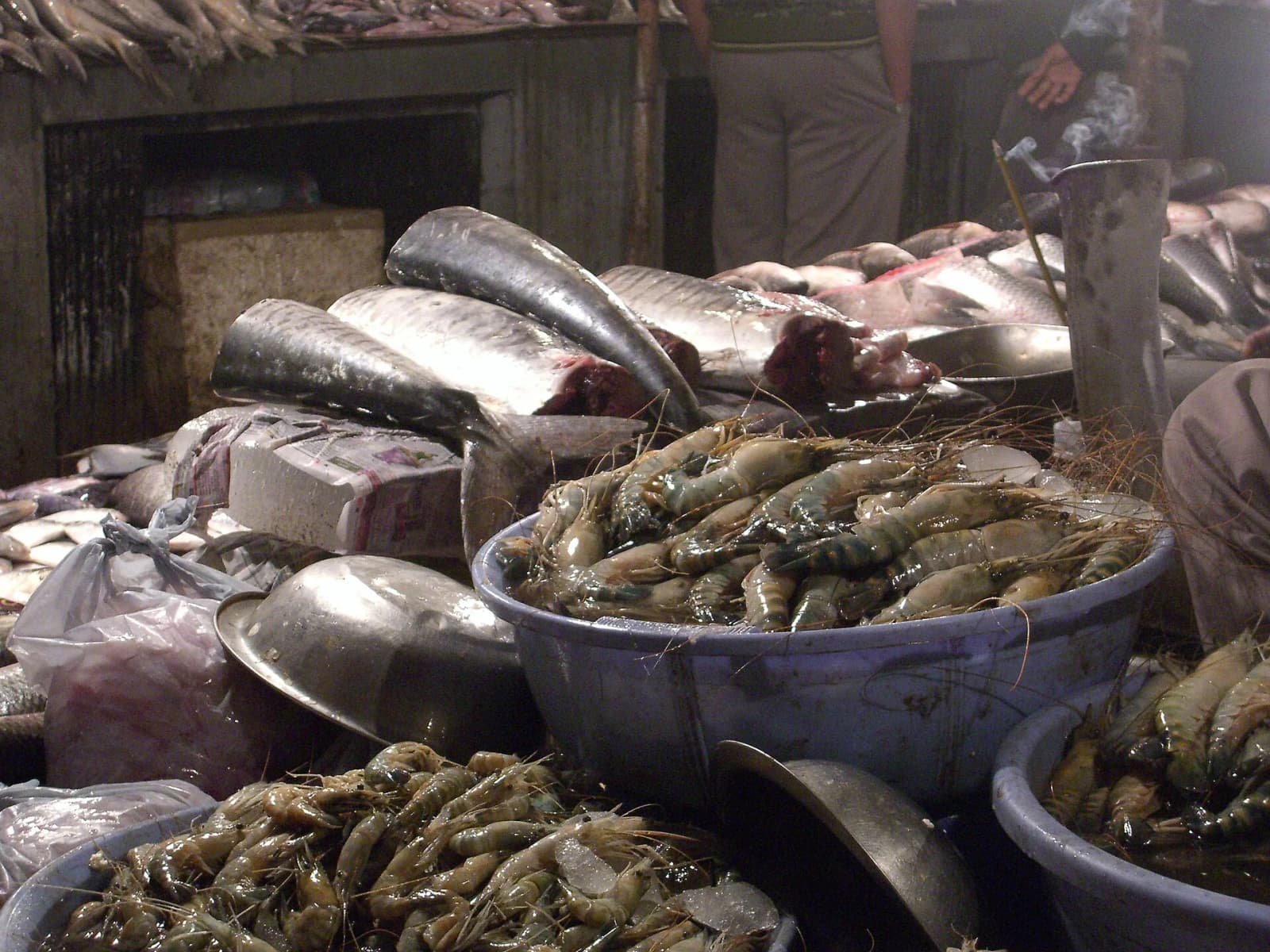
Food safety enforcement teams in Telangana seized and destroyed about 858 kg of spoiled fish and prawns, valued at Rs 1,56,880, during inspections of the Ram Nagar and Begum Bazaar fish markets in Hyderabad on Friday, 27 November 2026, the Telangana Standards Authority for Food and Essential Drugs (TG SAFE) said.
The inspections covered 19 establishments and street vendors across the two markets. According to a Deccan Chronicle report on the TG SAFE announcement, 15 of these were at Ram Nagar in the Musheerabad area and four at Begum Bazaar, two of the city's main wholesale and retail fish markets.
What did the inspectors find?
Inspectors found stock that had rotted or deteriorated, along with a long list of hygiene and licensing lapses, according to TG SAFE's press note as reported by Telangana Today, The South First and Deccan Chronicle. The violations listed were:
- vendors operating without a mandatory licence or registration from the Food Safety and Standards Authority of India (FSSAI);
- fish stored, handled and sold in unhygienic conditions, including the use of unclean water and ice to preserve seafood;
- no temperature monitoring of chilled fish, and no first-in, first-out rotation, so older and fresher stock were kept together;
- signs of rodent infestation and poor personal hygiene among food handlers;
- dirty plastic crates and thermocol boxes used for storage;
- missing records, including stock registers, employee health records and pest control documentation.
Who carried out the raids?
The drive was led by TG SAFE's enforcement wing. Food Safety Officers worked alongside TG SAFE police personnel, technicians from the State Food Laboratory and veterinary officials of the Greater Hyderabad Municipal Corporation (GHMC).
Laboratory technicians carried out on-the-spot tests for adulterants such as formalin, a chemical sometimes misused to make fish appear fresh for longer. Deccan Chronicle reported that TG SAFE did not disclose the results of those spot tests. Food Safety Officers and GHMC veterinarians also judged freshness physically, checking the colour of fish gills, the clarity of the eyes and the firmness and texture of the flesh, and examining the colour and firmness of prawns.
The stock declared unfit was destroyed on site, and GHMC sanitation vehicles were used to dispose of it.
Why does this matter for shoppers?
Spoiled seafood is a direct food safety risk, and the two markets supply a large number of households, eateries and smaller retailers in the city. TG SAFE said the drive was meant to identify violations and make sure seafood sold in markets meets hygiene and safety standards.
The Hyderabad action is the latest in a run of food safety enforcement stories across India this week. MapMyTimes has reported on FSSAI sanctioning the prosecution of Bisleri over a contaminated water sample from its Jalpaiguri plant and on food safety raids in Morena, Madhya Pradesh, that flagged excess lead in ghee.
What is confirmed and what is not
The quantity seized (about 858 kg), its stated value (Rs 1,56,880), the two markets involved and the list of violations come from TG SAFE's announcement as carried by several outlets. The reports reviewed by MapMyTimes did not name individual traders or officials, did not give a market-wise breakdown of the seized quantity, and did not mention fines, licence suspensions, closures or prosecutions arising from the drive.
What happens next?
TG SAFE has not publicly announced follow-up action against the vendors. Under the Food Safety and Standards Act, 2006, food businesses must hold an FSSAI licence or registration, and regulators can issue improvement notices, suspend licences or launch prosecutions for violations. Any further steps against the vendors at Ram Nagar and Begum Bazaar would be decided by TG SAFE.
Photo source · nathalie_r, CC BY 2.0