The Supreme Court on 20 November 2026 dismissed two applications by Tamil Nadu seeking directions to Karnataka to release more Cauvery water, holding that monitoring releases is the job of the Cauvery Water Management Authority (CWMA) and the Cauvery Water Regulation Committee (CWRC), not the court. A bench of Justices Vikram Nath and Aparesh Kumar Singh also dismissed a separate application filed by the Dravida Munnetra Kazhagam (DMK), according to the judgment, reported as 2026 INSC 1257.
What did Tamil Nadu ask for?
Tamil Nadu wanted the court to enforce two CWMA decisions taken during a rain-deficit year. The first, from the authority's 54th meeting on 30 July 2026, required Karnataka to release water from its Krishnaraja Sagara (KRS) and Kabini reservoirs so that 3,500 cusecs flowed for 15 days, or 4.536 TMC, at Billigundulu on the inter-state border. Tamil Nadu also sought release of what it calculated as a shortfall of 26.954 TMC between 1 June and 12 August 2026.
The second application sought enforcement of the CWMA's 57th-meeting decision of 8 September 2026, which called for daily average flows of 6,000 cusecs at Billigundulu for 15 days from 9 September, and release of a claimed shortfall of 16.01 TMC for 1 June to 9 September.
What did Karnataka tell the court?
Karnataka said that although there was an initial shortfall, it was made good once the Wayanad region received adequate rain. The judgment records Karnataka's submission that it released 1,65,080 cusecs from its reservoirs and that 86,797 cusecs were recorded at Billigundulu against the 45,500 cusecs stipulated at the 54th meeting. Karnataka acknowledged a delay of two days in complying, the court noted.
Why did the Supreme Court refuse to step in?
The bench said the first application was "misconceived" because the expert body entrusted with regulating Cauvery releases was already seized of the matter. Tamil Nadu, it said, was seeking to draw the court into "the continuing process of monitoring and enforcing the release schedule, a function entrusted to the CWMA and the CWRC", and doing so would be "neither warranted nor appropriate".
The court called Tamil Nadu's worry that its annual allocation might not be met "premature", because the release schedule runs on a June-to-May cycle and both bodies include representatives of Tamil Nadu and Karnataka. It noted that the CWRC meets every 15 days and that the minutes of the CWMA's 58th meeting on 24 September 2026 concluded there was "no backlog shortfall". On the disputed shortfall figures, the bench said the matter "shall, accordingly, be left to be considered by the CWRC and the CWMA in accordance with law".
What about the DMK's plea?
The court said the DMK's concerns were adequately represented by the Tamil Nadu government. It held that the scope of the Cauvery Water Disputes Tribunal's award of 5 February 2007, as modified by the Supreme Court on 16 February 2018, "ought not to be enlarged" by entertaining claims from an applicant that was not a party before the tribunal.
Background
The Supreme Court's 2018 judgment settled the sharing of Cauvery water among Karnataka, Kerala, Tamil Nadu and Puducherry. The Centre then notified the Cauvery Water Management Scheme on 1 June 2018, which created the CWMA and the CWRC to implement the award. The ruling comes days after the court turned away another inter-state water plea involving Tamil Nadu, over the Shenbagavalli weir in Keralam's Periyar Tiger Reserve.
What happens next?
Tamil Nadu's grievances over the shortfall now go back to the CWRC and the CWMA, which the court said will continue to monitor whether Karnataka maintains the daily average flows it has prescribed. The court did not fix any further hearing.
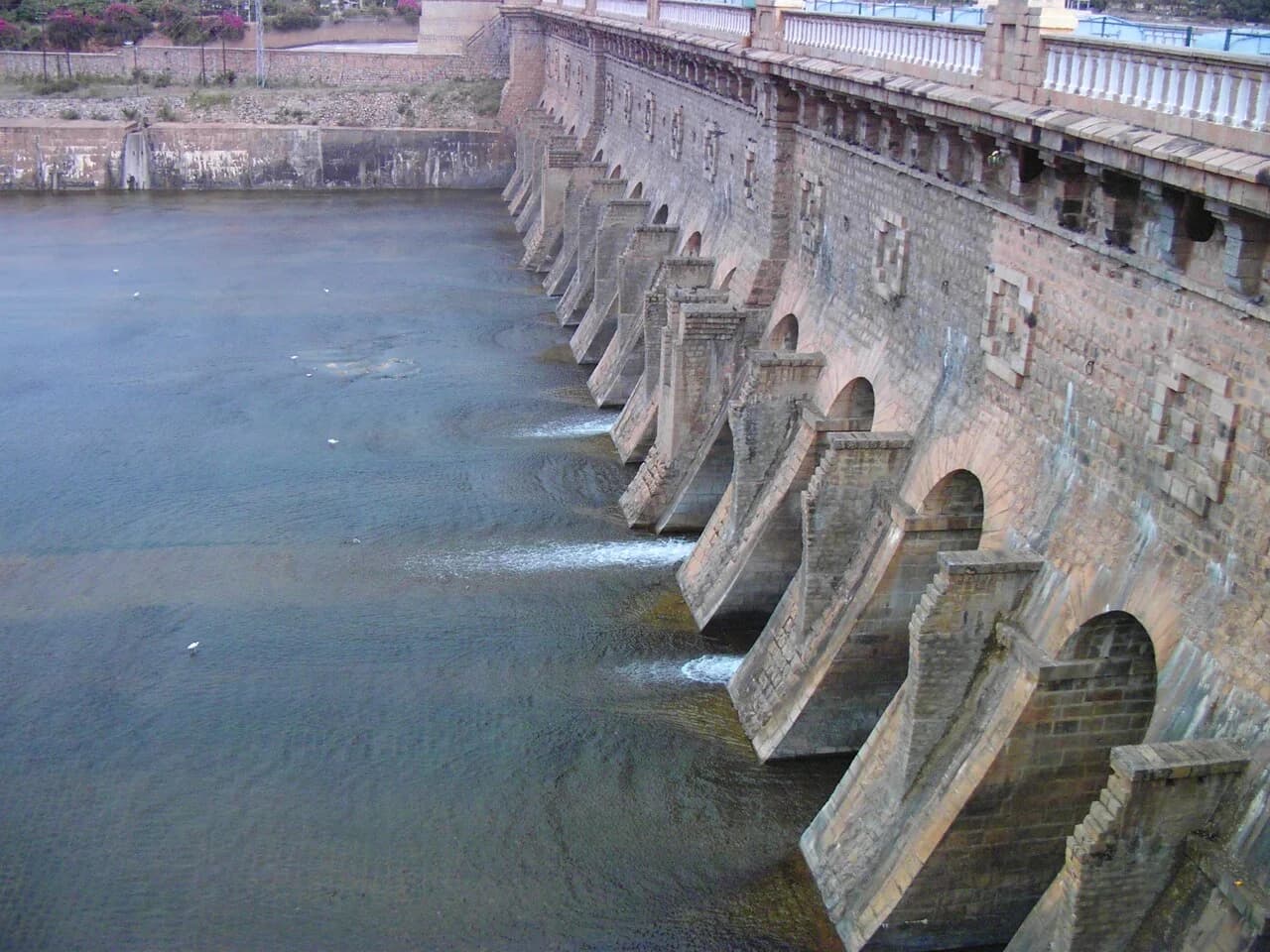
Photo source · Vaishu2, public domain