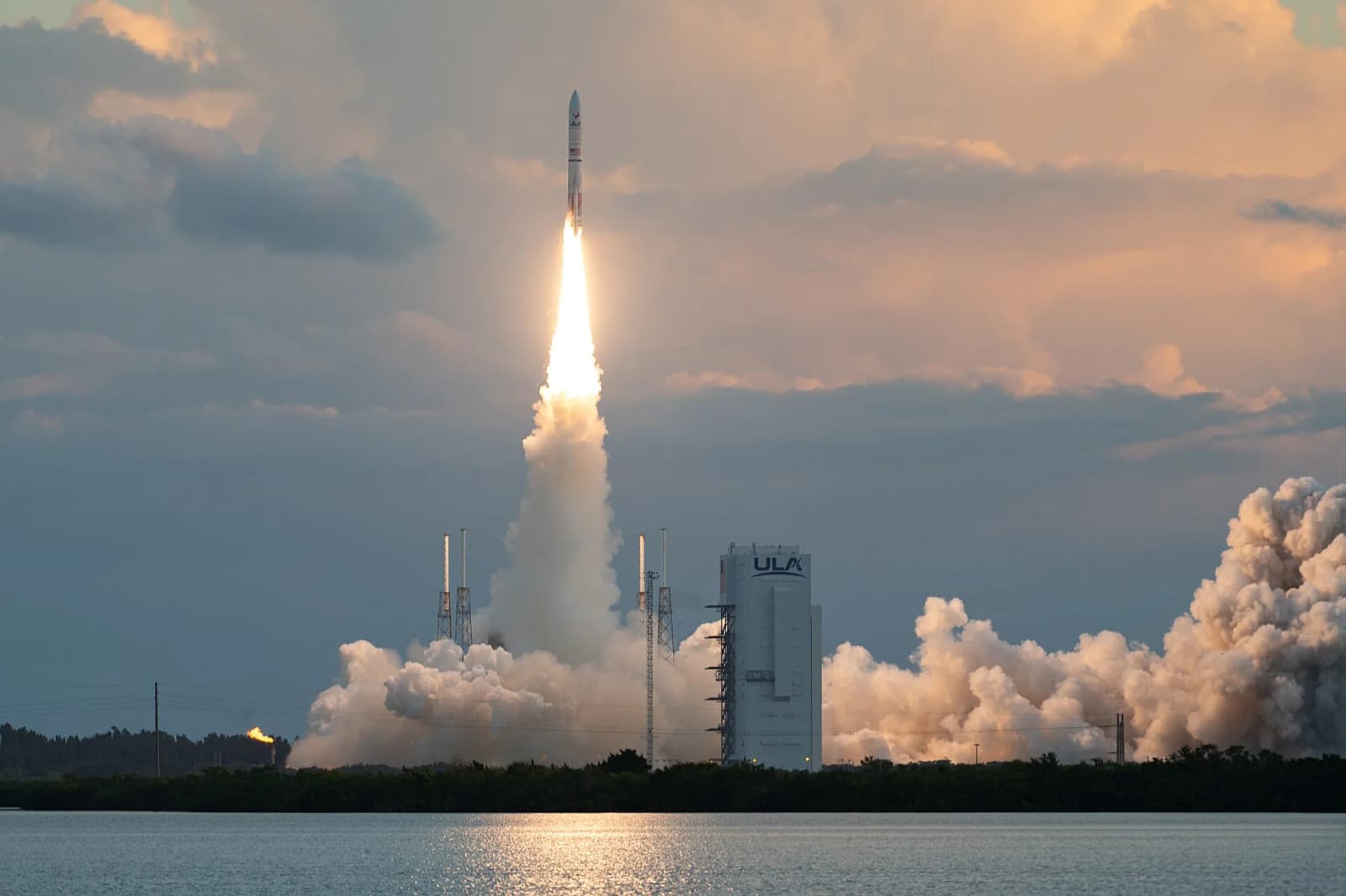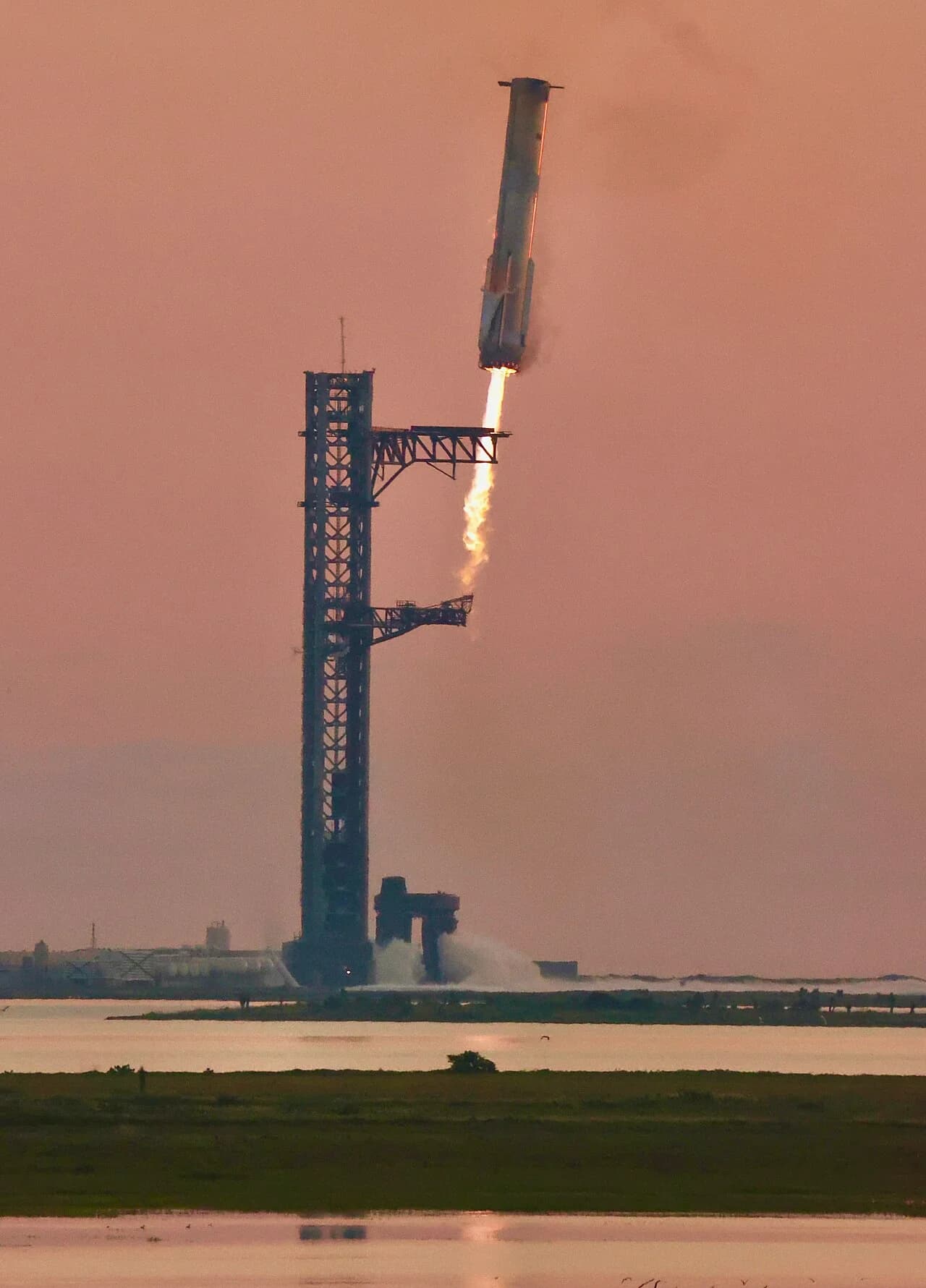
SpaceX has caught the upper stage of its Starship rocket with the arms of its launch tower for the first time. The ship was plucked out of the air at Starbase in South Texas on Saturday, 14 November 2026 (US time), after spending roughly 22 hours in orbit on the vehicle's 15th test flight.
“Mechazilla catches Starship! Congratulations to the entire SpaceX team on this incredible achievement!” the company posted on X after the catch.
How Flight 15 unfolded
The rocket lifted off on Friday, 13 November, from Pad 2 at Starbase, with Ship 42 stacked on top of Booster 22, according to Teslarati. The launch window opened at 4:45 pm Central Time.
The ship reached an orbit of about 275 km and released all 26 of the Starlink V3 satellites it carried, Engadget and Teslarati reported. It completed around 14 orbits. Three of the satellites carried cameras to inspect the ship's heat shield, and SpaceX said the images showed the shield in good condition, so controllers did not use a backup splashdown option overnight, according to Teslarati.
After re-entering the atmosphere, the ship flew back to the launch site and was caught by the tower's “chopstick” arms about 22.5 hours after launch. SpaceX has caught and reflown Super Heavy boosters before, but never the ship itself, Engadget noted.
The booster did not make it back
SpaceX had planned a double catch, with the new V3 Super Heavy booster to be caught first and the ship a day later. That half of the plan failed. During its return, the booster detected a guidance, navigation and control problem and aborted its catch attempt. It diverted towards the Gulf of Mexico and exploded before reaching the water, Engadget reported.
SpaceX's Dan Huot said the booster had “initially” been go for a catch, according to Teslarati. Elon Musk said the booster ran short of propellant because its engines slightly underperformed, and that fixes would include more consistent Raptor engines and a software change to shut engines down about one second earlier. “This booster loss does not change our timeline to reach high volume, fully reusable Starship flights,” Musk said, as quoted by Teslarati.
Why the catch matters
Reusing the upper stage is central to how Starship is meant to work. SpaceX's Falcon 9 routinely lands its boosters but throws away its second stage, whereas Starship is designed so that both stages can be refuelled and flown again, Teslarati explained.
- A recovered ship can, in principle, be inspected and reflown rather than lost after each mission.
- NASA's Artemis lunar lander plan depends on refilling a Starship in orbit using several tanker flights, which makes rapid, low-cost reuse important.
- The flight was a step up from Starship's September mission, which reached orbit but ended after about three hours with a splashdown in the Pacific, short of the planned 10 hours.
What happens next
Musk expects Starship to reach a weekly launch rate in the first half of 2027, Teslarati reported. Before that, SpaceX has to apply the booster fixes it has outlined. As of Friday morning, the company was also still awaiting approval from the US Federal Aviation Administration for a licence change covering the ship's return over land, according to the same report.