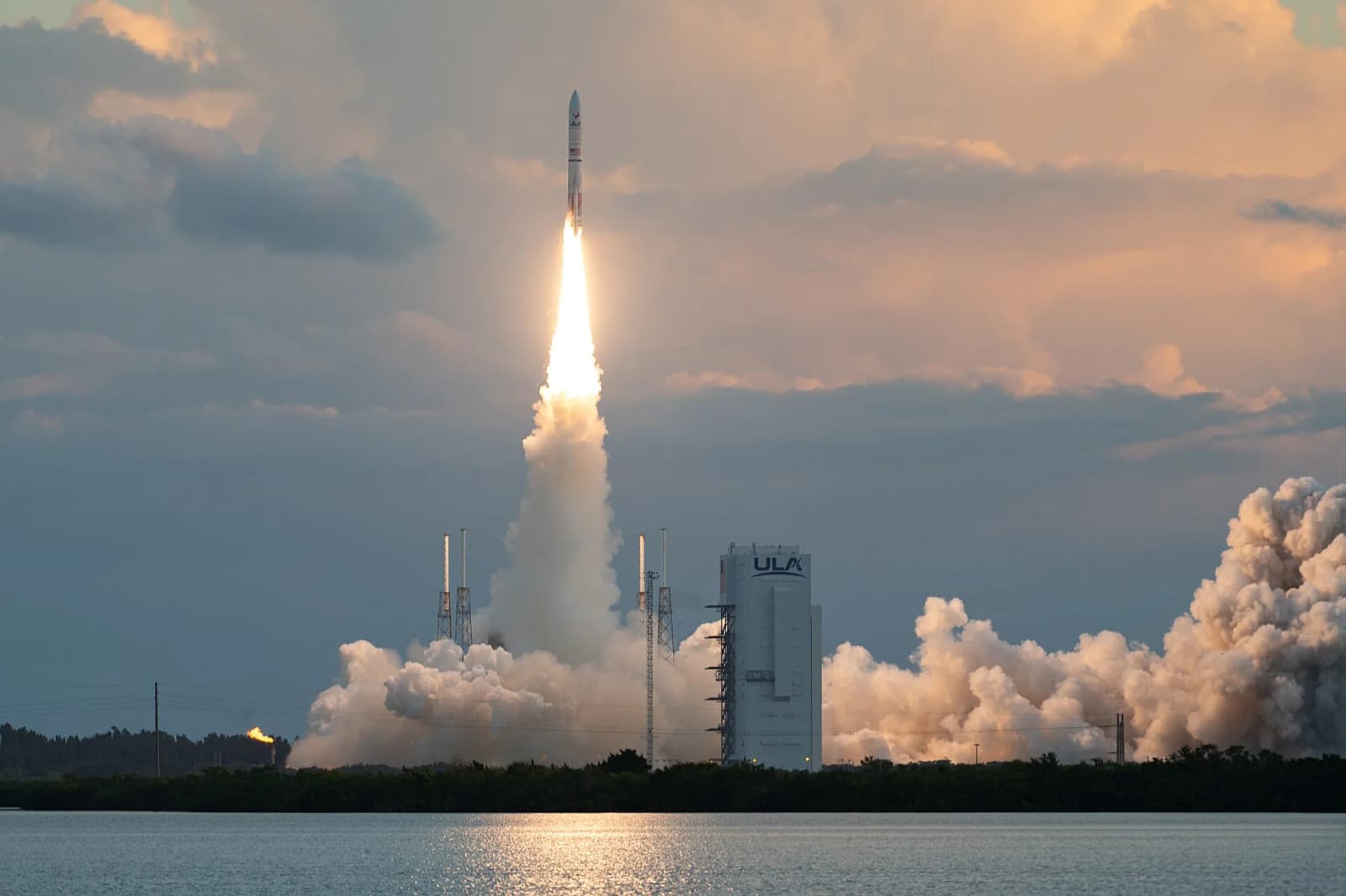
United Launch Alliance's Vulcan rocket failed to reach orbit on Sunday, 15 November, and the 40 Amazon Leo internet satellites it was carrying were lost. The flight was Vulcan's first in nine months and was meant to show that the rocket was ready to fly again.
The rocket lifted off at 12:40 pm US Eastern time (11:10 pm IST) from Space Launch Complex 41 at Cape Canaveral Space Force Station in Florida, Space.com reported.
What ULA said
About 50 minutes after liftoff, ULA posted an update on X. "Based on data received by our Launch Director, we confirm that the Vulcan vehicle launched from Space Launch Complex 41 suffered an anomaly 10 minutes into the flight and failed to deliver the Amazon mission to orbit," the company said. It added that because the anomaly had only just happened, it did not yet have specific data on the cause.
ULA did not say which part of the rocket failed. Space.com reported that the six solid rocket boosters appeared to work as expected and that a different problem ended the mission.
A comeback that went wrong
Vulcan first flew in January 2024 and had flown four times before Sunday. On two of those flights, in October 2024 and February 2026, a nozzle on one solid rocket booster failed. Both missions still reached their planned orbits. After the February flight, the US Space Force paused national security missions on Vulcan.
In an update on 28 October, ULA said its team had found several possible causes of the February booster problem and had addressed them with changes to the nozzle's design and manufacturing.
The mission, called Vulcan Leo 1, used Vulcan's VC6L configuration: six side-mounted boosters, a Centaur V upper stage built for low Earth orbit and a longer payload fairing, according to ULA's mission page. Spaceflight Now reported before launch that the satellites were due to begin separating about 70 minutes after liftoff, in 16 separation events over roughly 25 minutes.
The launch had already been delayed. A planned attempt on Friday, 13 November, was scrubbed after a power interruption at an Air Liquide nitrogen plant that supplies the launch pad, Spaceflight Now reported.
What it means for Amazon Leo
Amazon Leo, previously called Project Kuiper, is Amazon's planned satellite broadband network and will compete with SpaceX's Starlink. ULA said this was the first of 38 Vulcan launches booked for Amazon, following eight Atlas V missions. Space.com reported that about 400 Amazon Leo satellites had reached space before Sunday, launched on Atlas V, Falcon 9 and Ariane 6 rockets.
Before the launch, Amazon's Melissa Wuerl described Vulcan to Spaceflight Now as Amazon's "primary workhorse over the next several years". According to Spaceflight Now, the US Federal Communications Commission expects Amazon to have its 3,232-satellite first-generation constellation in orbit by July 2029.
The failure also comes at a difficult time for heavy-lift rockets. Bloomberg reported that Blue Origin's New Glenn has been grounded since it exploded during a ground test in May.
What next
ULA has not given a cause or a timeline for its investigation. Amazon had said before the launch that a second Vulcan mission could follow within weeks, Spaceflight Now reported. It is not yet clear whether that plan will change.