The China Manned Space Agency (CMSA) on 24 November 2026 named the three-member crew of its Shenzhou-24 mission at the Jiuquan Satellite Launch Center in Gansu province, northwest China. The crew includes Pakistani astronaut Muhammad Zeeshan Ali, who is set to become the first foreign astronaut to visit China's Tiangong space station.
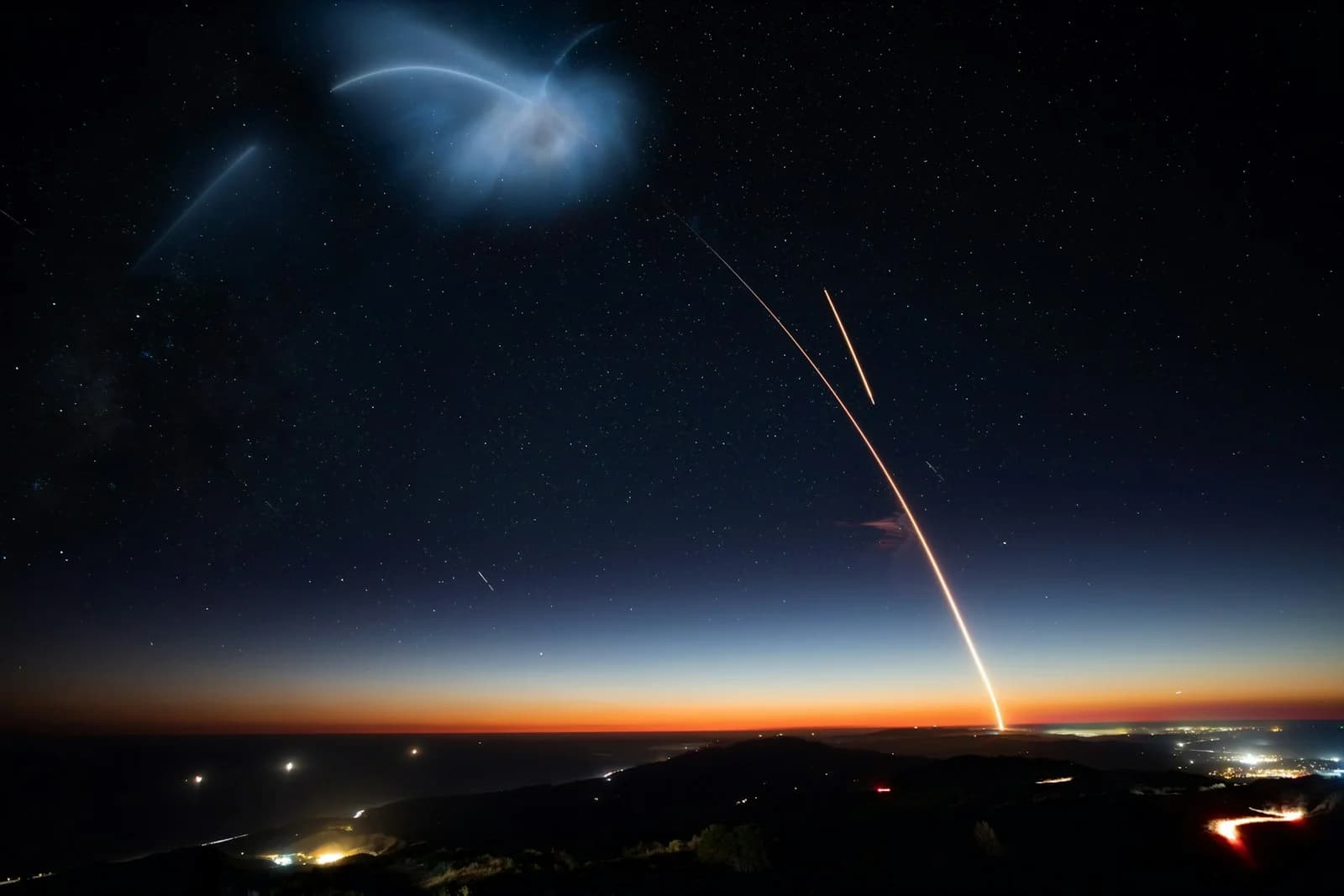
CMSA spokesperson Zhang Jingbo told a press conference that the Shenzhou-24 spacecraft will lift off at 8:18 am Beijing time on Wednesday, 25 November 2026 (5:48 am Indian time) on a Long March-2F rocket, according to a Xinhua report carried by the Global Times. The agency said the rocket would soon be filled with propellant.
Who is on the Shenzhou-24 crew?
The crew is made up of two Chinese astronauts and one Pakistani astronaut. Tang Hongbo, the mission commander and spacecraft pilot, has flown on Shenzhou-12 and Shenzhou-17 and will become the first Chinese astronaut to visit Tiangong three times, the Global Times reported from Jiuquan. Flight engineer Wu Yi belongs to China's third group of astronauts.
Muhammad Zeeshan Ali will fly as payload specialist. He is one of the first foreign astronauts chosen under a China-Pakistan cooperation agreement. Both Wu Yi and Ali will be making their first spaceflight, and this is the first Chinese crewed mission to carry a foreign astronaut.
How long will the Pakistani astronaut stay in orbit?
Ali's stay will be short. According to the Global Times, he will return to Earth aboard the Shenzhou-23 spacecraft. Zhu Yangzhu, a member of the Shenzhou-23 crew, will remain in orbit for the Shenzhou-24 mission and is expected to become the first Chinese astronaut to spend a full year in space.
Shenzhou-24 is the eighth crewed mission in the application and development stage of the Chinese space station and the 41st flight mission of China's human spaceflight programme, the CMSA said.
How was the Pakistani astronaut trained?
Two Pakistani astronauts have been training in China. Shi Yusheng, a technical expert at the Astronaut Center of China, said all user interfaces on the space station are in Chinese, so the Pakistani astronauts studied the language every day. Their training also covered the Chinese symbols and content linked to their assigned tasks, and their language skills are now enough to carry out the mission, he told the Global Times. Shi described the mission as pioneering and highly challenging, and said the training material would serve as a reference for similar missions in future.
Al Jazeera reported on 7 November that two Pakistani pilots, Zeeshan Ali and Khurram Daud, had trained for months at the China Astronaut Research and Training Center in Beijing. Their programme included practical operational exercises and intensive Chinese lessons. China had not then named which of them would fly.
Why does this mission matter?
Until now, only Chinese astronauts have worked aboard Tiangong. Flying a Pakistani payload specialist opens the station to international crew members for the first time and deepens space cooperation between China and Pakistan. Al Jazeera also reported that the China National Space Administration plans to carry Jinnah-1, Pakistan's first lunar rover, weighing 35 kg, on a future mission to study plasma behaviour, radiation and lunar soil.
What happens next?
The launch is scheduled for Wednesday morning from Jiuquan. Once aboard Tiangong, the Shenzhou-24 crew will work alongside Zhu Yangzhu, while Ali is due to come back to Earth on Shenzhou-23 after his short stay. The reports published on 24 November did not give a date for that return.