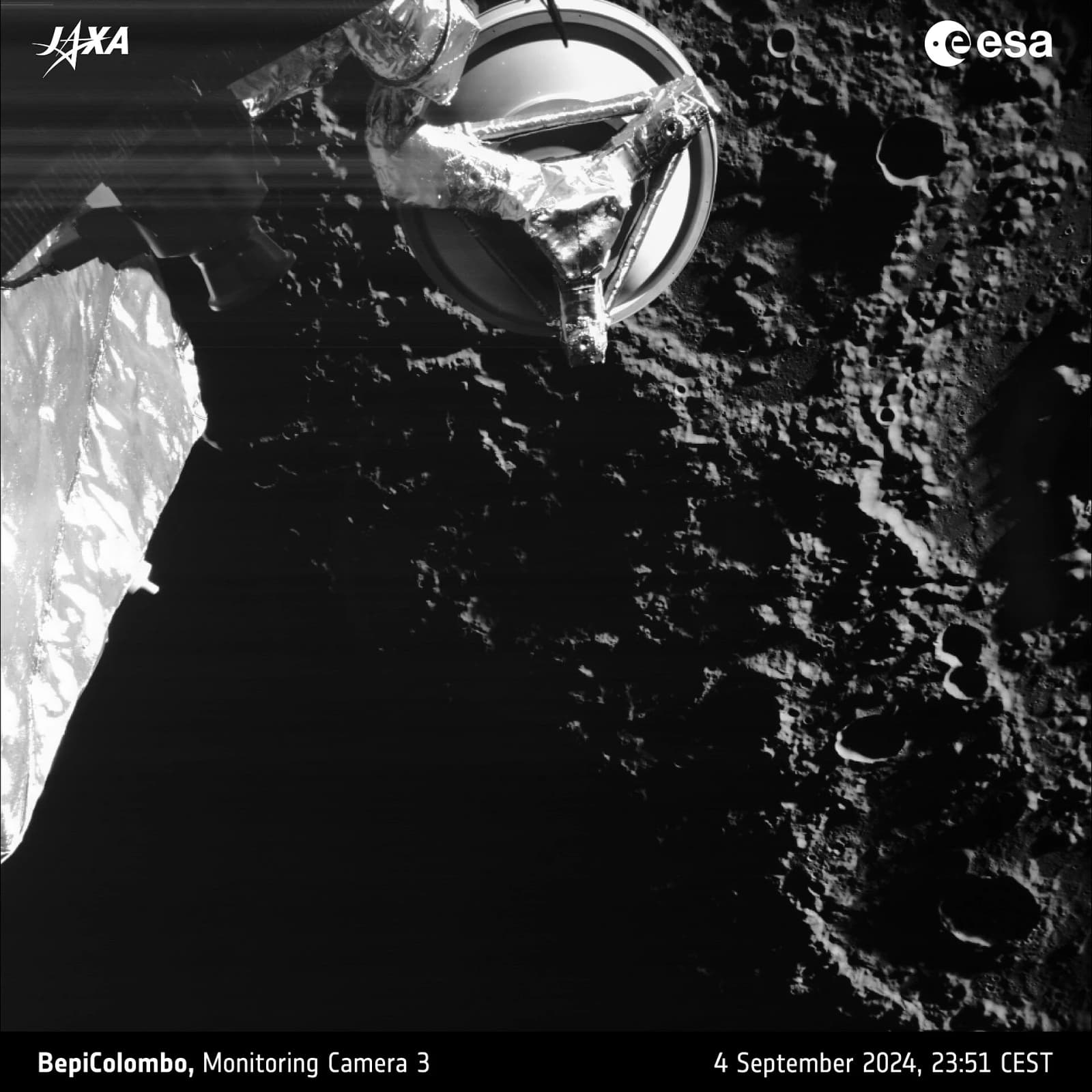
The European Space Agency (ESA) said on 23 November 2026 that its joint Mercury mission with Japan, BepiColombo, is safe and in a stable orbit around the planet, even though a software problem cut short the engine burn meant to capture it on 21 November. Flight controllers at ESA's operations centre in Darmstadt, Germany, say the orbiters remain on track to separate on 9 December.
What went wrong during the orbit-insertion burn?
The burn stopped early because the spacecraft halted it on its own and went into safe mode. According to ESA's update, the four axial thrusters fired at 18:24 UTC on 21 November, when BepiColombo was 635 km above Mercury's surface, for a manoeuvre planned to last 37 minutes.
When contact was restored through ESA's New Norcia deep-space antenna, telemetry showed the burn had been interrupted and the spacecraft was in safe mode, a protective state that halts non-essential activity. The burn achieved about 77% of the planned change in velocity. Teams at the European Space Operations Centre (ESOC), working with manufacturer Airbus and the Japan Aerospace Exploration Agency (JAXA), traced the fault to software involving attitude guidance and thruster control, ESA said.
"Upon finding Bepi in safe mode, it was like flipping a switch. Everybody was focused in understanding what had happened," said Ignacio Tanco, ESA's BepiColombo Flight Operations Director.
Is the spacecraft actually in orbit?
Yes. ESA said its Flight Dynamics team confirmed the capture at about 01:00 local time. "We confirm Mercury orbit capture!" said Frank Budnik, ESA's BepiColombo Flight Dynamics Manager.
The spacecraft is now in a 75-hour orbit rather than the 58-hour orbit originally planned. ESA said the rest of the insertion sequence has been adapted, no additional burns are needed, and the change does not affect the separation of Japan's Mio orbiter or the ability of ESA's Mercury Planetary Orbiter (MPO) to reach its planned science orbit.
ESA said BepiColombo is the first mission to enter orbit around another planet using "weak stability capture", a technique previously used only by some spacecraft travelling to the Moon. "It's a dynamic sequence! Each new manoeuvre is based on the previous ones," Budnik said.
Why it matters
BepiColombo becomes only the second spacecraft to orbit Mercury, after NASA's MESSENGER, which circled the planet from 2011 to 2015, Space.com reported. The mission launched in October 2018 on an Ariane 5 rocket from French Guiana and used flybys of Earth, Venus and Mercury on its way. Its goals include studying Mercury's magnetic field, its large iron core and how its magnetosphere interacts with the solar wind.
"Our almost 600-strong science team will be delighted to see BepiColombo pass this key milestone," said Geraint Jones, ESA's BepiColombo Lead Project Scientist.
What is still not known
ESA has not published a detailed explanation of why the software interrupted the burn beyond identifying the area involved.
What happens next
- 9 December 2026 (10 December in Japan): MPO and Mio separate.
- 16 December 2026: Mio's sunshield, still attached to MPO, is ejected.
- March 2027: MPO reaches its final orbit after further thruster burns.
- April 2027: science operations begin.
Photo source · European Space Agency, CC BY-SA 3.0 IGO