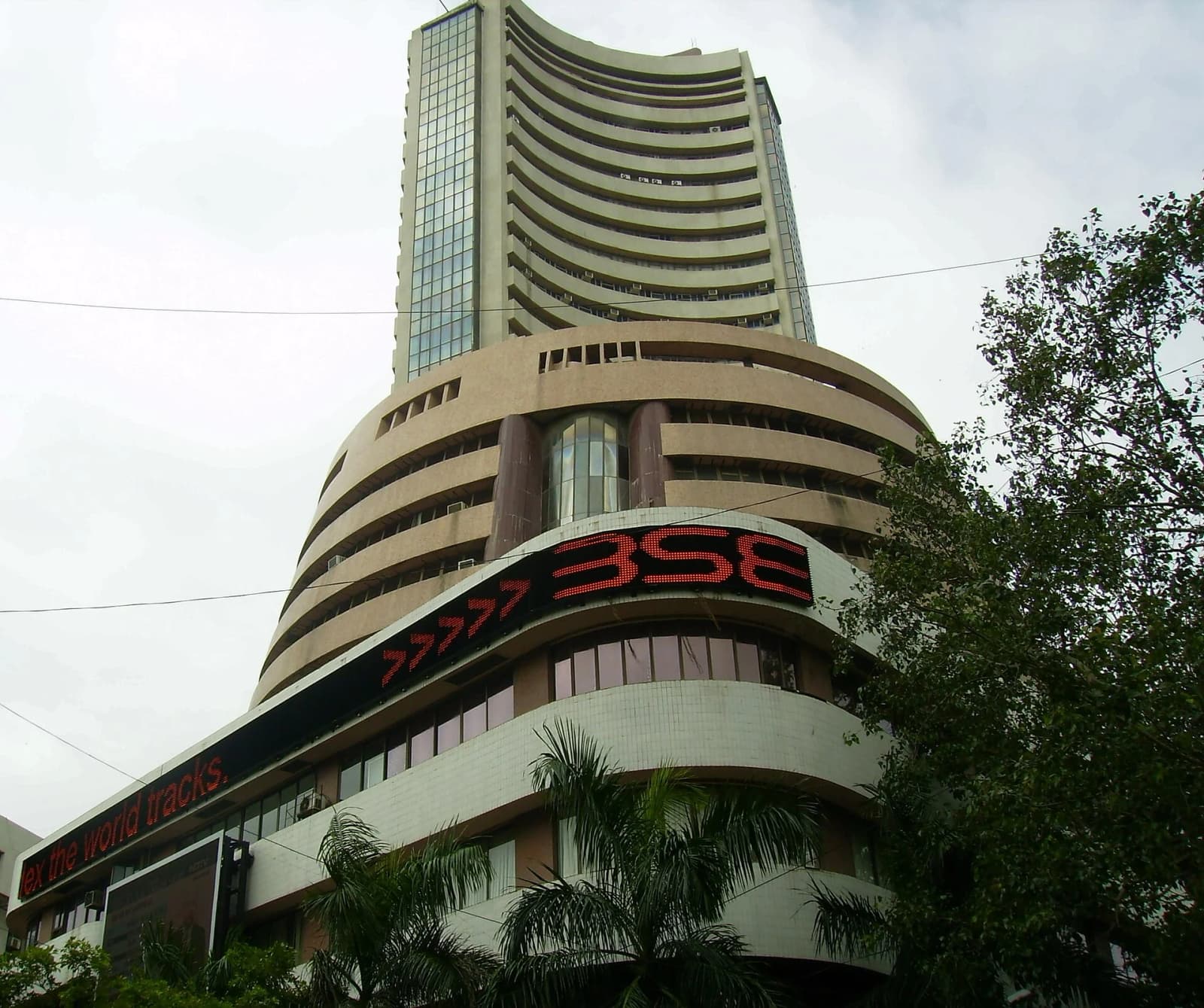
Indian equity benchmarks suffered a sharp fall on Monday, 23 November 2026, with the BSE Sensex dropping 1,483.72 points, or 1.77%, to close at 82,435.99 in Mumbai, according to Business Standard's market coverage. The National Stock Exchange's Nifty 50 lost 450.95 points, or 1.75%, to settle at 25,349.65, ending the session well below Friday's levels.
Metal shares led the decline, while banking stocks, which had powered the market's recent rally, also came under heavy selling. Information technology shares were the main exception, with the Nifty IT index rising about 2%.
How much did investors lose?
Investors lost about ₹5.64 trillion on paper by mid-afternoon. Business Standard reported that, as of 2:30 pm, the combined market capitalisation of all BSE-listed companies had fallen to ₹509.69 trillion from ₹515.33 trillion at Friday's close. A final end-of-day figure was not included in the reports checked.
Which sectors and stocks fell the most?
Nifty Metal was the worst-performing sectoral index on the National Stock Exchange (NSE), according to both ETV Bharat and Business Standard. Bank Nifty ended lower, and the PSU bank, private bank and financial services indices also ended lower, ETV Bharat reported. Auto shares closed in the red as well.
Among Nifty constituents, Tata Steel, Axis Bank and HDFC Bank were the biggest drags, ETV Bharat said, while ICICI Bank, Punjab National Bank, Canara Bank and Bank of Baroda also declined. Tata Steel's fall came on the day investors reacted to its plan to buy a 26.38% stake in APL Apollo Tubes and launch an open offer; Business Standard reported that APL Apollo Tubes shares fell as much as 21.9% during the session.
The broader market fell less steeply. The Nifty Midcap 100 lost 1.01% and the Nifty Smallcap 100 slipped 0.66%. In IT, Tata Consultancy Services, Persistent Systems and Coforge were among the top gainers, Business Standard reported.
Why did the market fall?
Reports pointed to several overlapping reasons. ETV Bharat said investors booked profits after a strong run in recent weeks as indices approached earlier peaks, and that the rally had been narrowly concentrated in banks and financials, so selling there weighed heavily on the indices. It also cited weak global metal prices, a stronger US dollar and expectations of US interest rate rises. Monday was also the day of the November monthly futures and options expiry, ETV Bharat noted.
The fall came as Asian markets were already under strain from a technology-led sell-off; MapMyTimes earlier reported on support measures announced in China and South Korea as an AI-led slump hit regional markets.
The rupee weakened 29 paise to a provisional 92.91 against the US dollar, ETV Bharat reported, saying early support from easing crude oil prices was offset by a firm dollar and the equity sell-off.
What do the flow figures show?
According to ETV Bharat, foreign institutional investors had been net buyers of about ₹1,11,950 crore in Indian equities through 20 November, while domestic institutional investors had been net sellers of about ₹61,787 crore over the same period. Exchange data for Monday's institutional activity had not been reported in the sources checked at the time of writing.
What happens next?
Market participants will watch whether foreign buying in banking stocks holds up after Monday's selling, and how metal shares respond to global prices and the dollar. Interest rates are another focus at home: a Reuters poll reported by MapMyTimes found economists expect the Reserve Bank of India to raise the repo rate to 5.75% on 4 December.
What is confirmed: the closing levels and percentage changes of the Sensex and Nifty, and the sectoral moves cited above. What is not yet confirmed: final end-of-day investor wealth loss and Monday's provisional institutional flow figures.
Photo source · Niyantha Shekhar, CC BY 2.0