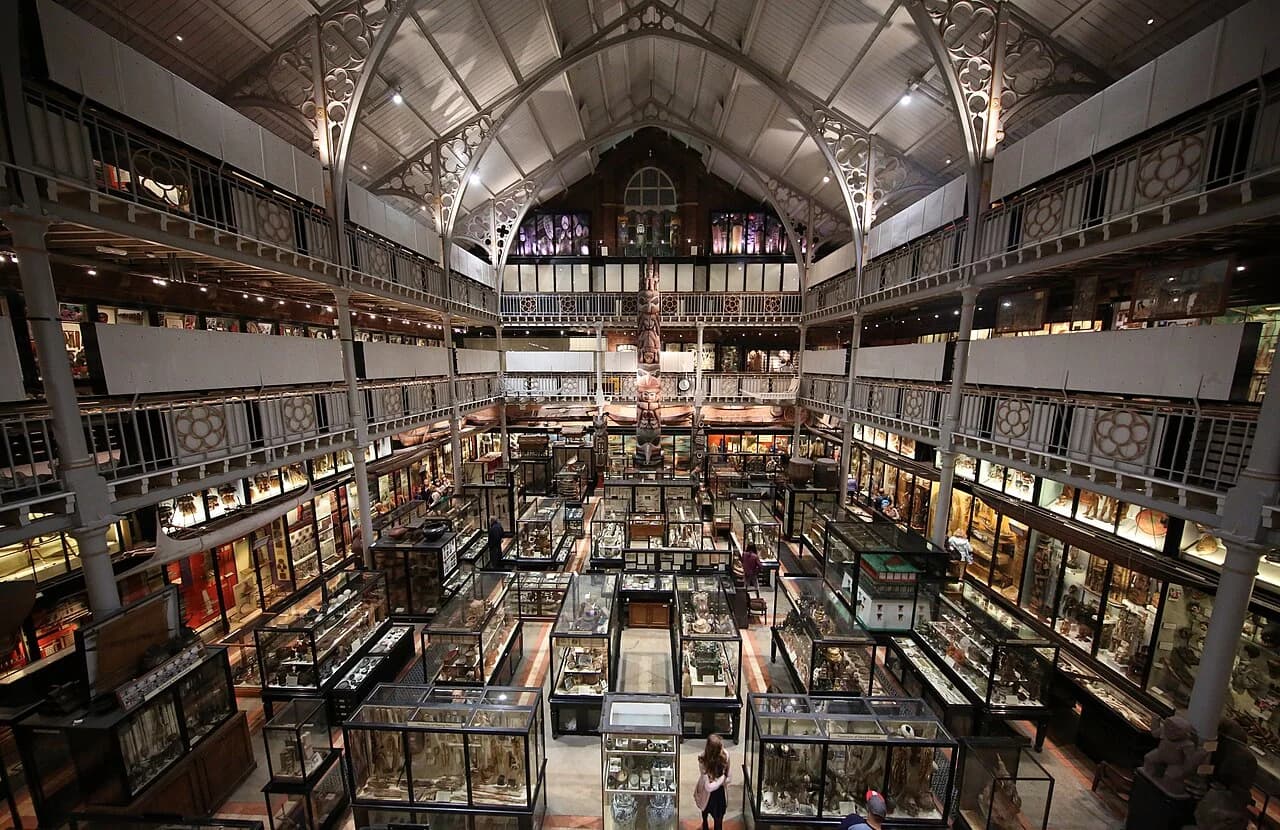
The Pitt Rivers Museum at the University of Oxford on 27 November 2026 opened an exhibition that puts the belongings of Naga leader Rani Gaidinliu on public view for the first time, nearly a century after British colonial officers seized them in what is now northeast India. The show, titled The Afterlives of Captured Objects: Reanimating the Gaidinliu Collection Digitally, runs in Oxford, United Kingdom, until 31 August 2027.
According to the museum's exhibition page, the objects have been held in its stores since they were sent there in the colonial era, and this is the first time they have been displayed. Entry is free, and the exhibition occupies the museum's Special Exhibition Gallery and Long Gallery.
What is on display?
The display brings together 27 objects that make up what the museum calls the Gaidinliu Collection, according to a report in the Nagaland newspaper Morung Express based on museum material. They include clothing worn by Gaidinliu, shown on a mannequin, a basket in which she kept her notebooks, and twelve notebooks written in a script that has not been translated.
Other items include a stick topped with a monkey skull, said to have been kept above her bed to ward off evil spirits, three wooden clubs used by Nagas to cast omens, two spiral arm bands and a spiked metal bangle. Two textiles taken in 1931 from clay figures in a temple at Kambiron in Manipur are also shown; the report says British troops later destroyed both the figures and the temple.
Who was Gaidinliu?
Gaidinliu was a Rongmei Naga religious and political leader who was arrested in 1932, at the age of 17 according to the museum, for leading an uprising against British rule. Morung Express reports that she was born in Manipur in 1915, led the revolt in the late 1920s with her cousin Jadonang, who was executed in 1931, and was freed only after independence in 1947.
She later became the spiritual guide of the Heraka religion and led a movement for a Zeliangrong Naga homeland spanning three northeastern states. She received the Padma Bhushan in 1982 and died in 1993, the report adds.
How did the objects reach Oxford?
The museum's records, as summarised by Morung Express, trace the items to anthropologists, district officers and British army personnel in the 1930s. Colonial official JP Mills is recorded as seizing her notebooks and ritual objects at Hangrum in present-day Assam in March 1932, after she escaped capture. Her body ornaments reached the museum through an Assam Rifles officer, though the museum says it has no record of how they were first obtained.
The museum has stated that, so far, it has not received any request to repatriate the collection.
A digital homecoming
The exhibition grows out of a four-year research project, DiMuse, led by researchers from India and the universities of Edinburgh and Oxford. It was initiated by Arkotong Longkumer of the University of Edinburgh, with Oxford's Clare Harris as co-investigator, and was funded by the UK's Arts and Humanities Research Council, according to the report.
The team digitised the objects in two and three dimensions and took them back to Naga communities in the three Indian states where Naga people live, through workshops, pop-up exhibitions and social media. Digital copies are being handed to Gaidinliu's family and to Naga communities. In consultations held during the project, most respondents said the collection should stay at the Pitt Rivers for now while community engagement continues.
The show also screens a film by the late documentary maker Tarun Bhartiya on an annual Zeliangrong pilgrimage to Bhuban Cave in Assam. Bhartiya began the work in 2023 and died in 2025 while making it.
Why it matters
The display comes as museums face growing questions over objects taken during colonial rule. The same museum has also returned ancestral human remains to Nagaland, as MapMyTimes reported in 39 Naga Ancestral Remains Return Home to Nagaland After Eight Decades at Oxford Museum. The Gaidinliu exhibition takes a different route, keeping the objects in Oxford while sharing them digitally with the communities they came from.
Photo source · Geni, CC BY-SA 4.0