Filmmaker Karthik Subbaraj said on Friday, 27 November 2026, that villainy on screen is often rooted in society rather than in a single person, speaking at an interview session titled "What If the Villain Is Right?" at the 57th International Film Festival of India (IFFI) in Goa. The conversation was moderated by film critic Sudhir Srinivasan, according to a release issued by the Press Information Bureau for the Ministry of Information and Broadcasting.
What did Karthik Subbaraj say about villains?
Subbaraj argued that nobody is born purely good or purely bad. "The base is grey for everyone," he said, explaining that the people someone meets and the situations they live through shape whether they end up being seen as a hero or a wrongdoer.
Using his film Dorothy as an example, he separated characters who knowingly do evil from those whose harmful behaviour comes from deep social conditioning. He described Whistle Veeraiya as an openly evil figure, but suggested that a character such as the parotta shop owner could be more dangerous because such people do not recognise their own prejudice or wrongdoing.
According to the PIB account, Subbaraj said Dorothy presents masculinity and patriarchal attitudes as the forces behind its protagonist's death, making an oppressive mindset, not one individual, the true antagonist. He drew a similar parallel with Mercury, in which the collective mentality of a village is portrayed negatively.
Humiliation, guilt and accountability
The director also reflected on how stories deal with punishment. He observed that mocking or laughing at someone's inability can hurt more than a scolding, and said remorse and guilt can themselves work as punishment. In his view, the consequences of a character's actions do not always have to be shown as physical harm or death.
Can cinema change audiences?
Subbaraj said he believes it can. He recalled audience reactions to Dorothy, including moments when viewers embraced transgender people and men were moved to tears. Such responses, he said, strengthened his belief that films can go beyond entertainment to build empathy and encourage social change. He added that the same idea of change through storytelling had shaped his approach to Jigarthanda.
Through the session he stressed that he avoids presenting characters as entirely virtuous heroes or irredeemable villains, preferring to leave moral judgement to viewers so they can weigh characters' motives for themselves.
Why it matters
Subbaraj is among the better-known Tamil filmmakers to address IFFI delegates this year, and his remarks tie into the festival's 2026 theme, "Stories Without Borders". The organisers framed his session as an example of how stories set in a specific social and cultural setting can raise universal questions about morality, empathy and human behaviour.
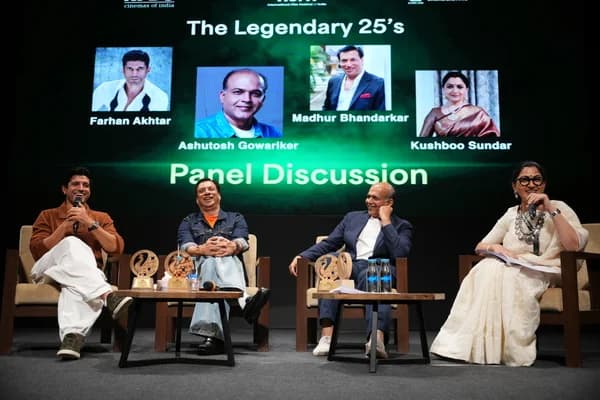
The talk was part of a crowded week of masterclasses and conversations in Goa. Earlier on Friday, directors Ashutosh Gowariker, Farhan Akhtar and Madhur Bhandarkar looked back at three landmark films from 2001, while the festival as a whole is screening more than 230 films from 87 countries.
What next
The 57th IFFI continues in Goa with screenings, panels and industry sessions. PIB has said further session reports are being published through IFFILOID, the festival's daily bulletin.