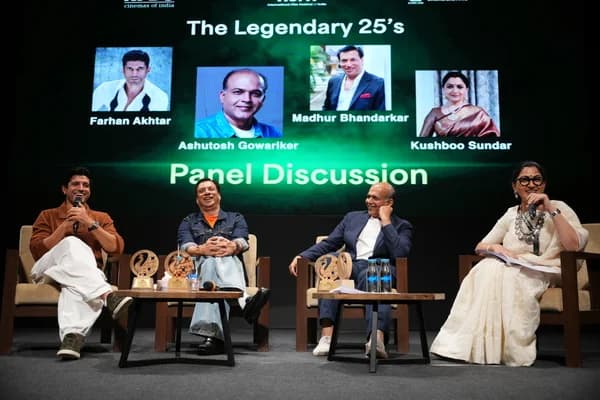
Twenty-five years after Lagaan, Dil Chahta Hai and Chandni Bar reached cinemas in 2001, their directors Ashutosh Gowariker, Farhan Akhtar and Madhur Bhandarkar shared a stage at the 57th International Film Festival of India (IFFI) in Goa, according to a Press Information Bureau release issued on 27 November 2026. The session, titled 'The Legendary 25s', was moderated by actor and producer Khushboo Sundar.
Why were these three 2001 films singled out?
The festival presented them as films that broke with convention in a single, unusually rich year for Hindi cinema. Lagaan followed a village that challenges an empire through a cricket match; Dil Chahta Hai tracked three friends through friendship, heartbreak and growing up; and Chandni Bar turned attention to women whose lives are often overlooked. The release describes the three as having changed the conversation around what mainstream Hindi films could be about.
Bhandarkar: real life over 'reel life', and limits to AI
Madhur Bhandarkar spoke about how hard it once was to pitch stories centred on women when the industry was reluctant to show them in unconventional ways. He linked Chandni Bar, Corporate and Fashion to a belief that cinema should show women in all their complexity. "For me, cinema has always been a mirror to society. I would rather explore real life than create an idealised reel life," he said.
He also addressed the rise of artificial intelligence and visual effects. While he said such tools could open new possibilities for visual storytelling, he insisted they could not substitute for human feeling. "AI and VFX can certainly enhance the visual experience and expand the possibilities of filmmaking, but they can never replace the human touch," Bhandarkar said.
Gowariker: every film is a 'reset to zero'
Ashutosh Gowariker said each new project forces a filmmaker to start afresh. He argued that unusual films need patience from the industry. "Anything that is new, different or unconventional needs more time to find its audience. We must not judge a film only by its opening weekend," he said.
On acting, the Lagaan director stressed listening and pauses. "For me, a true performance lies in the pauses," he said, adding that the way an actor listens and reacts to a cue matters as much as the lines. He also urged filmmakers to trust their own stories rather than second-guess what audiences want.
Akhtar: leave the ego at the door
Farhan Akhtar told aspiring writers and directors to back their instincts. "A director or writer must keep an open heart and mind, and leave their ego behind. Be fearless, believe in your vision and tell the story you truly want to tell," he said. He called a screenplay a "living, breathing thing" that grows through the work of writers, actors and technicians together, and warned against heavy promotion overshadowing the film itself.
What does the session say about Indian cinema today?
It points to a debate the industry is having right now: how much weight to give opening-weekend numbers, marketing and new technology, against original, human-centred storytelling. All three filmmakers, speaking a quarter-century after their breakthrough year, came down on the side of creative risk. The discussion tied into this year's festival theme, 'Stories Without Borders'.
The 57th IFFI is under way in Goa, where MapMyTimes has also reported on accessible screenings of 25 Indian Panorama films. More masterclasses and conversations are scheduled before the festival closes.