This is a MapMyTimes opinion piece. It responds to BBC Travel's decision to include Meghalaya in its list of the 20 best places to travel in 2027, which Chief Minister Conrad K. Sangma welcomed on 19 November 2026 and which MapMyTimes reported here. The recognition is deserved. The harder question is whether the living root bridges at the heart of it can take the visitors it will bring.
Why does this listing matter so much for Meghalaya?
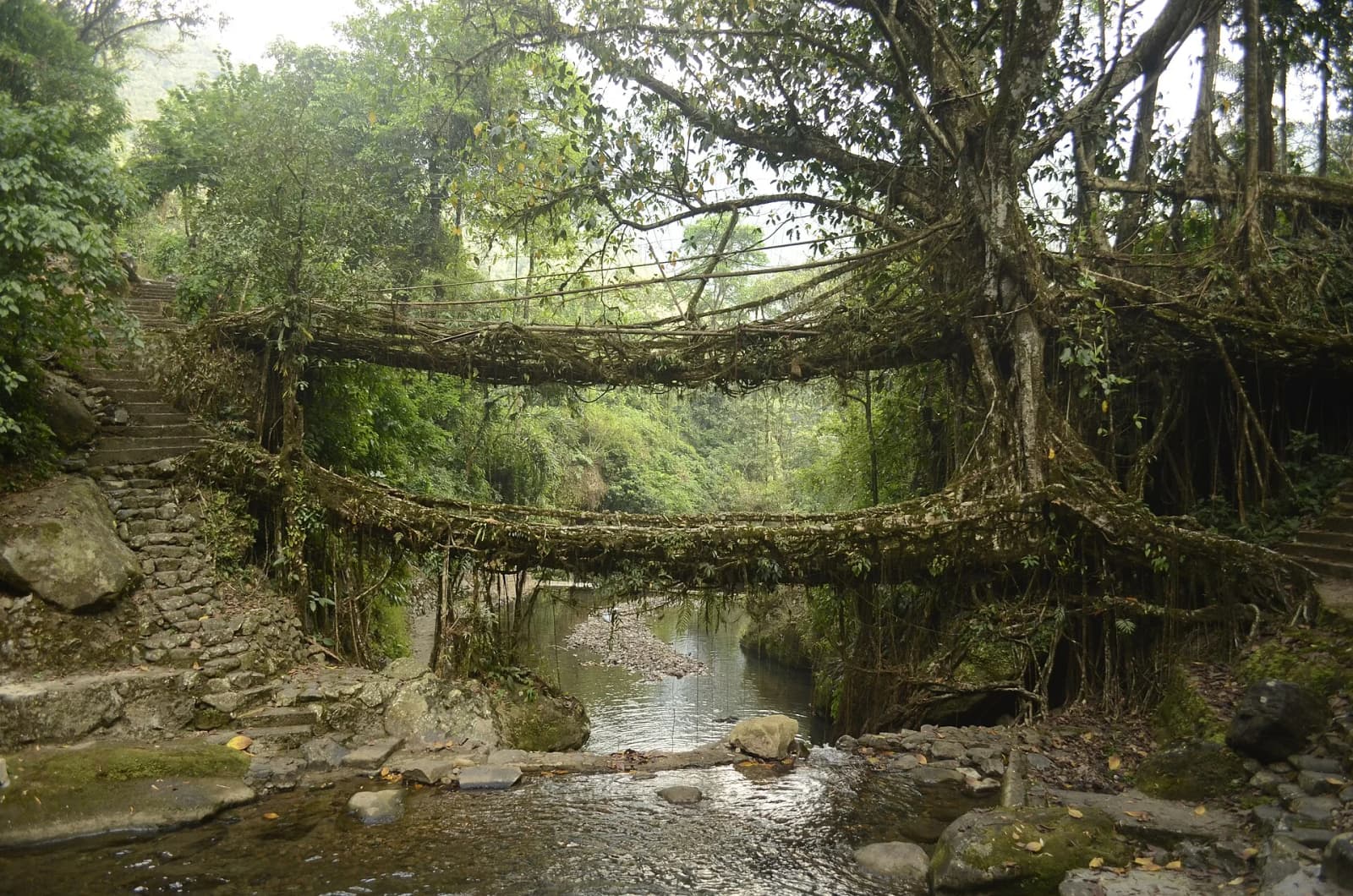
It matters because Meghalaya is the only Indian destination on the list, according to Mr Sangma, and because the feature singles out exactly the places that are most fragile. A Press Trust of India report from Shillong says the BBC piece highlights the state's living root bridges, sacred forests and indigenous communities, names the trek to Nongriat's double-decker root bridge as a signature experience, and praises a community-based model built on homestays. The state is supporting the creation or upgrading of 1,000 homestays ahead of the 39th National Games in March 2027. "Meghalaya is ready to welcome the world!" the Chief Minister wrote on X.
Are the root bridges ready for a surge of visitors?
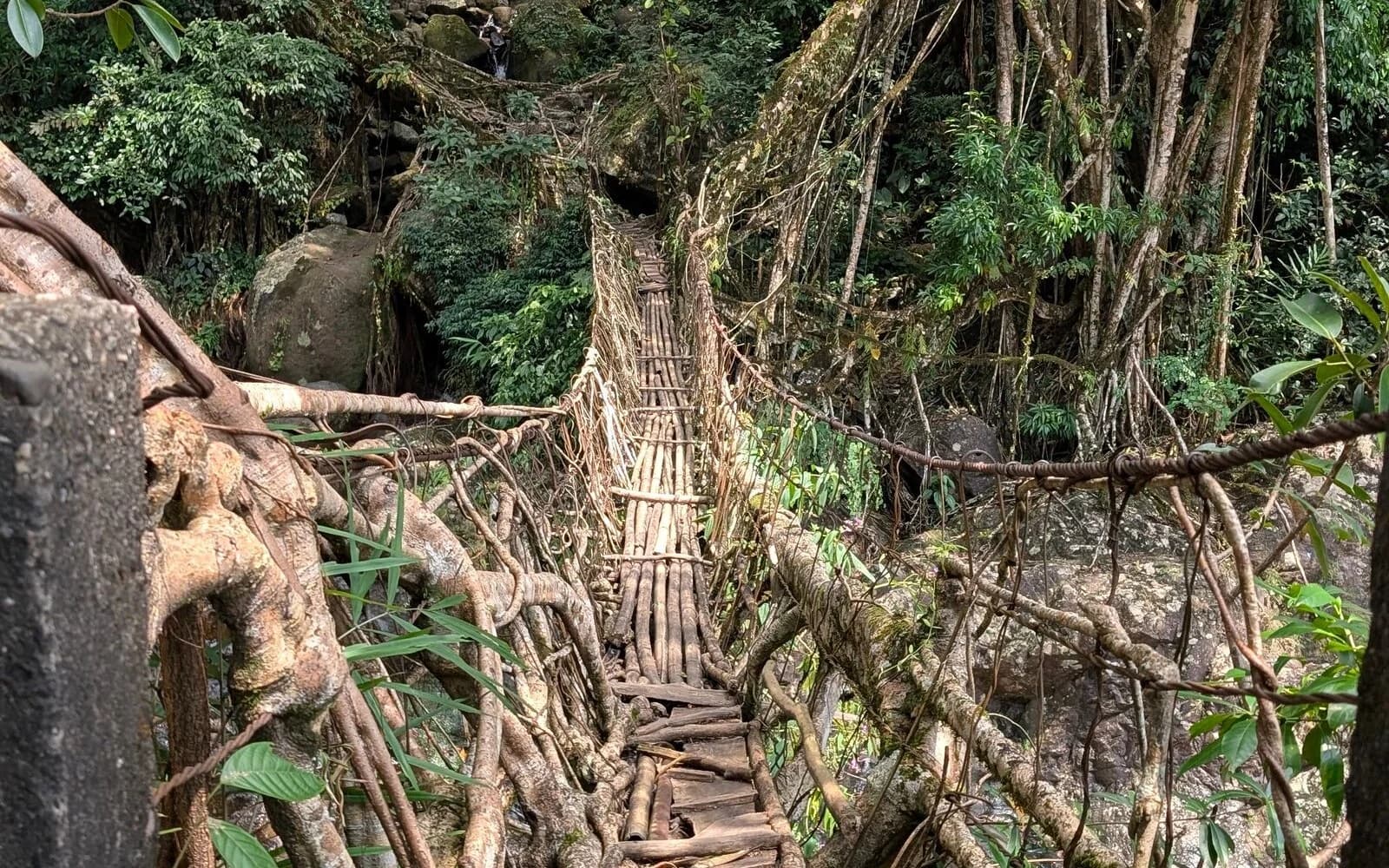
Not without clear limits, and the warning signs are already on record. A Mongabay India report from November 2024 found that some of the most visited bridges had been reinforced with concrete or steel, their approach paths paved, and that many bridges were being neglected as concrete structures crept closer. Traditional village institutions, the report noted, were struggling to keep pace with these changes. The knowledge needed to grow and repair the bridges rests with roughly 20 skilled elders who train young apprentices each monsoon.
There is also a strong conservation base to build on. With support from the United Nations Development Programme, a local Heritage Committee has mapped more than 132 living root bridges, adopted 30 of them for conservation, and proposed a 50-metre protected forest belt, known locally as law adong, around each one. The bridges are already on UNESCO's tentative list of World Heritage sites. A sudden rush driven by a global ranking could undo that patient work faster than any monsoon.
What is the strongest case against limits?
The strongest objection is that tourism money is exactly what these villages need. Mongabay reported that some villages have cut back on farming to earn from visitors, and a homestay owner who has just borrowed to upgrade a room is unlikely to welcome a cap in the year the world finally takes notice. It can also be argued that the state already promotes community-led tourism, and that rules imposed from Shillong would repeat the "top-down" approach local stakeholders have complained about. Those are fair points. Badly designed limits could hurt the same families the listing is meant to help.
What should Meghalaya do instead?
The answer is not fewer visitors overall but smarter spreading of them, decided by the communities themselves. Four steps would help:
- Village-set visitor ceilings at the busiest bridges, such as Nongriat, with timed entry slots on peak days, agreed by local institutions rather than imposed by the state.
- Ring-fenced entry fees that pay the elders and apprentices who maintain the bridges, so conservation becomes a paid job, not a sacrifice.
- A firm no-concrete rule on the bridges and their immediate approaches, backed by the proposed 50-metre forest belts.
- Using the 1,000 homestays to spread demand across the more than 132 mapped bridges, and publishing footfall data so everyone can see where pressure is building.
The National Games in March 2027 will be the first real test. If Meghalaya treats this recognition as a reason to plan carefully rather than simply to market harder, the bridges that took generations to grow can still be standing, and still living, when the next list is drawn up.