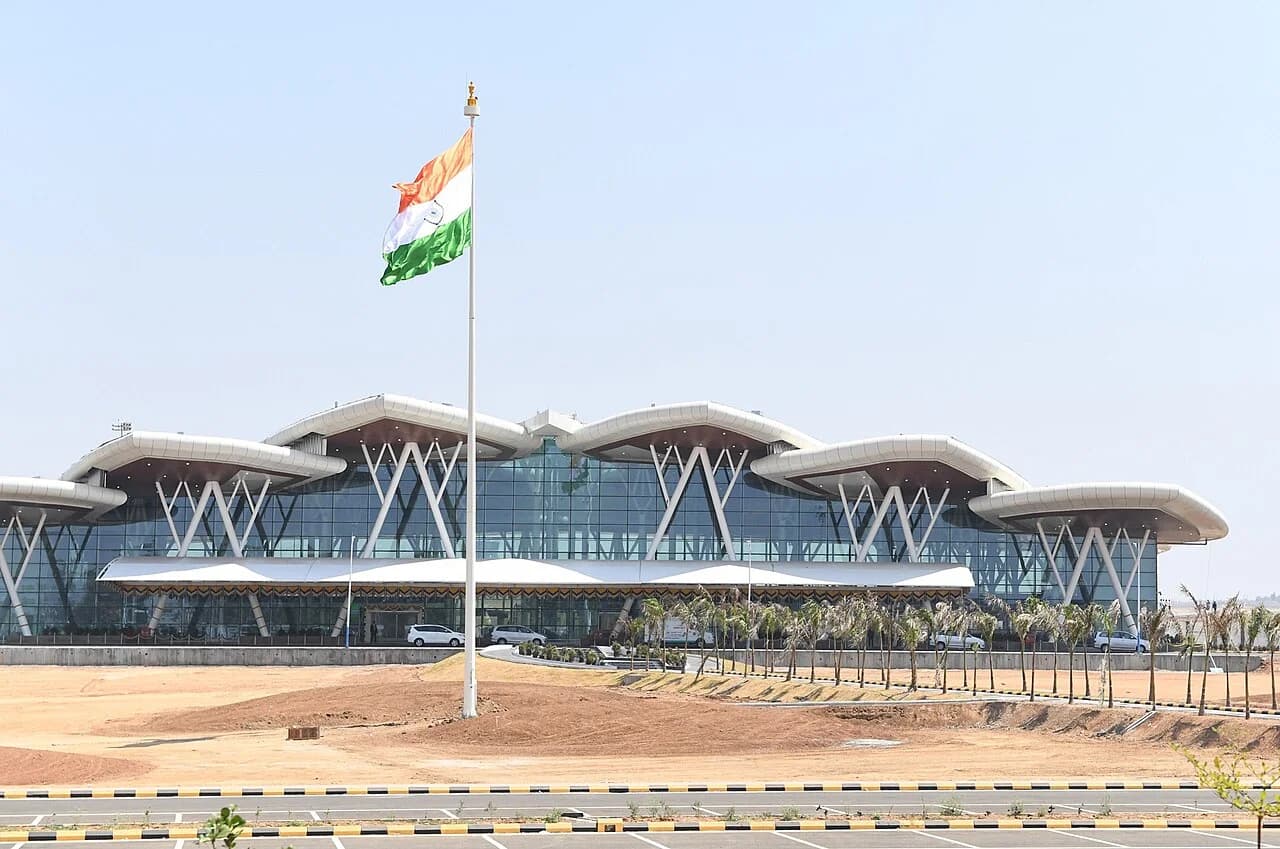
This is a MapMyTimes opinion piece. It responds to the news, reported by MapMyTimes on 27 November 2026, that Shivamogga Airport in Karnataka has been left without scheduled passenger flights since 21 November, after Star Air's three-year Viability Gap Funding support under the Centre's UDAN regional connectivity scheme ran out.
An airport that was inaugurated on 27 February 2023 and began commercial operations in August that year now sits idle. It is run by the Karnataka State Industrial and Infrastructure Development Corporation, employs more than 200 people and costs about Rs 95 lakh a month to keep open. The planes have gone, but those bills have not.
Why did Shivamogga lose its flights?
Shivamogga lost its flights because, for the airlines, the routes did not pay once the subsidy ended. IndiGo withdrew its Bengaluru service from 1 May and SpiceJet suspended operations from 9 June, The Hans India reported on 7 November, citing low passenger demand, inadequate government support and the expiry of UDAN incentives. Star Air, the last carrier, followed when its support period ended.
None of this was a surprise. In March, Karnataka's Industries Minister M.B. Patil said that airports at Kalaburagi and Bidar had already shut after airlines left at the end of their lock-in period, and warned that Shivamogga could face the same fate within one or two years, ETV Bharat reported. It took about eight months.
The case against more subsidy
The strongest objection deserves a fair hearing. UDAN was designed to give routes a head start, not permanent life support. If three years of public money could not create enough demand for a Shivamogga flight to stand on its own, critics argue, another five years may only delay the same result at greater cost, money that could go to roads, rail or buses that more people use. Airlines are not charities, and pressing them to fly near-empty aircraft helps no one.
That argument is right about one thing: subsidy without a plan for demand is waste. But it misses what a sudden cliff does. When support stops on a fixed date, airlines leave together, passengers lose confidence, and the next operator has to rebuild the market from zero. The public money already spent on the runway and terminal earns nothing while the airport waits.
What should change?
There are signs of learning. UDAN 6.0, which Shivamogga has entered, offers carriers up to five years of support and drops the mandatory one-year commercial break, and Lok Sabha MP B.Y. Raghavendra has asked the state government for short-term bridging support so Bengaluru and Hyderabad flights can restart before new routes begin, possibly in February or March 2027. Karnataka has proposed 10 new destinations from Shivamogga. These are reasonable steps, and we would add three more.
- Taper, do not cut. Support should shrink in stages tied to load factors, so airlines and travellers are not left facing a single cut-off date.
- Publish the numbers. Route-wise passenger loads and subsidy paid should be public, so voters can judge which routes are growing and which are not.
- Build demand on the ground. States that want airports should pair flights with road links, tourism promotion and cargo, rather than expecting a runway alone to create traffic.
The bottom line
Regional air connectivity is worth pursuing, but it is a long game. Shivamogga's empty terminal is a warning that the Centre, the state and airlines should use the UDAN 6.0 round to design support that lasts long enough, and ends gently enough, for small-city routes to stand on their own.
Photo source · Prime Minister's Office, GODL-India