This is a MapMyTimes opinion piece. Parliament meets in a special sitting from Monday, 30 November 2026, where the Union government plans to introduce the Constitution (132nd Amendment) Bill, 2026, the Delimitation (Second) Bill, 2026 and a companion bill for Union Territories, after the Union Cabinet approved them on 27 November. Bills that redraw how every Indian is represented deserve a debate that is careful as well as timely, and the present schedule risks giving them less scrutiny than they need.
What do the bills propose?
The bills propose the largest expansion of India's legislatures in decades. According to reports on the list of business circulated to MPs, the 132nd Amendment Bill would raise the number of Lok Sabha and Assembly seats in every state and Union Territory by 50% of their existing strength, lifting the maximum size of the Lok Sabha to 850 and adding 650 members to state Assemblies in all. Its statement of reasons says the uniform increase is meant to "enhance representation while maintaining the existing relative distribution of seats among states." The Delimitation (Second) Bill would set up a Delimitation Commission to redraw constituencies, and the package is designed to enable one-third reservation for women in the Lok Sabha and state Assemblies. MapMyTimes has reported the government's plan to bring the bills in the special sitting.
Why does the timing matter?
The timing matters because citizens and many legislators have had very little time to read the new texts. According to a report in The Hindu, a group of 34 former civil servants, constitutional experts and activists wrote to Parliamentary Affairs Minister Kiren Rijiju on 28 November saying the drafts were uploaded late on 27 November, leaving less than three days for public scrutiny. They asked for a 30-day consultation under the government's own 2014 Pre-Legislative Consultation Policy and for the bills to be published in Hindi and major regional languages. Their letter also raised the absence of explicit safeguards against gerrymandering.
These are not arguments against the bills' goals; the promise of reserved seats for women has waited a long time. But a constitutional amendment that changes the size of Parliament and every state Assembly will shape elections for a generation. Details such as how the commission is appointed and how boundaries are checked for fairness deserve open argument before a vote.
What is the strongest case for moving quickly?
The strongest case for speed is that this is not a new debate. An earlier version, the 131st Amendment, was defeated in the Lok Sabha on 17 April 2026 after falling short of the two-thirds majority a constitutional amendment needs. The revised bill appears to respond to the loudest criticism of that attempt by applying a uniform 50% rise, so that no state's share of seats shrinks. The DMK, which had raised concerns about southern states' representation, has said it supports the revised proposal, according to reports. Supporters can fairly argue that the debate has run for months and that delay could push back women's reservation, which depends on delimitation.
That case has real weight. Delay for its own sake would not serve voters, and objections from any party should be tested on their merits in the House.
What would a better path look like?
A better path is to combine urgency with structured scrutiny. Parliament could introduce the bills as planned and then refer them to a joint committee of both Houses with a short, fixed deadline, so that the timetable for women's reservation is protected while experts, states and citizens are heard. The texts could be published in all scheduled languages, and the Delimitation Bill could spell out how the commission's draft maps will be published, how long the public will have to object, and what criteria it must follow to keep constituencies compact and fair.
None of this means opposing the reform. It means making a change of this size in a way that even the side that loses the vote can accept as fair. Laws that redraw representation carry authority when the process behind them is seen as careful, and a few more weeks of open scrutiny would give these bills that authority.
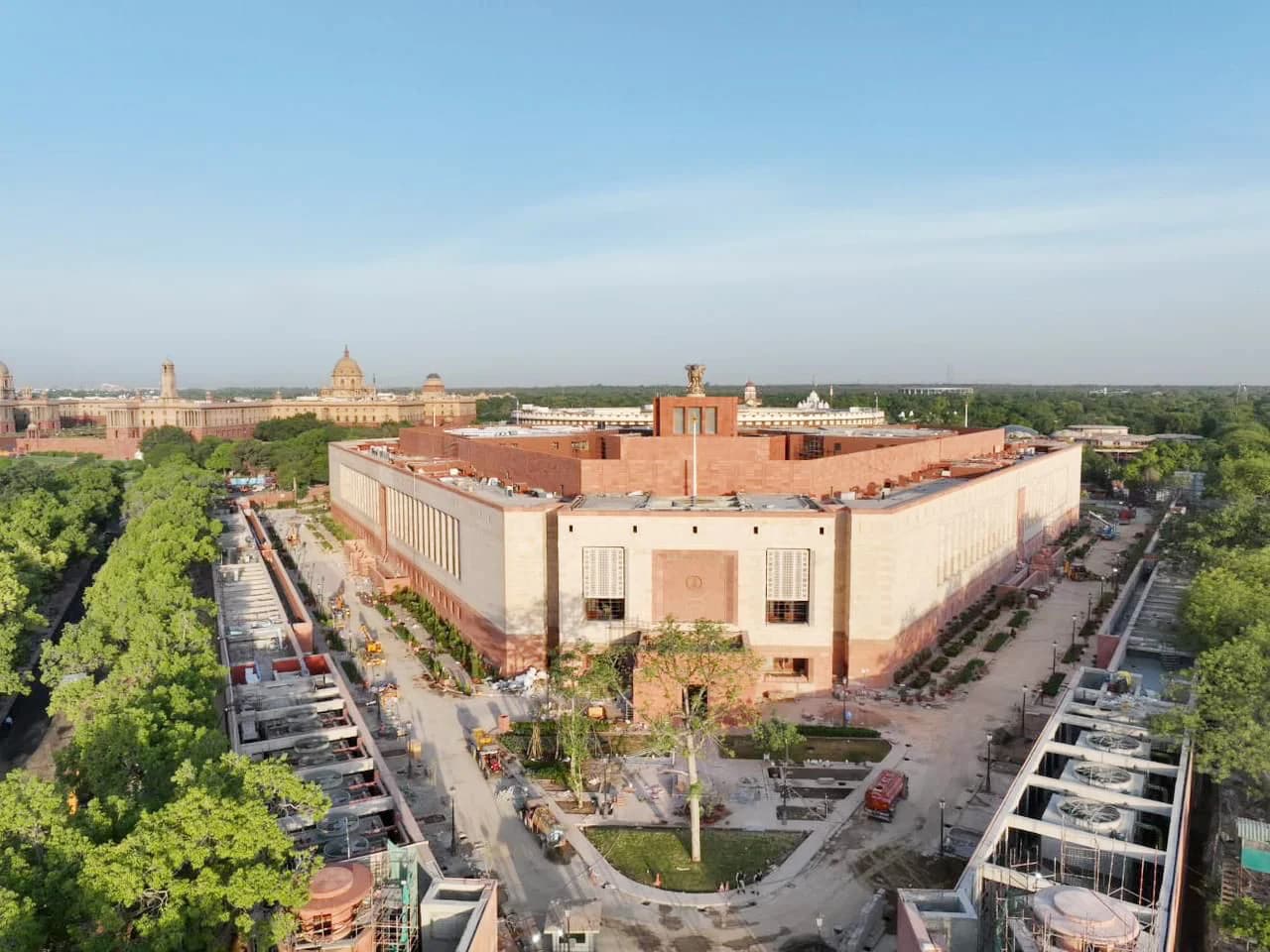
Photo source · Ministry of Parliamentary Affairs, GODL-India