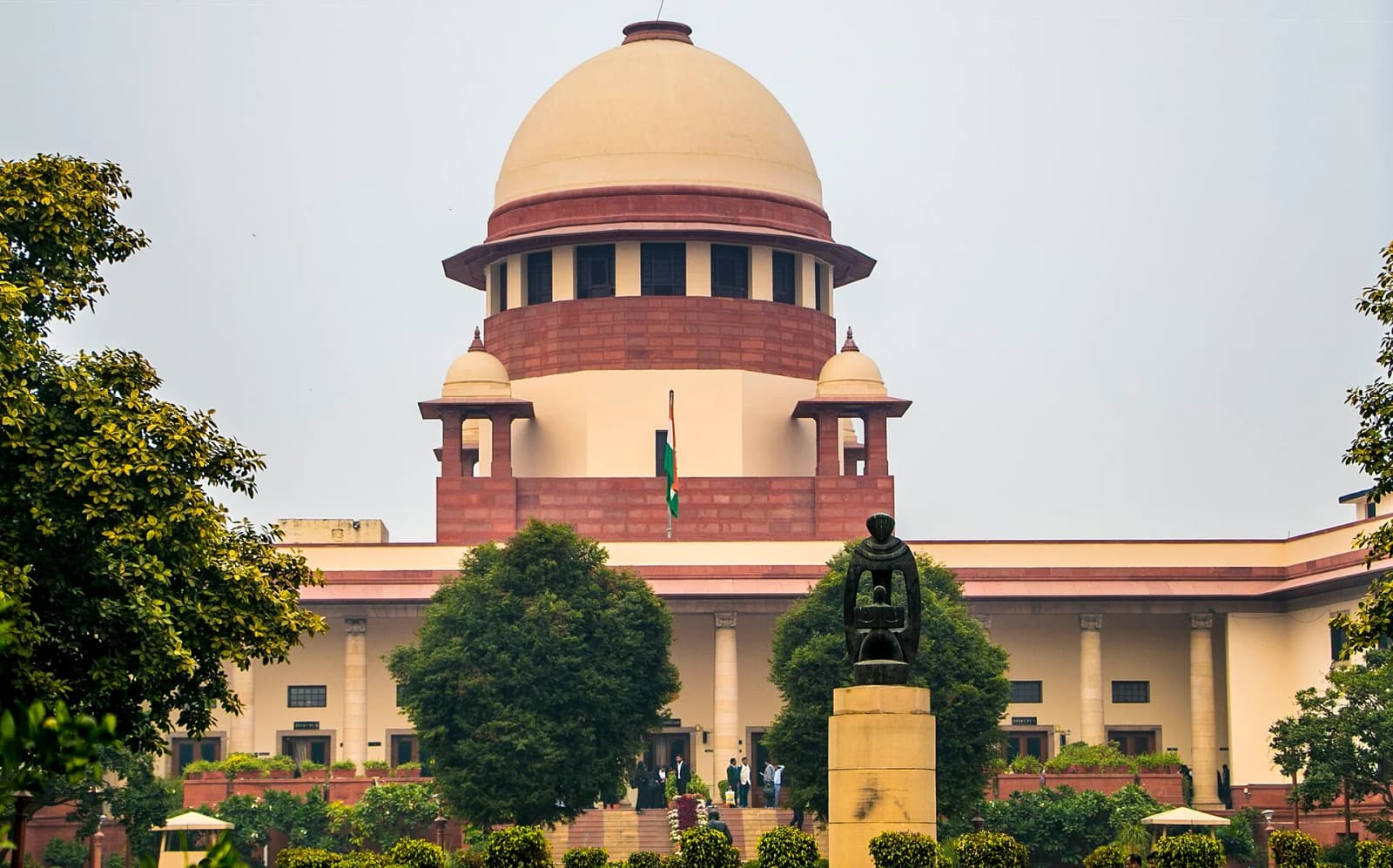
This is a MapMyTimes opinion piece. It responds to President Droupadi Murmu's address at the Constitution Day celebrations organised by the Supreme Court of India in New Delhi on 26 November 2026, where she said that the "massive backlog of pending cases remains a significant challenge" for the justice delivery system. MapMyTimes reported her speech here.
What did the President actually say?
According to the President's Secretariat, she called the timely delivery of justice "an essential component of the very concept of justice". She acknowledged the judiciary's work on simpler procedures, technology and special courts, and expressed confidence that the backlog would be tackled through efforts at every level. She also said the synergy between judicial independence and judicial accountability strengthens the judiciary, urged Legal Services Authorities to step up help for poor and marginalised litigants, and called for more women on the Bench and at the Bar.
Few will disagree with any of this. That is exactly why it deserves a more concrete answer than agreement.
The tools to measure delay already exist
India is unusually well placed to turn this concern into measurable goals. A Press Information Bureau backgrounder on the e-Courts Mission Mode Project, dated 7 August 2026, says the National Judicial Data Grid (NJDG) is a public dashboard that tracks pending cases across levels of the judiciary and also records the reasons for delay, such as non-availability of parties, pending documents and court stays.
The same document lists other building blocks. It says more than 1.25 crore cases had been filed through the e-filing platform by 30 June 2026, courts had held over 4.18 crore remote hearings, and the National Service and Tracking of Electronic Processes (NSTEP) system lets bailiffs serve summons electronically with GPS tracking. Phase III of the project runs to 2027, with ₹53.57 crore of a ₹7,210 crore outlay set aside for artificial intelligence and machine learning, according to the backgrounder.
In our view, the missing piece is not data but public commitments built on it. If the grid already shows why cases stall, courts and governments can say which of those causes they will reduce, by how much, and by when. A delay caused by unserved summons is a different problem from one caused by a stay order or a missing document, and each needs its own owner.
The strongest case against our view
There is a serious counter-argument, and it should be stated fairly. The same PIB backgrounder says that since 2014 both case filings and disposals have nearly tripled, and that courts have consistently disposed of more cases than were filed each year. On that reading, a large pending number partly reflects more people approaching the courts, which is a sign of access, not only of failure.
A second objection is about independence. Numerical targets set from outside could push judges to prioritise speed over careful reasoning, or invite pressure on the judiciary. The President herself framed accountability as working alongside independence, not above it.
Both points are fair. But they argue for how targets are designed, not against having them. Goals set and published by the judiciary itself, focused on the oldest cases and on procedural causes of delay rather than on the speed of individual judgments, would respect independence while giving litigants something they can check.
A practical next step
A useful outcome of this Constitution Day would be an annual, plain-language public report, drawing on NJDG data, that tracks the leading reasons for delay and the progress made against each one, alongside the work of Legal Services Authorities for those who cannot afford lawyers. By Constitution Day 2027, when Phase III of the e-Courts project is due to conclude, citizens should be able to see whether the backlog the President described has started to shrink where it hurts most.
Photo source · Subhashish Panigrahi, CC BY-SA 4.0