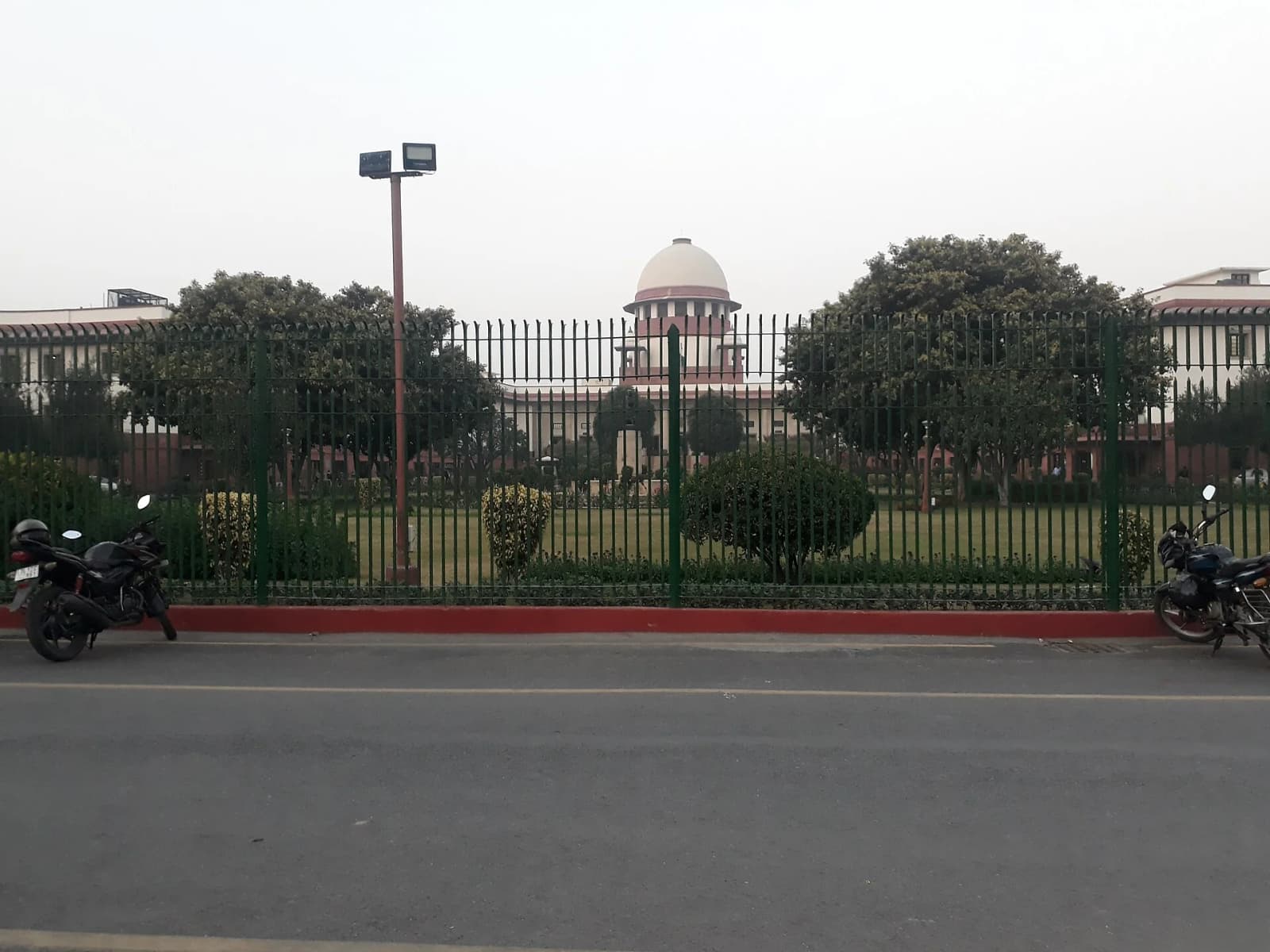
President Droupadi Murmu on 26 November 2026 told the Supreme Court of India's Constitution Day celebrations in New Delhi that judicial independence and judicial accountability must work together, and that the huge backlog of pending cases remains a major challenge for India's justice delivery system, according to a release issued by the President's Secretariat.
Speaking at the event organised by the Supreme Court, the President also called for wider access to free legal aid, more women on the Bench and at the Bar, and greater weight on empathy and ethics in legal education.
What did President Murmu say about the judiciary?
President Murmu said the synergy between judicial independence and judicial accountability gives the judiciary its strength. She noted that Indian courts have, from time to time, placed special emphasis on accountability, and said the judiciary has adapted its role to changing circumstances while upholding the fundamental ideals of justice.
She said the Supreme Court, the High Courts and the district and lower courts have made an invaluable contribution to the journey of the Republic, at a time when the influence of technology and media on public life has become increasingly pervasive.
Why does she see pending cases as a problem?
The President said the timely delivery of justice is an essential part of the very idea of justice. She acknowledged initiatives such as simpler procedures, the use of technology and the setting up of special courts, but said the massive backlog of cases is still a significant challenge. She expressed confidence that concerted efforts at every level of the judiciary would address it.
Access to justice and legal aid
President Murmu pointed out that not everyone has the resources needed to approach the High Courts or the Supreme Court. She said the Constitution mandates justice on the basis of equal opportunity, including free legal aid, so that no citizen is denied justice because of economic or other hardship.
She called on the District, State and National Legal Services Authorities to intensify their efforts for vulnerable and disadvantaged groups, and stressed the quality and reliability of legal representation available to the poor and marginalised.
The President also noted steps taken by the Supreme Court to prioritise cases involving specially abled persons, acid attack victims, senior citizens above 80 and people below the poverty line, along with measures on case management and listing, digital transformation and amicable resolution of disputes.
Women in the judiciary and legal education
Saying that a woman's perspective can add inclusion, diversity and balance to judicial decision-making, President Murmu urged greater participation of women as judges and lawyers. She said greater emphasis on inclusivity and merit would further strengthen the judiciary.
On legal education, she said empathy and ethics deserve as much importance as the study of law, and urged senior members of the legal profession to set examples for young lawyers that excellence can be combined with empathy, and competence with compassion. The full text of her speech has been published by PIB.
Why is 26 November observed as Constitution Day?
The people of India adopted their Constitution on 26 November 1949, the President recalled. In 2015, on the 125th birth anniversary of Dr B.R. Ambedkar, the principal architect of the Constitution, it was decided to mark the date every year as Constitution Day. Observances were held across the country this year, including in Madhya Pradesh, where the state assembly opened a Constitution gallery in Bhopal.
What happens next?
The address did not announce any new policy or measure. According to a separate PIB release, President Murmu is scheduled to visit Keralam, Mizoram and Nagaland from 27 November to 2 December 2026.
Photo source · Press Information Bureau, PIB copyright policy