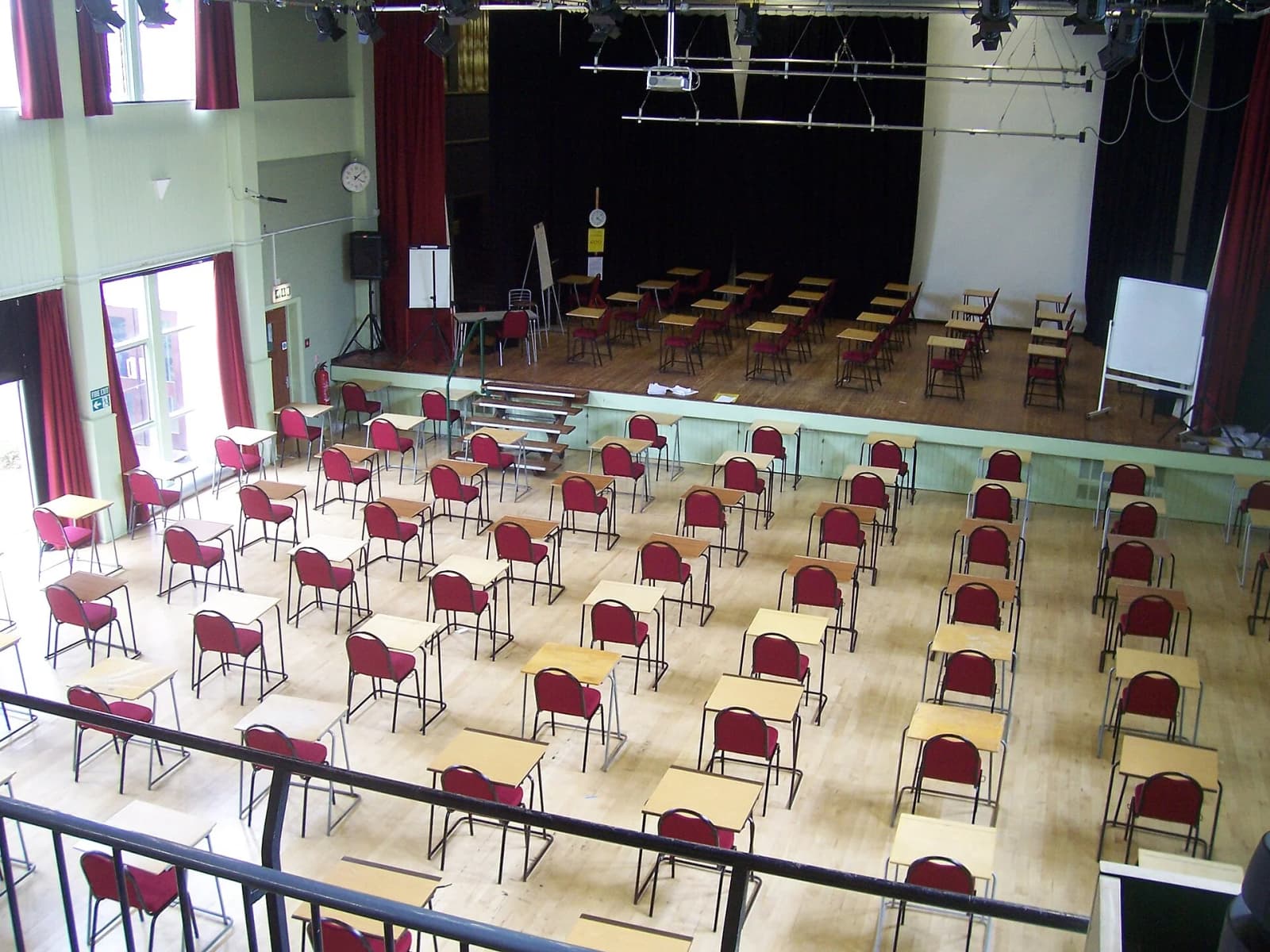
This is a MapMyTimes opinion piece. On 21 November 2026, Chief Justice of India Surya Kant told law schools in Hyderabad that no student should be found guilty of cheating only because AI-detection software flagged their work. We reported his speech to the Commonwealth Legal Education Association (CLEA) conference earlier today. His warning was given to legal educators, but it applies to every Indian university and school board now writing rules for generative AI.
What did the Chief Justice actually say?
He said a detector's verdict is not proof. "No student should therefore be held guilty of misconduct on the word of a machine alone," he said, according to LiveLaw. He backed this with a 2023 study in the journal Patterns, "GPT Detectors Are Biased Against Non-Native English Writers". In that study, seven widely used detectors labelled more than three in five essays by non-native English speakers as machine-written, while doing almost perfectly on essays by US students.
He also opposed a blanket ban on AI in law schools, saying it would only drive use "out of sight". He asked institutions to publish clear rules in advance and to test students orally, or have them defend the authorities they cite, or find the errors in a machine-written answer.
Why this is the right call
The core point is about fairness, and it is sound. A misconduct finding can cost a student a degree, a scholarship or a career. Such a serious finding should rest on evidence the student can see and answer. A detector score is usually a number with no reasoning attached. As the Chief Justice put it, an honest student could be branded a cheat "on the strength of a number that no one can explain", and would have no real way to challenge it.
The language problem makes this especially relevant to India. The Chief Justice noted that across the Commonwealth many law students do not write in their first language, and that includes many Indian students who are taught and examined in English. If the tools flag non-native writing more often, as the study he cited found, the students most likely to be wrongly accused are those who already work hardest to write in a second language. A rule that falls hardest on them cannot be called neutral.
The strongest case for detectors
Teachers have a real problem, and it should not be brushed aside. The Chief Justice himself accepted that generative AI can summarise judgments, suggest arguments and write polished answers within seconds. A teacher marking hundreds of scripts cannot hold an oral test for each one. Seen that way, a detector is a cheap first filter, and banning its use could leave honest students competing against classmates who hand in machine-written work without consequence.
That argument deserves a fair hearing, and it points to a sensible middle ground. A detector flag can be a reason to look closer. It should not be the verdict. The Chief Justice's own proposal fits this. When a flag is raised, the student can be asked to explain the work, walk through the sources and answer questions on the reasoning. A student who wrote the essay can usually do that. A student who did not will find it much harder.
What institutions should do now
The speech was a set of recommendations, not a court order, and no regulator has yet changed legal education rules in response. That leaves the next step to universities, law schools and regulators. Three practical steps would help:
- Write the rules down first. Students should know before an assignment which AI uses are allowed, which must be disclosed, and which are off limits, as the Chief Justice suggested.
- Never rely on a score alone. Any misconduct process should require evidence beyond a detector result, and give the student a chance to respond in person.
- Change the test, not just the policing. Oral explanations and source-checking exercises, which he recommended, test understanding directly and are harder to fake.
Courts are working through the same problem from the other side. MapMyTimes has argued that state lawyers need a verification rule after the Madhya Pradesh High Court rebuked AI-style fake citations. The principle is the same in both places. A person should check the machine's output and take responsibility for the result, and a machine's guess should not decide anyone's fate on its own.
The Chief Justice ended with a test that every institution can adopt: a law school "must be able to certify, with confidence, what its graduates themselves know and can do". Careful teaching and fair assessment can give that confidence. A detector score cannot.