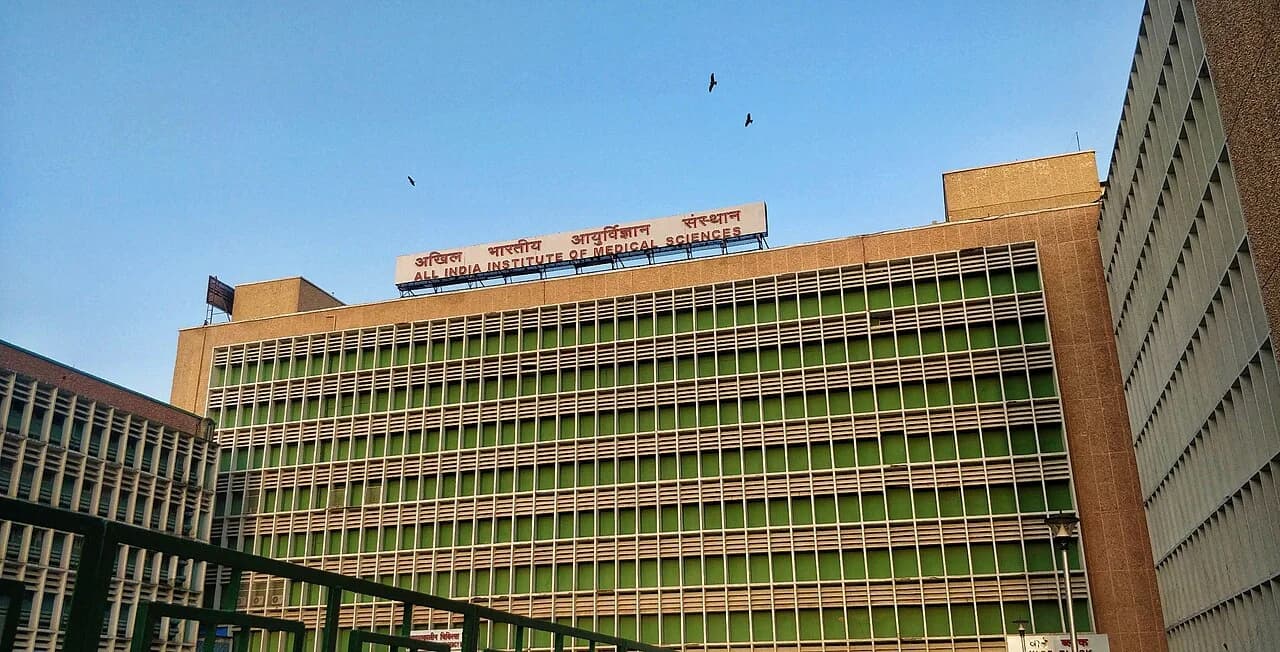
This is a MapMyTimes opinion piece. It responds to the announcement by the All India Institute of Medical Sciences (AIIMS), New Delhi, on 28 November 2026 that its doctors, working with Tel Aviv University surgeons, had performed what the institute called India's first robotic-guided deep brain stimulation surgery for a Parkinson's patient.
The achievement deserves recognition. Deep brain stimulation (DBS) involves placing electrodes deep inside the brain, where small errors in placement can affect results. AIIMS neurosurgery head Dr P Sarat Chandra was quoted by the Press Trust of India as saying robotic guidance "brings greater precision and accuracy". That is a meaningful claim for a disease that, for many families, slowly takes away the ability to walk, write and speak clearly.
What should a "first" be measured by?
A first should be measured by what follows it, not by the announcement itself. The live surgery on 25 November was part of a four-day workshop at AIIMS from 25 to 28 November that, according to the PTI report, drew more than 180 registrations from India and abroad. That detail matters more than the label. A technique demonstrated before a room of doctors who return to their own hospitals has a chance to spread; a technique that stays inside one flagship institute does not.
The workshop also showed that DBS is not one operation but a long relationship between patient and care team. One live session involved programming, for the first time, the device of a patient whose electrodes had been implanted about three weeks earlier. Careful selection of patients, adjustment of stimulation settings and follow-up over years were among the subjects taught by visiting experts. Precision in the operating theatre is wasted if the follow-up clinic is hundreds of kilometres away.
The case for caution
There is a fair counter-argument. Surgeons around the world already perform DBS without robots, and a new machine adds equipment, training needs and, potentially, cost to an already specialised procedure. AIIMS has not yet published outcome data on this operation, and the patient's progress has not been made public. Sceptics can reasonably ask whether public money should go into robotic systems before more neurologists and neurosurgeons are trained to offer conventional DBS and the long-term programming it needs.
That concern should shape how the technology is adopted rather than whether it is. Robotic guidance is a tool, and like any tool its value has to be shown through results, not press statements.
What would turn this into public benefit?
First, AIIMS should publish its results from robotic-guided DBS, including complications, in peer-reviewed form, so other hospitals can judge whether the added precision changes outcomes. Second, the training seen at this workshop should become regular, with a clear plan for building movement-disorder teams at other public medical colleges. Third, programming and follow-up should be designed so patients are not forced to travel to Delhi for every adjustment.
World Movement Disorder Day, marked on 29 November, is a good moment to set those goals. The surgery at AIIMS shows that India's public institutions can work at the leading edge of neurosurgery. The test now is whether that edge reaches the patients who need it most, wherever they live. Readers can also see our recent report on the new spectral CT facility at NIMHANS Bengaluru, another example of advanced care concentrated in a single institution.
Photo source · Vishnoi M, CC BY-SA 4.0