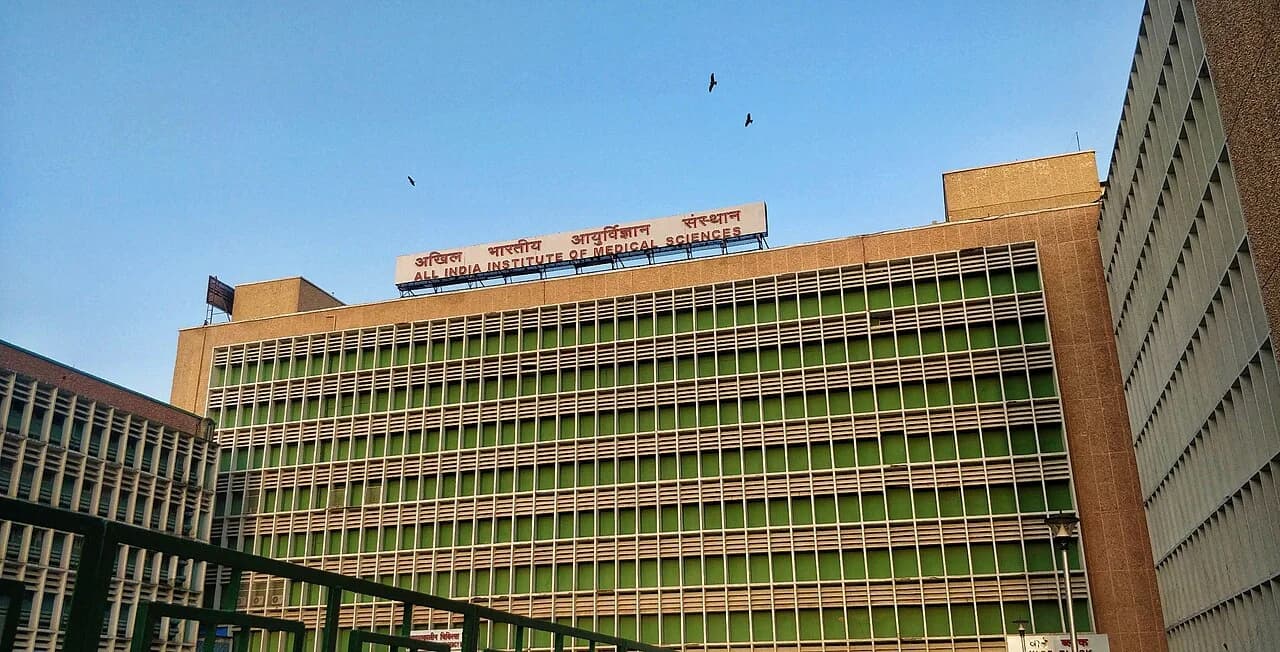
The All India Institute of Medical Sciences (AIIMS), New Delhi, said on Saturday, 28 November 2026, that its doctors had carried out what it described as India's first robotic-guided deep brain stimulation (DBS) surgery for a patient with Parkinson's disease, working with surgeons from Tel Aviv University in Israel.
The hospital announced the procedure in a post on X. According to a Press Trust of India report from New Delhi, the surgery was demonstrated live on 25 November during a four-day international workshop on DBS in movement disorders held at the institute from 25 to 28 November.
Who performed the surgery?
The procedure was led by Dr P Sarat Chandra, head of neurosurgery at AIIMS, with Dr Ido Straus of Tel Aviv University, Dr Ela Varsi and Dr Manjari Tripathi, head of neurology at AIIMS, along with teams from the two departments. The hospital has not released the patient's identity or details of the patient's recovery.
"Robotic guidance brings greater precision and accuracy to deep brain stimulation surgery," Dr Chandra was quoted as saying by PTI, calling it "an important step forward in functional neurosurgery".
What does deep brain stimulation do?
Deep brain stimulation places thin electrodes in specific regions of the brain that deliver electrical impulses to change abnormal brain activity. According to the reports, the impulses are controlled by a small pacemaker-like device placed under the skin of the upper chest and connected to the electrodes by a wire running under the skin.
The robot's role is to help surgeons guide the electrodes to their targets more precisely. During the workshop, the surgeons also used intraoperative microelectrode recording, a technique that reads signals from nerve cells during surgery, to confirm they had reached the intended area.
Apart from Parkinson's disease, the reports said DBS is used for other conditions including essential tremor, dystonia, epilepsy, obsessive-compulsive disorder and Tourette syndrome.
What else happened at the workshop?
The workshop, organised by the AIIMS departments of neurology and neurosurgery, drew more than 180 registrations from India and abroad, according to the PTI report. International faculty included Prof Jens Volkmann from Germany and Prof Renato Munhoz from Canada, who spoke on choosing patients, brain targets, stimulation settings and long-term results.
Dr Genela Morris of Tel Aviv University demonstrated an artificial intelligence-based method for analysing neuronal signals. In a separate live session, visiting experts programmed, for the first time, the device of a patient whose DBS electrodes had been implanted about three weeks earlier.
A hands-on session on botulinum toxin treatment had more than 100 participants and used 40 patient cases. The organisers linked the workshop to World Movement Disorder Day, observed on 29 November.
Why it matters
DBS is a specialised operation in which small errors in placing electrodes deep in the brain can affect results, which is why AIIMS is presenting robotic guidance as a precision gain. The announcement comes alongside other AIIMS work on neurological care, including a pilot study by its neurosurgery department earlier this month on slowing the growth of glioblastoma, an aggressive brain tumour, in patients waiting for surgery.
No outcome data from the robotic-guided procedure has been published so far. For people with Parkinson's and their families, the next questions will be how widely the technique is offered at AIIMS and other public hospitals, and how results compare with conventional DBS over time. MapMyTimes recently reported on other specialised public facilities, such as the new spectral CT facility at NIMHANS Bengaluru.
Photo source · Sumita Roy Dutta, CC BY-SA 4.0