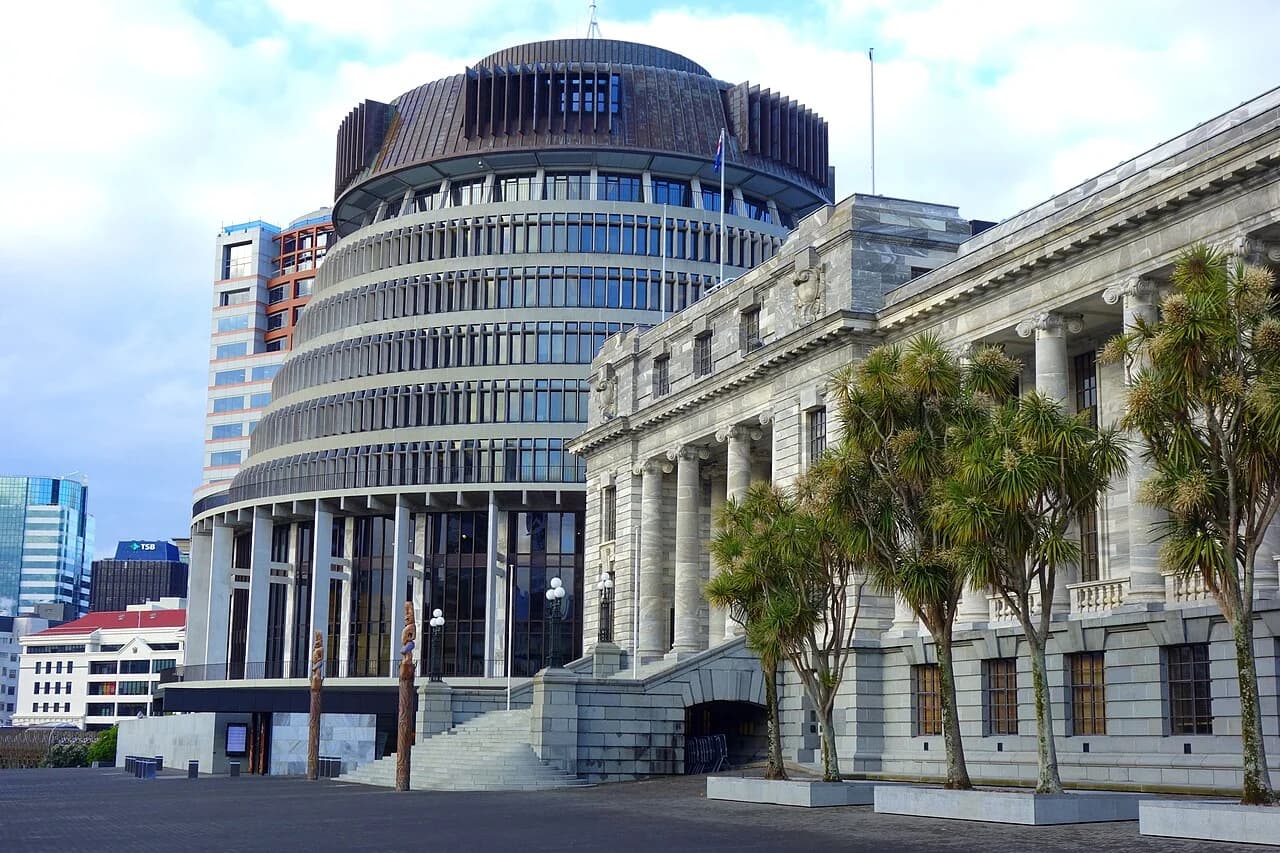
New Zealand Prime Minister Christopher Luxon met Opportunity Party leader Qiulae Wong in Auckland on Sunday, 29 November 2026, as he tries to form a government after official election results left his three-party bloc one seat short of a majority. Luxon's office described it as "a constructive meeting", the New Zealand Herald and Reuters reported.
Why does Luxon need the Opportunity Party?
The parties of the outgoing government, National, ACT and New Zealand First, together hold 65 seats in a 130-seat House, where 66 are needed for a majority. According to the official results published by Radio New Zealand, National won 40 seats, Labour 36, the Greens 17, ACT 13, NZ First 12, the Opportunity Party 7 and Te Pāti Māori 5. The House has 10 more seats than usual because of an overhang, six for National and four for Te Pāti Māori.
The left-leaning bloc of Labour, the Greens and Te Pāti Māori has 58 seats and would reach only 65 even with Opportunity's support, The Spinoff calculated. That leaves the Opportunity Party's seven MPs as the deciding group. Labour won the most party votes, 29.9%, ahead of National's 28.4%; Opportunity won 6.1%.
How did the numbers change?
The election was held on 7 November. On election-night preliminary results, the governing bloc had 67 seats. After special votes were counted, Labour took the Hamilton East and Wairarapa electorates and the Greens won Wellington Bays, pushing the bloc below the majority line when the official count was declared on 27 November.
What did the two leaders say?
Wong told the New Zealand Herald that the pair discussed "some areas of common ground" and went through Opportunity's five bottom lines "very broadly", not "as a checklist". Luxon had repeatedly ruled out working with Opportunity before the election. Over the weekend, National's chief of staff also held separate meetings with the chiefs of staff of ACT and NZ First, Luxon's office said.
What is confirmed and what is not?
Confirmed: the meeting, the official seat totals and the overhang. Not confirmed: any agreement, the form any deal might take, and the detail of Opportunity's bottom lines, which have not been set out in the reports. Options discussed by analysts include a full coalition or a confidence-and-supply arrangement.
Why does it matter for India?
The India-New Zealand free trade agreement was signed in New Delhi on 27 April 2026 but is not yet in force, and it needs approval in New Zealand. Reports at the signing said it includes temporary employment visas for Indian professionals and a New Zealand investment commitment in India, which NZ First had criticised. The make-up and stability of the next government could affect how quickly the deal moves.
What happens next?
Wong and the Opportunity caucus are expected in Wellington on Tuesday. Reuters and the Herald reported that negotiations could stretch into next year, and The Spinoff noted that if no government can be formed, a fresh election is possible in theory.
Photo source · Daderot, CC0