Ambassadors of the North Atlantic Treaty Organization (NATO) are due to meet at the alliance's headquarters in Brussels on Monday, 23 November 2026, for an extraordinary session of the North Atlantic Council called after Russian missiles and a suspected drone came down in south-eastern Poland on 20 November.
Poland's Permanent Representation to NATO announced the meeting on Saturday, Polish Radio's English service reported, citing the Polish Press Agency (PAP). Deputy Defence Minister Paweł Zalewski will represent Warsaw at the council, NATO's main decision-making body.
What landed in Poland?
Three Russian objects crossed into Polish airspace early on Friday, 20 November, during what Defence Minister Władysław Kosiniak-Kamysz called "one of the largest Russian attacks on Ukraine since the beginning of the full-scale war", Notes from Poland reported.
- Near the village of Nowy Lipowiec in Biłgoraj county, the minister said, a Russian Kh-101 cruise missile hit a field a few hundred metres from buildings, leaving a crater.
- A second missile fell near Rudnik nad Sanem.
- A probable jet-powered drone struck near Mołodycz.
No injuries or damage to critical infrastructure were reported. According to the Kyiv Post, Poland's operational command first reported the suspected violation at about 7:07 am local time.
What has Poland said?
Prime Minister Donald Tusk said the objects were Russian and that "it does seem that we're dealing with an intentional provocation", while adding that he was choosing his words carefully. Mr Kosiniak-Kamysz said the timing was "no coincidence", because Coalition of the Willing military exercises were under way in Poland not far from the impact sites.
US military newspaper Stars and Stripes reported that one missile came down about 22 miles (35 km) from Nowa Dęba, where thousands of European troops were taking part in the coalition's drills. The minister wrote on X that Poland would "in the near future" receive "strong support from our NATO allies to bolster the protection of our eastern border". Poland has asked for more airborne early-warning aircraft and F-35 fighters on the eastern flank, the paper said, though no new deployments had been announced.
How has NATO responded so far?
Secretary General Mark Rutte, speaking to reporters in Warsaw on Saturday, pledged that the alliance would defend "every inch" of Polish territory. He called the incident "dangerous", said its circumstances were still being investigated and did not rule out a repeat. "Poland is a strong ally. You have excellent troops here, and now we need to establish exactly what happened," he said.
Mr Rutte said NATO's Supreme Allied Commander Europe, US General Alexus Grynkewich, would examine whether the alliance's defences needed adjusting. Mr Kosiniak-Kamysz said Poland would ask for more forces and capabilities for Eastern Sentry, NATO's operation to reinforce its eastern flank.
What is confirmed and what is not
Confirmed by Polish officials: the object near Nowy Lipowiec was a Russian Kh-101 cruise missile, and no one was hurt. Not confirmed: whether Russia deliberately aimed the weapons at Poland or timed them to coincide with the allied exercises. Polish leaders have called it a likely provocation but have not presented proof of intent, and initial accounts of the second and third objects have varied. The sources reviewed for this report carried no Russian government response.
Why it matters
A Russian cruise missile landing on the territory of a NATO member raises the risk of the war in Ukraine spilling across the alliance's borders. Monday's meeting is a consultation and does not by itself trigger NATO's collective defence clause. It comes days after other attacks linked to the war, including a drone strike on the Russian cargo ship Sparta II in the Gulf of Finland and a Russian drone strike in the Kyiv region.
What happens next
Poland is expected to present its proposals for stronger air defence and surveillance on the eastern border at the council. Any extra deployments by allies would be announced separately.
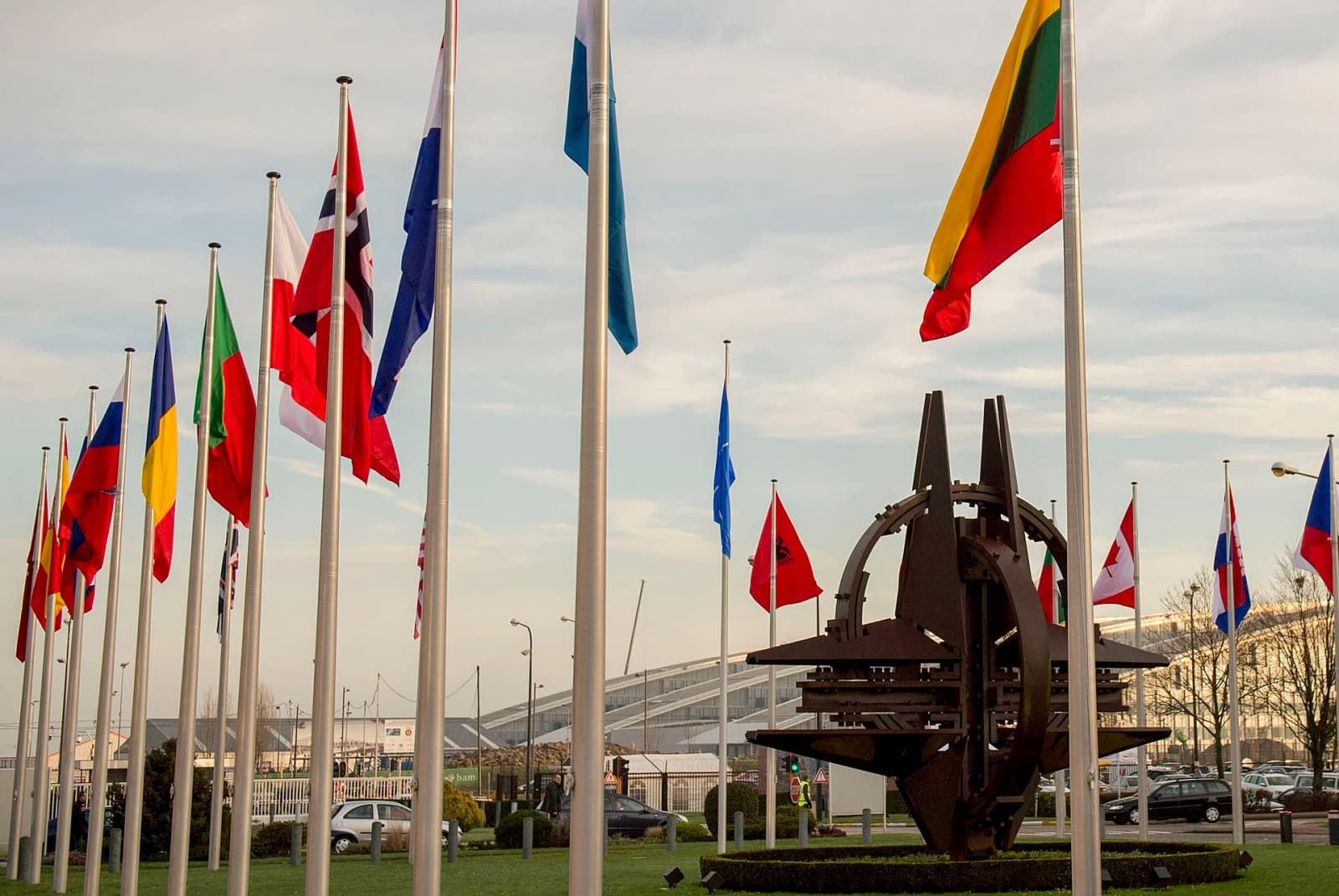
Photo source · Senior Master Sgt. Adrian Cadiz, US Department of Defense, public domain