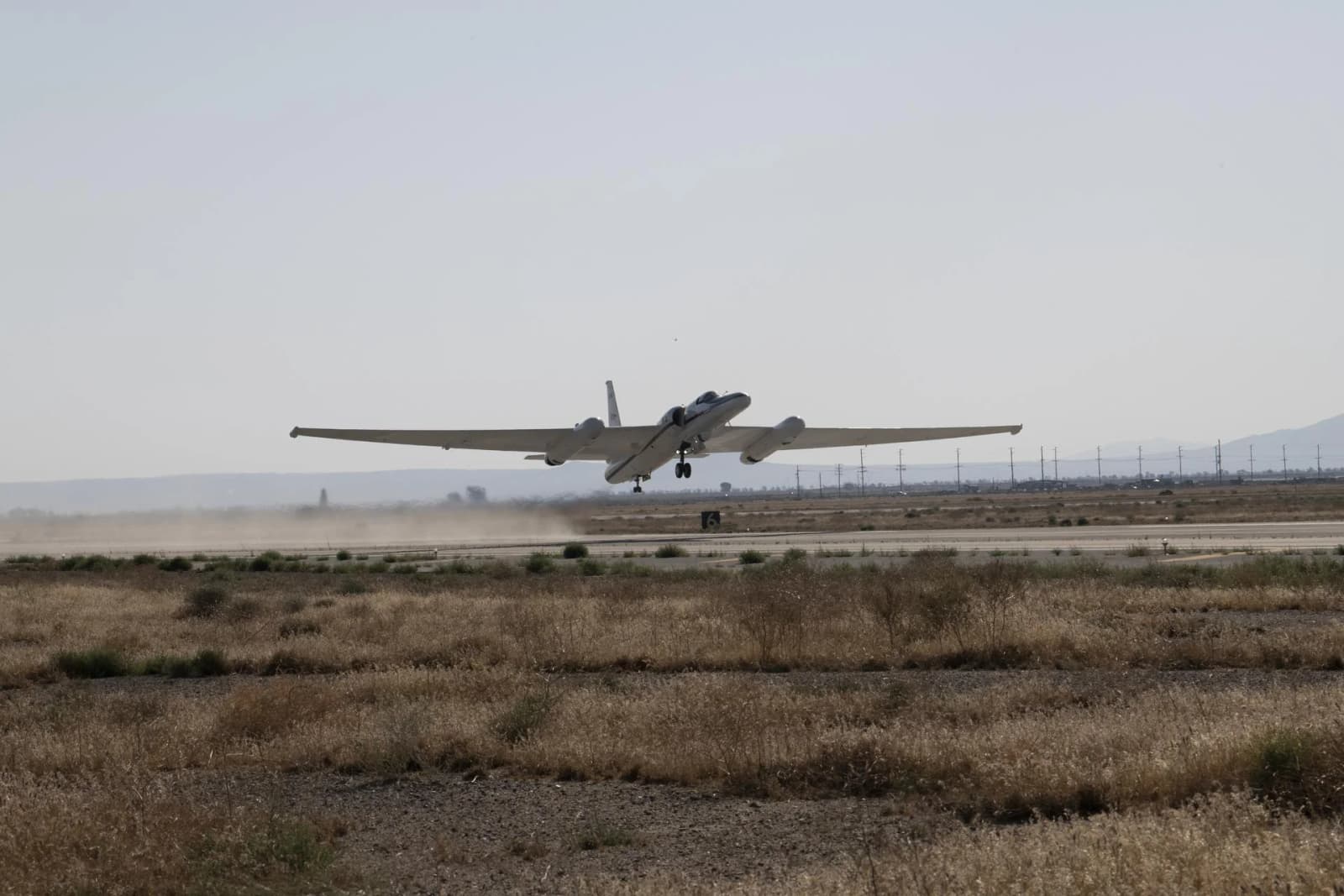
NASA scientists have found evidence of an ancient reservoir of ice in the Kuiper Belt, the region of icy bodies beyond Neptune, by studying 12 tiny dust particles collected from Earth's stratosphere by NASA's ER-2 high-altitude research aircraft, the US space agency said in a science update published on 18 November 2026. The work was carried out by researchers from NASA's Johnson Space Center in Houston, Texas, and the University of California, Los Angeles (UCLA).
How did the scientists trace the dust to the Kuiper Belt?
The particles carried high concentrations of solar energetic particle tracks, damage left by charged particles from the Sun, which helped the team link them to the Kuiper Belt, NASA said. The researchers used advanced electron microscopy at NASA and an ion microprobe at UCLA to study the particles' minerals and the make-up of their oxygen isotopes, using measurements from NASA's Genesis mission as the reference for comparison.
What did they find?
The particles contain minerals that formed when water interacted with dust early in the history of the solar system. That ancient water was enriched in heavier oxygen isotopes, which NASA described as compelling evidence of an ancient reservoir of ice in the Kuiper Belt. According to NASA, the result supports a long-suspected idea that the outer solar system held ice rich in heavier oxygen isotopes, something earlier studies of meteorites and asteroid samples had only partly supported.
Similar signatures are scarce in meteorites, NASA said, which may mean that the giant planets limited the mixing of material between the outer and inner solar system.
Why it matters
The study shows that dust from that distant region reaches Earth's upper atmosphere, where aircraft can collect it, giving scientists a way to study the chemistry of the outer solar system without a spacecraft. For more space science, read our report on Voyager 1 reaching one light-day from Earth.
What is not yet known
NASA's post did not name the lead researchers or the journal in which the findings were published, so the full peer-reviewed details are not yet available.
Photo source · NASA/Carla Thomas