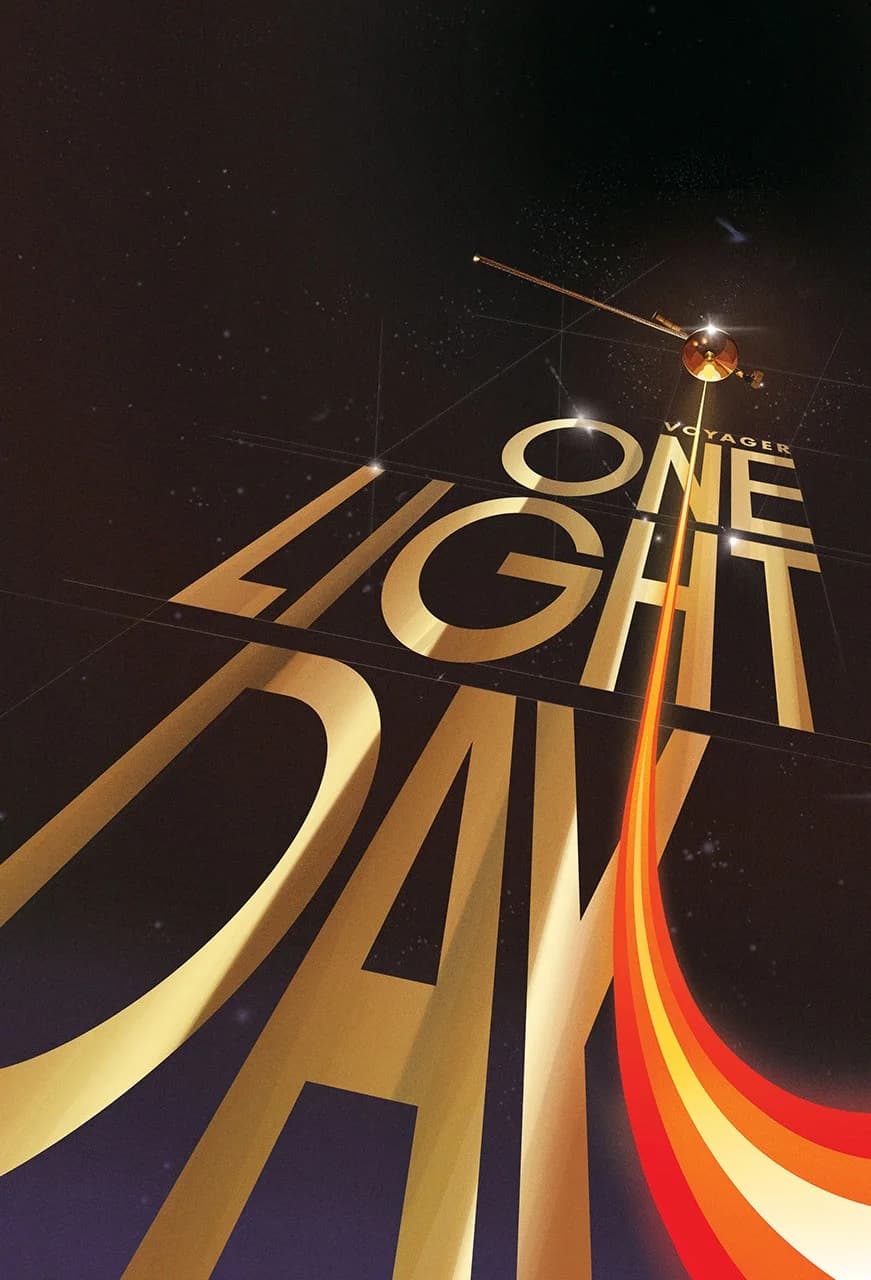
NASA's Voyager 1 spacecraft on Wednesday, 18 November 2026, became the first human-made object to travel one light-day from Earth, a distance of more than 16 billion miles (25.9 billion kilometres), according to NASA's Jet Propulsion Laboratory (JPL). At that range, light, and every radio signal sent to or from the probe, needs a full 24 hours to make the one-way trip.
What a light-day means
NASA has stressed that the milestone is a measure of distance rather than time. "The milestone Voyager 1 will reach on Wednesday, Nov. 18, is about distance, not time," the agency says on its Voyager 1 mission page. A light-day is simply how far light travels in one day.
In practical terms, the gap makes operating the spacecraft slow and deliberate. A command radioed from Earth now takes a day to reach Voyager 1, and the spacecraft's response takes roughly another day to return, according to NASA material on the milestone. Contact is maintained through NASA's Deep Space Network, which JPL manages.
Almost half a century in flight
Voyager 1 lifted off on 5 September 1977, NASA's mission page says. It was built to explore the outer planets, taking advantage of a planetary alignment that occurs only once every 176 years, JPL said. On 25 August 2012, it became the first spacecraft to leave the heliosphere, the protective bubble created by the Sun, and begin measuring conditions in interstellar space. Its twin, Voyager 2, crossed into interstellar space in 2018 on a different path.
Four of Voyager 1's science instruments are still working and returning data, according to NASA: the cosmic ray telescope, the low-energy charged particles experiment, the magnetometer and the plasma waves experiment. JPL describes it as the most distant human-made object.
Marking the moment
NASA invited the public to join a "Shine Bright for Voyager's Light-Day" campaign on the evening of 17 November, asking people to shine lights skyward after sunset. Phones and tablets could flash "VGR", Voyager's call sign, in Morse code, the agency said.
JPL will host a moderated discussion on the milestone at its von Kármán Auditorium in Southern California on 19 November at 12 p.m. EST (10:30 p.m. IST), to be streamed on NASA's live channel. Listed participants include Nicky Fox, associate administrator of NASA's Science Mission Directorate; Voyager project manager Suzanne Dodd; project scientist Linda Spilker; mission manager Kareem Badaruddin; JPL chief scientist Jonathan Lunine; and deputy project scientist Jamie Rankin of Princeton University. The event will also include a preview of a NASA+ documentary on Voyager planned for 2027, the mission's 50th anniversary year.
Why it matters
The milestone underlines how long-lived the Voyager mission has become. Both spacecraft continue to send observations from beyond the heliosphere, JPL said, giving scientists direct measurements from a region no other active probe has reached. The mission is managed by JPL for NASA and funded by the agency's Heliophysics Division.
What next
Voyager 1 will keep moving farther away, widening the communication delay further. NASA's attention now turns to the 19 November event and the run-up to the mission's 50th anniversary in 2027.