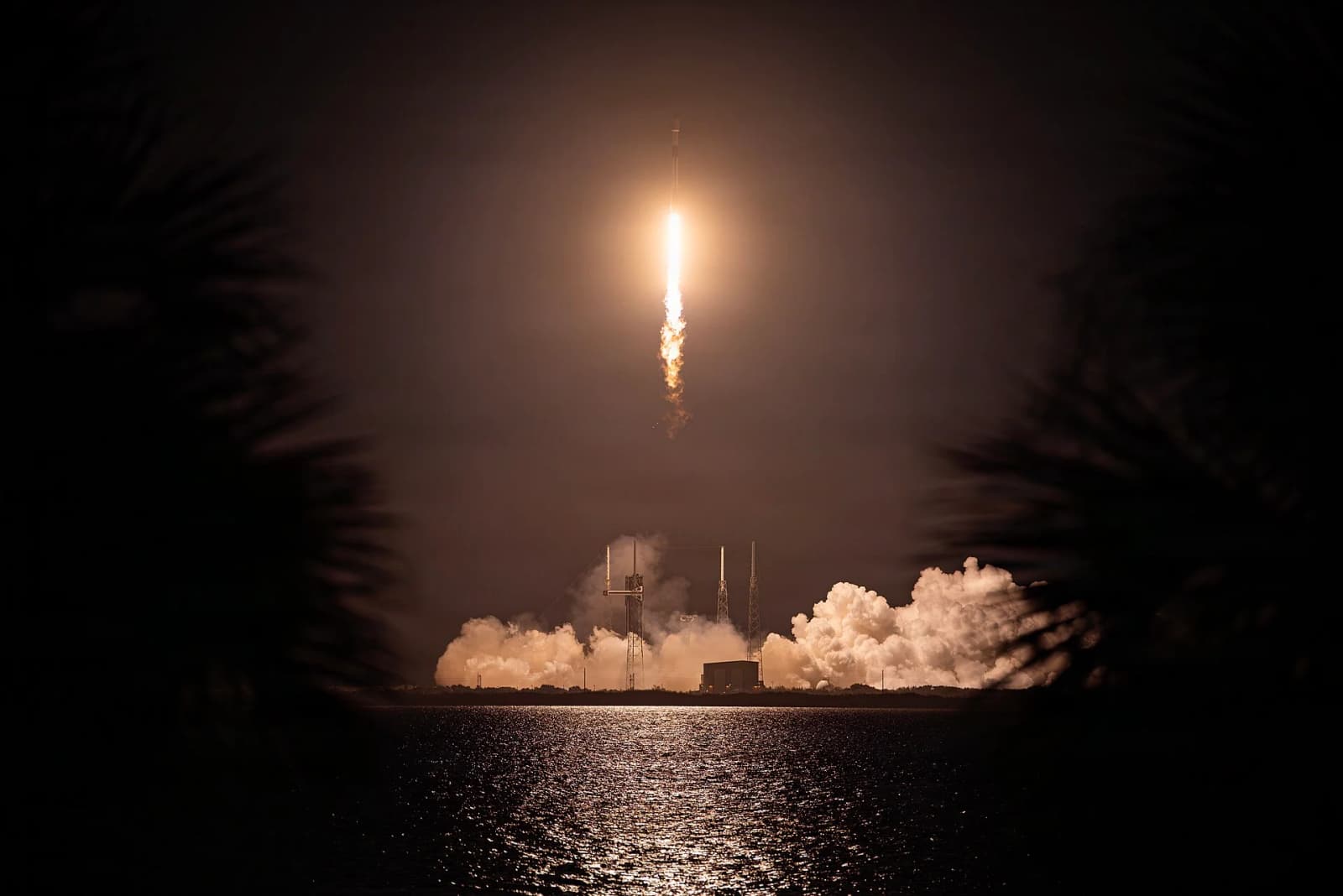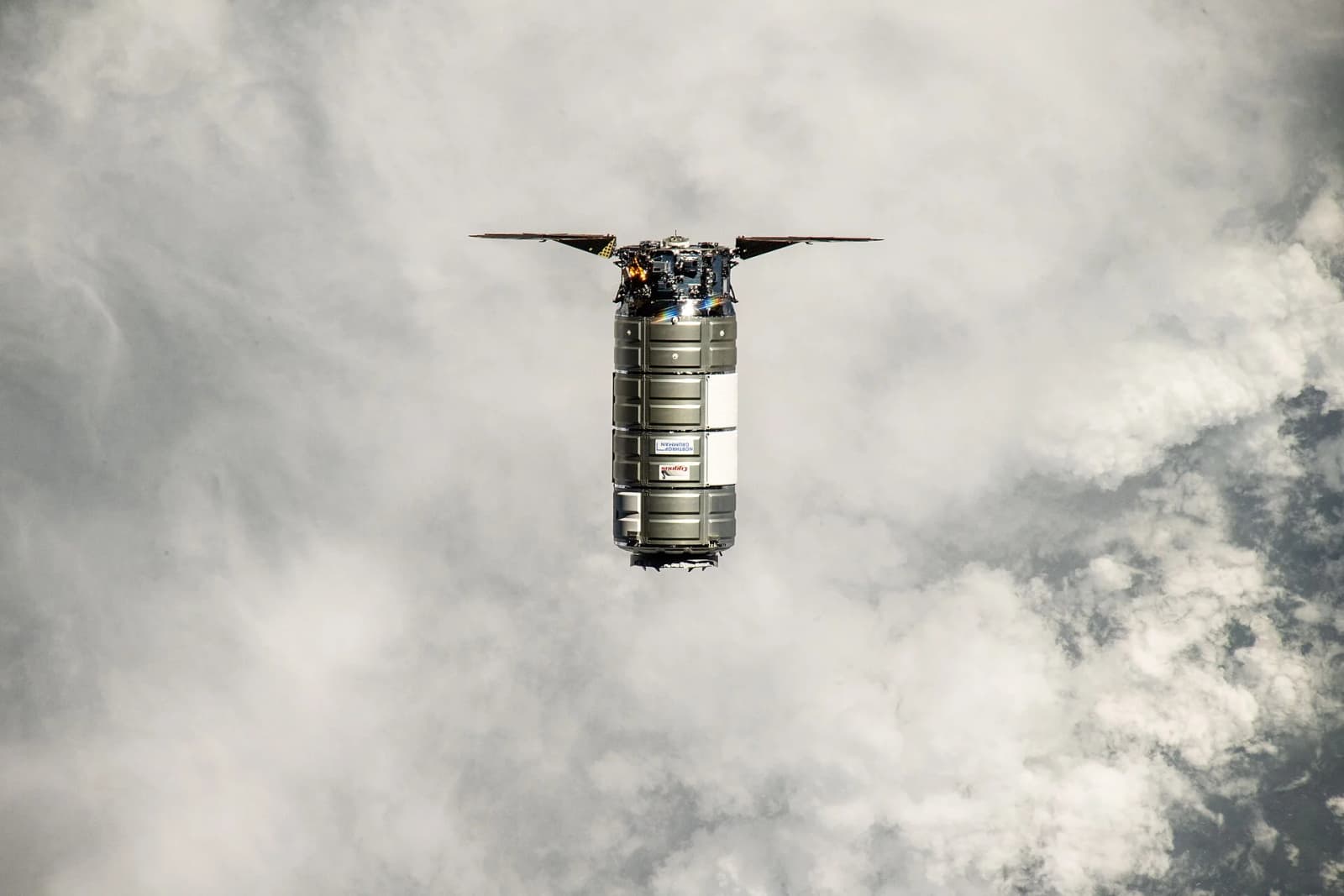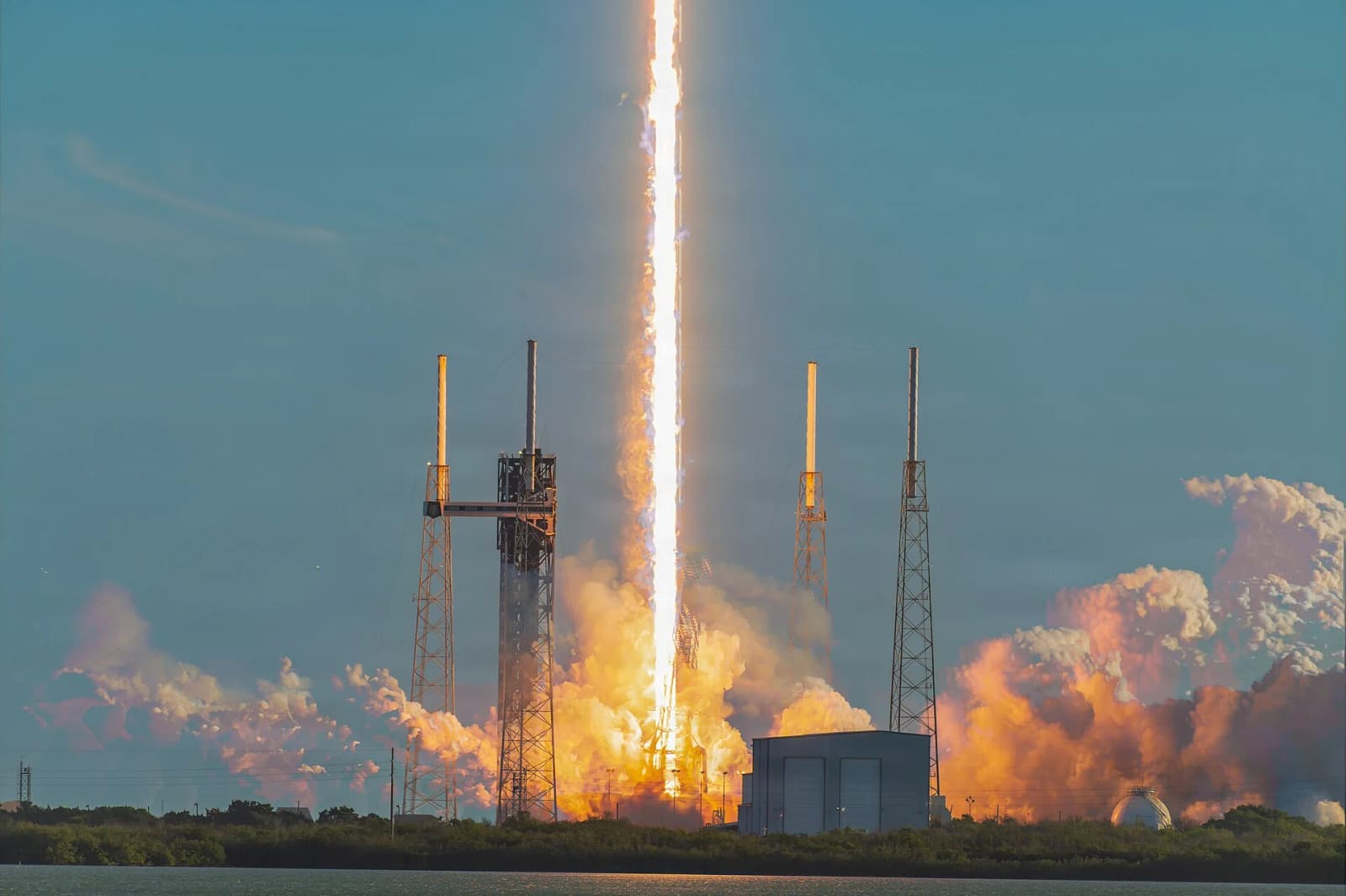
Cape Canaveral: NASA and SpaceX successfully launched Northrop Grumman's Commercial Resupply Services-25 (CRS-25) cargo mission to the International Space Station (ISS) on Sunday, November 29, 2026, sending the Cygnus XL spacecraft into orbit with about 11,000 pounds (5,000 kg) of food, crew supplies, hardware, and scientific investigations.
Liftoff, Booster Recovery, and Orbital Deployment
The SpaceX Falcon 9 rocket lifted off at 10:47 a.m. EST (1547 UTC) from Space Launch Complex 40 at Cape Canaveral Space Force Station in Florida under overcast skies. SpaceX powered the launch with Falcon 9 first-stage booster B1096, completing its ninth flight before touching down back at Landing Zone 40 roughly eight minutes after liftoff. SpaceX confirmed orbital deployment of the Cygnus XL spacecraft at 11:41 a.m. EST (1641 UTC).
Northrop Grumman named the CRS-25 vehicle the S.S. James "Jim" A. Lovell in honour of the former NASA astronaut who flew four missions, including Gemini VII, Gemini XII, Apollo 8, and Apollo 13. The mission marks the 25th flight of a Cygnus cargo spacecraft to the orbiting laboratory under NASA's Commercial Resupply Services contract and the fifth Falcon 9 launch flown on behalf of Northrop Grumman.
Arrival Schedule and Research Payloads
Following a two-day orbital rendezvous, Cygnus XL is scheduled to arrive at the space station at 2:35 a.m. EST (0735 UTC) on Tuesday, December 1. NASA astronauts Jessica Watkins and Luke Delaney will capture the spacecraft using the station's Canadarm2 robotic arm before robotics flight controllers at Johnson Space Center in Houston install it onto the Earth-facing port of the Unity module.
According to NASA's ISS Operations Integration Manager Gaurang Patel, the manifest includes 42 standard menu Bulk Overwrap Bags, 65 crew-specific food and coffee/tea bags, and four fluid loading kits, alongside dozens of experiments. Notable investigations include Lockheed Martin's JOining demonstration IN-Space (JOINS) microgravity welding test, Utah State University's Ohalo 3 plant water-delivery and crop-growth module, and the University of Connecticut's DNA Nano B particle study for medical drug delivery.
More than 35 payloads aboard the mission are sponsored by the ISS National Laboratory, including an autonomous assembly test by Rendezvous Robotics, radiation studies on rubber compounds from Dunlop Tires, and radiation-shielding technology from Malagen Labs. Northrop Grumman also noted the spacecraft could assist with orbital reboosts of the station during its stay, which is scheduled to continue until May 2027 before re-entry with several thousand pounds of disposal cargo.