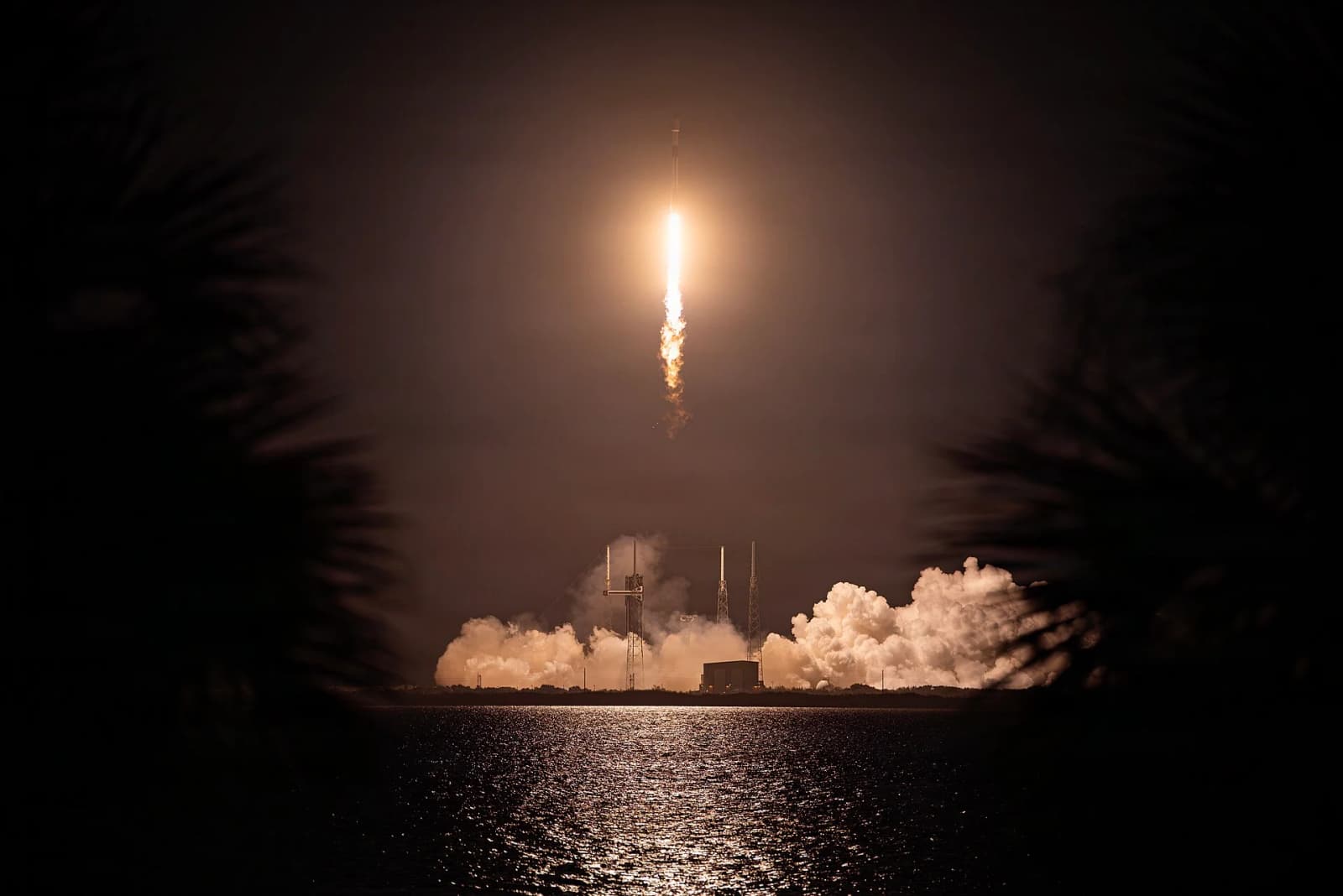
United States communications regulators have cleared SpaceX to launch up to one million solar-powered satellites into low-Earth orbit to construct AI data centres in space, marking the first regulatory authorisation of its scale for an orbital computing network dubbed Starmind.
Milestone Schedule and Orbital Design
Announced by the Federal Communications Commission (FCC) on November 25, the licence grants conditional permission for Starmind spacecraft to orbit at altitudes between 500 km and 2,000 km and relay AI workloads via SpaceX's existing 10,000-plus Starlink broadband constellation. Under FCC terms, deployment must begin by November 2033, with SpaceX required to reach 10% deployment by November 2035 and 50% by November 2038, though the firm aims to launch a first test satellite next year.
FCC Chairman Brendan Carr praised the plan as a milestone uniting space and computing infrastructure, while Elon Musk thanked regulators on X. SpaceX argues solar-powered orbital computing avoids growing local backlash against sprawling terrestrial AI data centres that consume vast electricity and cooling water.
Astronomers, Rivals, and Engineers Raise Questions
Rival Amazon dismissed the proposal as a "lofty ambition rather than a real plan." Meanwhile, the American Astronomical Society (AAS) warned that larger, brighter satellites remaining visible longer across night skies could "significantly undermine" federal astronomy investments, and Earthjustice senior attorney Jan Hasselman flagged broader planetary consequences.
Surrey Satellite Technology chairman Prof Sir Martin Sweeting told BBC Radio 4 that while space data centres appear feasible in principle, high-capacity optical laser ground links needed for massive two-way data traffic are not yet perfected at that scale.