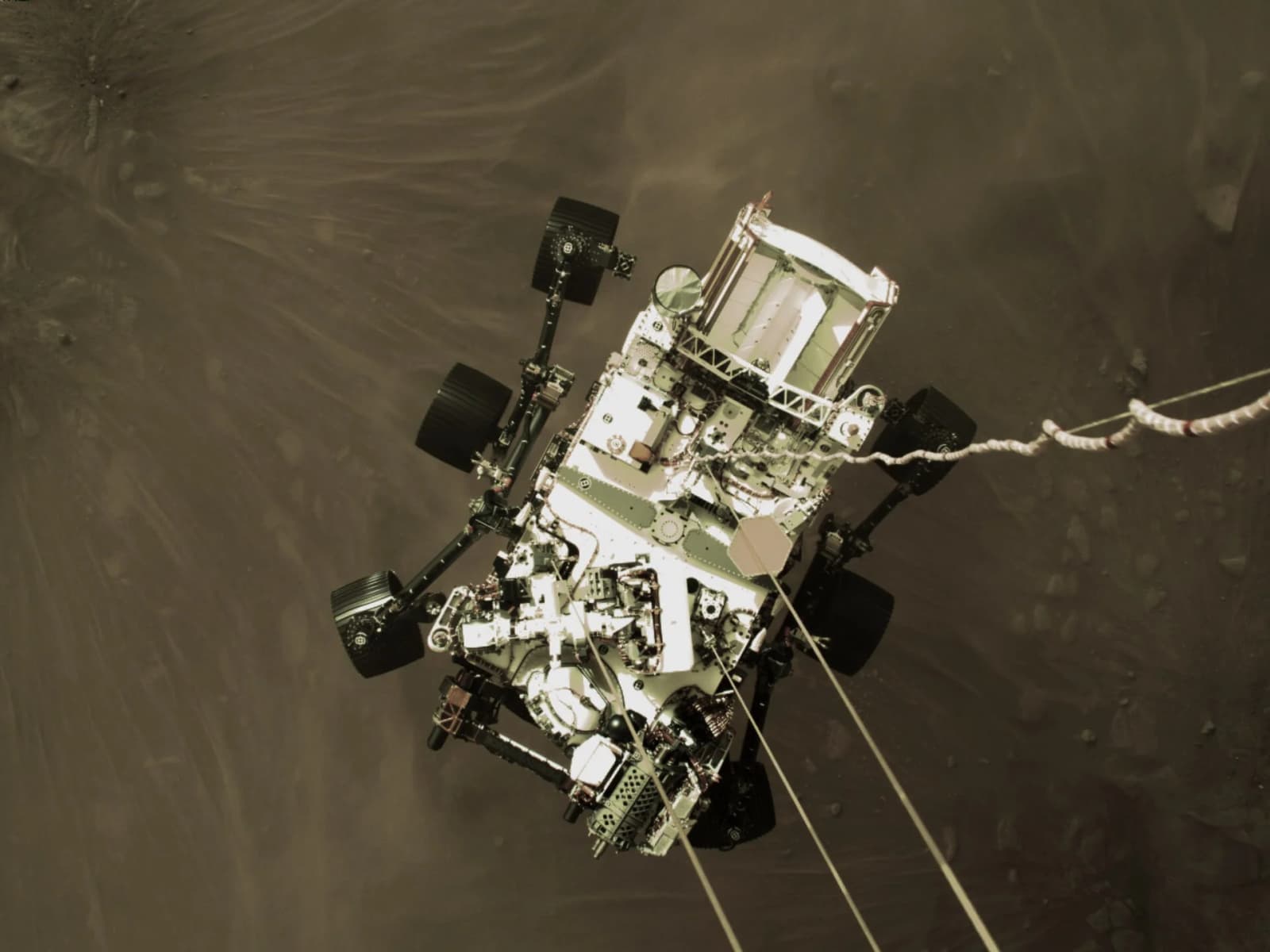
Engineering teams at NASA's Jet Propulsion Laboratory (JPL) have temporarily paused science operations and raw imagery releases from the Perseverance Mars rover while diagnosing faults across both of its ultra-high frequency (UHF) relay radios, NASA Science reported in an engineering update tracked through late November 2026. In a separate mission anomaly, the veteran 2001 Mars Odyssey orbiter has also taken its science instruments offline after one of its reaction wheels malfunctioned.
Perseverance Radio Swap and Direct-to-Earth Link
According to NASA, the Perseverance anomaly began on October 30 when the rover's primary UHF downlink radio—ordinarily used to relay high-volume data to orbiting Mars spacecraft—stopped sending periodic electronic 'heartbeats' to the rover's main computer. After 25 consecutive missed heartbeats over roughly 100 seconds, onboard fault-protection software powered down the unit, switched communications to the redundant backup UHF radio, and placed the rover into protective safe mode.
Subsequent diagnostics indicated that the backup UHF radio is transmitting at only about half of its expected power, limiting orbiter relay efficiency. While troubleshooting continues, JPL engineers led by project manager Steven Lee are commanding Perseverance directly via its high-gain antenna over X-band links through NASA's Deep Space Network, aiming to restore normal science operations by late November.
Odyssey Orbiter Attitude Control Troubleshooting
Meanwhile, mission controllers for NASA's longest-operating spacecraft at Mars, the 2001 Mars Odyssey orbiter, placed the probe's science payload on standby to focus on attitude control stability. Teams are investigating a malfunctioning reaction wheel—part of the spinning flywheel assembly that rotates the spacecraft cleanly alongside thruster firings for communications and surface imaging.
Both spacecraft remain under active telemetry monitoring from Pasadena as NASA manages orbital relay bandwidth across its Mars fleet, including MAVEN and the Mars Reconnaissance Orbiter, until hardware diagnostics conclude.