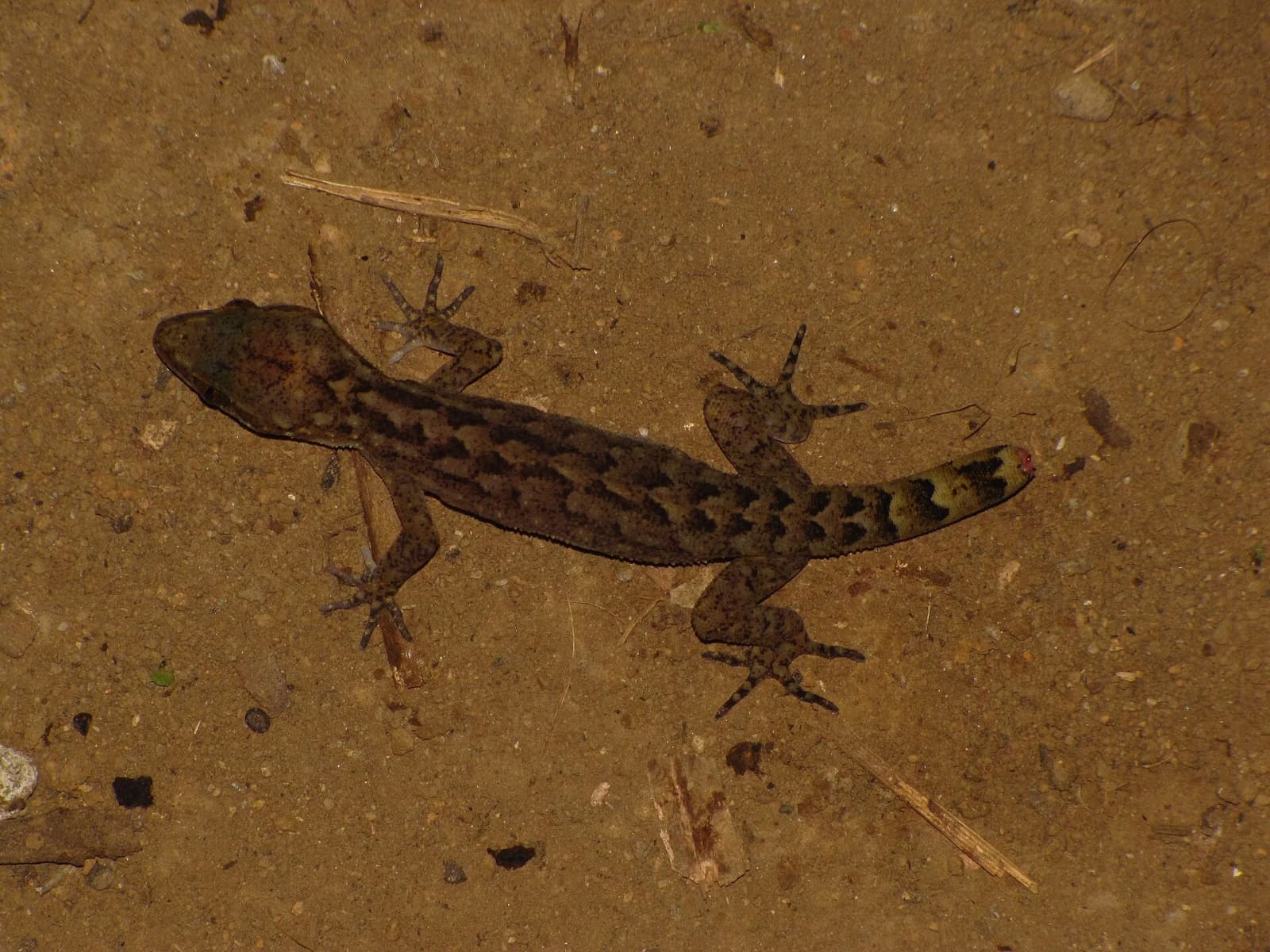
Indian herpetologists have identified two previously unknown species of cave-dwelling bent-toed geckos in the limestone caves of Meghalaya, raising the state's documented total of the genus to nine.
Published on November 25, 2026 in the journal Taprobanica (Volume 15, Issue 2), the study was led by Cynthia M. Umlong, Manmath Bharali, Arup K. Hazarika, Holiness Warjri, Madhurima Das, and Jayaditya Purkayastha from Assam Don Bosco University, Cotton University, and conservation group Help Earth.
Morphology, Naming and Genetic Distinction
The first species, Cyrtodactylus bossmit, reaches a maximum snout-vent length of 81.7 mm and was discovered in Maw Tynghiang Cave in the South West Khasi Hills. Scientists named it after Shillong's distinctive traditional wooden buses, locally known as Bossmit.
The second species, Cyrtodactylus kremicola, measuring up to 83.6 mm in snout-vent length, was found inside Rupasor Cave in the West Jaintia Hills. Its epithet combines the Khasi word krem (cave) with the Latin suffix -cola (dweller). Analysis of the mitochondrial ND2 gene showed genetic divergence of 4 to 7.6 percent from closely related species.
Conservation Significance in Karst Caves
Alongside naming the two new reptiles, the authors confirmed reference records of Cyrtodactylus khasiensis from Arwah Cave. Researchers noted that Meghalaya's limestone cave systems harbour highly localised subterranean fauna, making habitat protection against unregulated mining and disturbance critical.