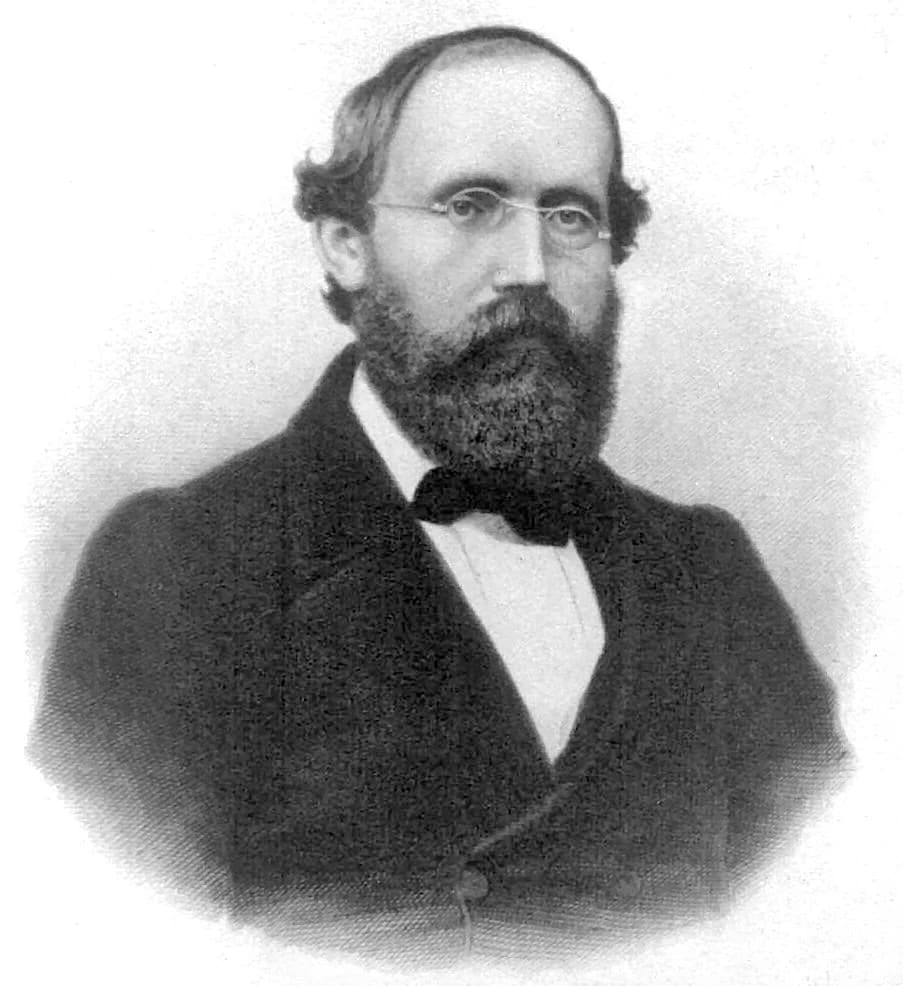
Levent Alpöge, a mathematician who works at the artificial intelligence company Anthropic, said on Friday, 20 November 2026, that he believes he has found a proof of the Riemann hypothesis, the 1859 problem about how prime numbers are distributed, working with the company's AI model Claude. The claim has not yet been confirmed by the mathematical community.
"I believe I have, working with Claude, discovered a proof of the Riemann Hypothesis," Dr Alpöge wrote in a note posted on his website. He said the method also settles the broader Generalized Riemann Hypothesis and that he expects it, with more time, to reach the Extended Riemann Hypothesis as well.
How was the proof released?
It was released as computer code, not as a conventional paper. Dr Alpöge published the argument in Lean, a programming language in which a computer checks each logical step. He wrote that the argument is "incredibly long at the moment" and that, rather than post an unreadable document, he "decided to only present Lean". He said he intends to work to understand it, simplify it and write it up properly.
His note includes a timeline of key steps that, he says, Claude compiled, beginning on 6 October 2026. He wrote that in the final stretch "Claude far outpaced me near the finish line".
What do other mathematicians say?
Scientific American reported that Andrew Sutherland of the Massachusetts Institute of Technology independently compiled the Lean code. "This is indeed an historic moment," Dr Sutherland told the magazine, adding: "There is much work to be done to understand the mathematical details of the proof."
Hector Pasten of the Pontifical Catholic University of Chile told Scientific American that "if the proof is correct and understood," it would complete a link between branches of mathematics where connections had been only partial. The magazine cautioned that issues can arise in Lean, and that experts still need to check whether the hypothesis has been coded correctly.
TechCrunch reported that several independent participants in an online Lean discussion had checked the code, but said it was too early to know whether the result would be understood by humans. The Riemann hypothesis is one of the Clay Mathematics Institute's Millennium Prize problems, which carry a $1 million award.
Is there a second claim?
Yes. On the same day, Stanford University professor Ravi Vakil, president of the American Mathematical Society, posted a "hurried announcement" of a proposed proof of the Generalized Riemann Hypothesis by Alessandro Maria Masullo, a Stanford postdoctoral researcher. "It is all human, with no AI," Prof Vakil wrote, adding that mathematician Brian Conrad had reviewed it for months and found it "so far looking good".
About eight hours later, Prof Vakil updated the post to say several people had reported problems in the draft, found with the help of AI models, and wrote: "I make no claim as to the correctness of the proof strategy."
Why does the timing matter?
Scientific American noted that the announcement came a day after Anthropic's record stock market debut. Dr Alpöge addressed this in his note, saying he had messaged Anthropic chief executive Dario Amodei after the breakthrough late on a Sunday night to ask about announcing it. "There is an obvious cynical view, to do with the timing, but it is false," he wrote.
The claim comes amid rapid debate over what AI systems can do in research, including new measurements of how long AI models can work on tasks. Neither proof has yet been accepted; the next step is detailed checking of the Lean statement and, eventually, a human-readable account of the argument.