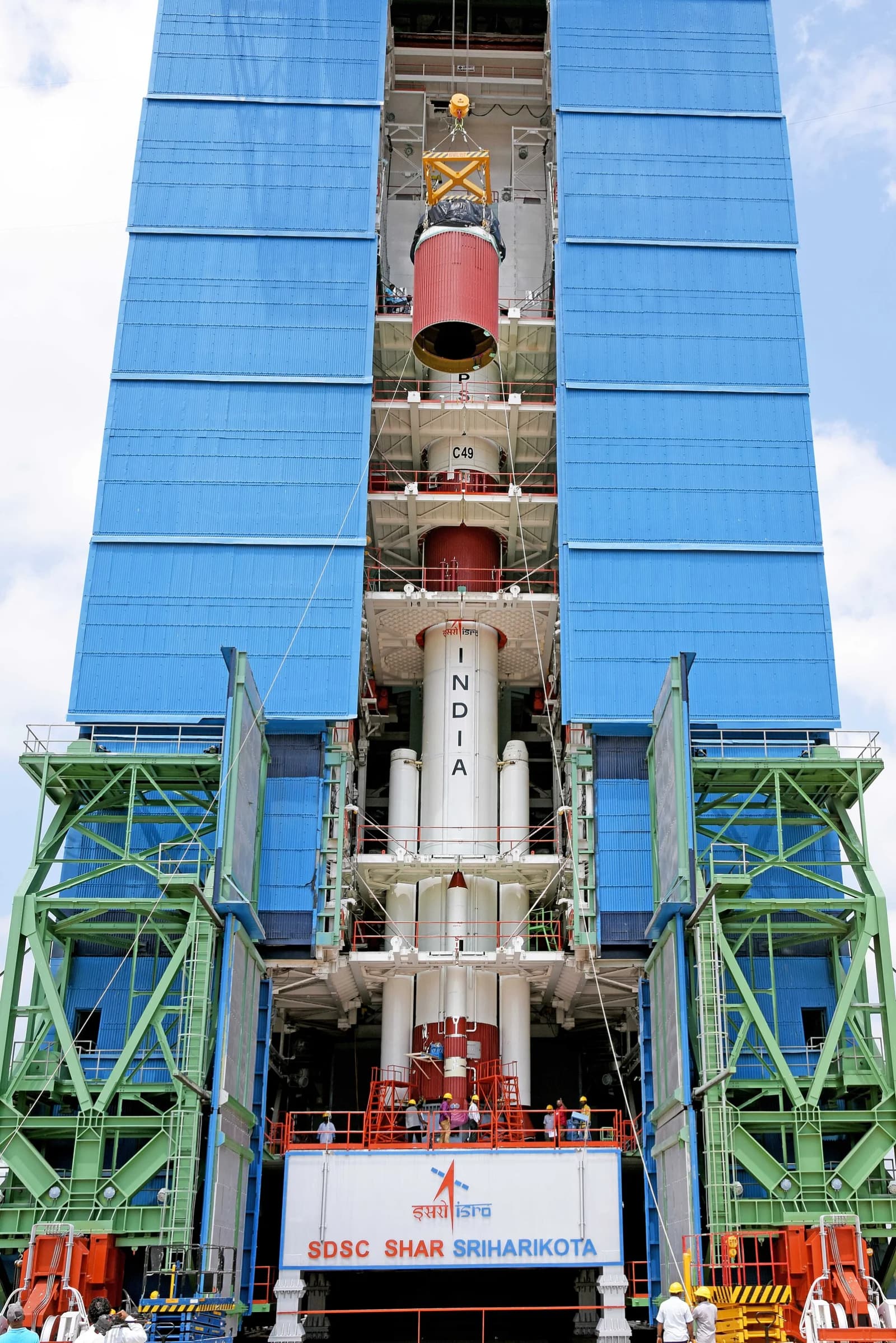
The Indian Space Research Organisation (ISRO) on Thursday, November 12, carried out a ground static test of a reworked third stage for its Polar Satellite Launch Vehicle (PSLV), a key step in efforts to return the rocket to service after third-stage problems ended two of its most recent missions.
The test of the PSLV third stage, known as PS3, was conducted at the Static Test Facility of the Satish Dhawan Space Centre (SDSC-SHAR) in Sriharikota, Andhra Pradesh. In a statement, ISRO described the test as successful and said the stage tested was a "new version" of the PS3 solid motor.
What ISRO changed
According to the space agency, the PS3 configuration was "revisited comprehensively" after anomalies were seen in the third stage during the PSLV-C61/EOS-09 and PSLV-C62/EOS-N1 flights. The review covered design margins, the criteria used to accept raw materials, assembly procedures and the quality checks that had been followed until now.
ISRO listed several changes that came out of that review:
- Nozzle: improvements to the nozzle configuration to increase design margins.
- Mechanical interfaces: strengthened, with redundancy added to the sealing systems. ISRO said the adequacy of the design margins has been verified.
- Processes: revised procedures for accepting raw materials, for assembly and for quality checks.
- Inspection: updated assembly steps and non-destructive tests (NDT) during the different phases of integration and transportation of the stage.
ISRO did not release performance figures from the firing, such as burn duration or thrust. It said further tests are planned once the test data has been analysed and reviewed.
Two failures in eight months
The PSLV, which first flew in 1993 and has carried more than 60 missions, including Chandrayaan-1, the Mars Orbiter Mission and Aditya-L1, has long been regarded as ISRO's most dependable launcher. That record came under strain in 2025–26.
On May 18, 2025, PSLV-C61 lifted off from Sriharikota with the EOS-09 radar imaging satellite. The first two stages performed normally, but the mission failed during third-stage operation. ISRO chairman V. Narayanan said at the time that a fall in chamber pressure had been observed in the third stage.
The return-to-flight attempt, PSLV-C62, launched on January 12, 2026, carrying the DRDO-built EOS-N1 satellite along with a group of smaller co-passenger payloads. Once again the first two stages behaved as expected, but a deviation was seen towards the end of the third stage's operation, and the satellites did not reach orbit.
Both failures were examined by failure analysis committees, but ISRO has not publicly released the full findings. Thursday's statement is among the most detailed public accounts so far of what the agency has altered in the stage.
Why the third stage matters
The PS3 is a solid-propellant motor that takes over after the liquid-fuelled second stage and accelerates the vehicle before the fourth stage performs final orbit insertion. Published specifications put its propellant load at roughly 7.6 tonnes, housed in a composite motor case with a flexible nozzle that steers the rocket in pitch and yaw. Because the motor cannot be shut down or throttled once ignited, any flaw in its casing, seals or nozzle can quickly end a mission, which is why ISRO's fixes centre on margins, seals and manufacturing checks.
The stakes go beyond ISRO's own satellites. Government agencies, Indian startups and foreign customers use the PSLV for Earth-observation and small-satellite launches; the failed PSLV-C62 flight alone carried co-passenger payloads from several countries.
What happens next
ISRO has said more tests will follow after a detailed review of the data from Thursday's firing. The agency has not announced a date for the PSLV's next flight. A successful qualification campaign for the redesigned PS3 would be the main technical hurdle before the rocket can fly again.
PS · ISRO, GODL-India