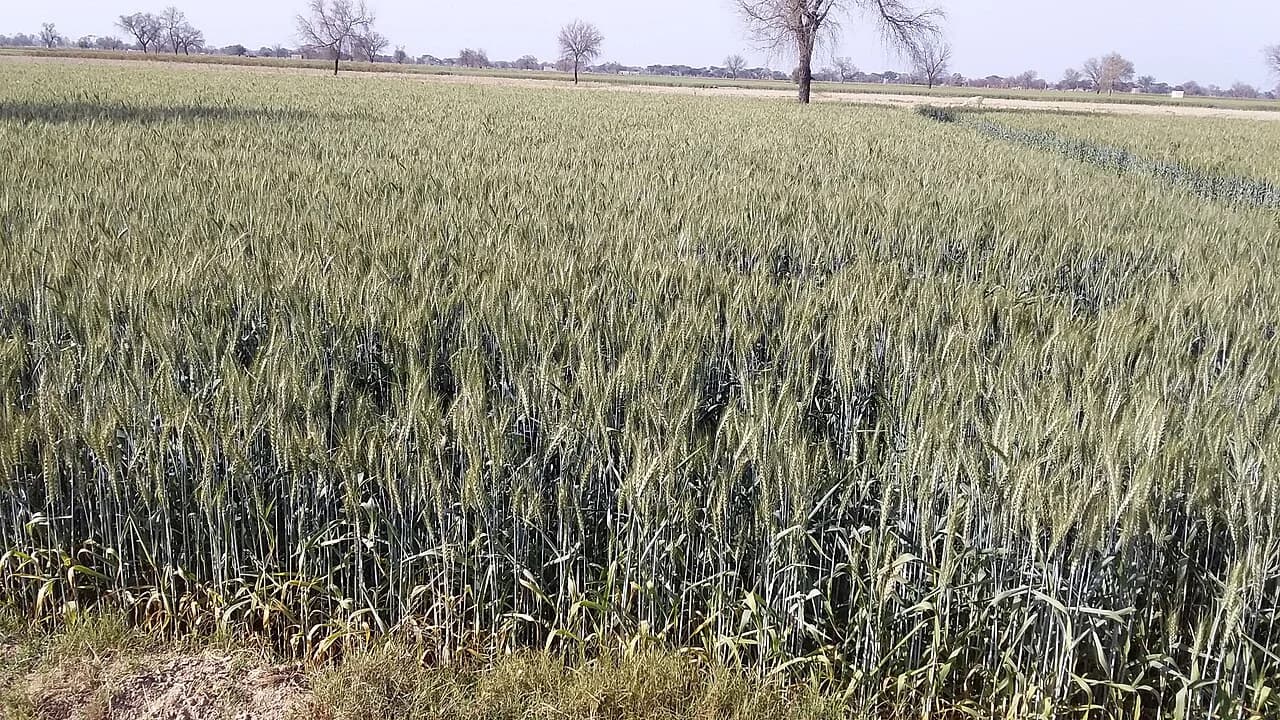
India's wheat planting for the 2026-27 season is heading for its steepest fall in 26 years as dry fields push farmers towards crops that need less water, according to industry estimates reported by Reuters from Jalna in Maharashtra on 20 November 2026. Official sowing data already show wheat area running about 15% behind last year.
An average of estimates from 10 industry officials puts this season's wheat area about 6% below last year's record of 33.6 million hectares, at roughly 31.58 million hectares, Reuters reported. That would be the lowest in four years and the biggest year-on-year drop since 2000-01.
How far behind is wheat sowing right now?
Wheat had been sown on 50.07 lakh hectares (about 5 million hectares) as of 13 November, compared with 59.10 lakh hectares a year earlier, a fall of 15.3%, according to Union Agriculture Ministry data reported by ETV Bharat and Reuters.
The shortfall is not limited to wheat. Total rabi (winter-sown) area stood at 178.25 lakh hectares against 201.04 lakh hectares last year, down 11.3%, ETV Bharat reported. Pulses were 14.3% lower at 47 lakh hectares and oilseeds 7.4% lower at 61.71 lakh hectares. Within these, gram (chickpea) covered 31.13 lakh hectares against 39.70 lakh hectares and mustard 59.31 lakh hectares against 64.78 lakh hectares.
Sowing normally continues for several more weeks, so these numbers will change before the season's final area is known.
Why are farmers planting less wheat?
Water is the main reason cited. Reuters reported that the June-September monsoon was the weakest in more than a decade, with rainfall as much as 41% below average in the key wheat-growing states of Punjab, Rajasthan, Madhya Pradesh and Maharashtra. ETV Bharat put the overall monsoon deficit at 13%, which left less moisture in the soil before sowing.
Vilas Bhutekar, a farmer in Jalna district, told Reuters that wheat needs four to five rounds of irrigation and he did not have enough water even to sow it, so he chose chickpeas instead. Nitin Gupta, deputy country head at the agricultural trader Olam Agri India, said wheat needs more water than competing crops and water is short in some regions this year.
Prices are also playing a part. Wheat competes for land with rapeseed, chickpea and maize, and the prices of those crops have risen much more than wheat's, Sandeep Bansal, a director of a flour mill in Uttar Pradesh, told Reuters. The government raised the minimum support price (MSP), at which the state-run Food Corporation of India buys wheat, by just 1% this year to ₹2,610 per quintal, the smallest increase since 2002-03, according to Reuters. A New Delhi-based trader with a global trading house told the agency the small increase was discouraging farmers from expanding wheat area.
The official data so far show gram and mustard area also behind last year, so it is not yet clear how much of the wheat shortfall will move to other crops.
Where is the drop concentrated?
Industry officials expect wheat area to stay largely steady in Punjab and Haryana, where irrigation is reliable, according to Reuters. Elsewhere, farmers are moving to less water-hungry crops, mainly chickpea and rapeseed, the agency reported, citing industry officials.
Why it matters
India is the world's second-largest wheat producer. Reuters reported that a smaller area, along with the risk of lower yields from a severe El Niño, could reduce output, push up prices and make it harder for the government to keep food inflation in check. India's grain outlook is already under watch abroad: the International Grains Council this week trimmed its world rice crop forecast because of a cut for India.
What to watch next
The Agriculture Ministry's weekly sowing updates over the coming weeks will show whether late planting narrows the gap. The industry estimates reported by Reuters are projections, not official figures, and the final wheat area will be known only after the planting window closes.